- Remove From My Forums
-
Question
-
Hi All,
I have installed the Exchange 2010 Management Tools and a few roles on our DC (Windows Server 2008 R2) but i cannot even connect to it to configure anything.
If i use the management tools GUI i get an error message saying:
«Connecting to remote server failied with the following error message: The WinRM client received an HTTP server error status (500), but the remove service did not include any other informaition about the cause of the failure. For more information, see the about_Remote_Troubleshooting Help topic. It was running the command ‘Discover-ExchangeServer -UseWIA $true -SuppressError $true’.»
Using the Exchange Management Shell is get a similar error:
«Connecting to remote server failied with the following error message: The WinRM client received an HTTP server error status (500), but the remove service did not include any other informaition about the cause of the failure. For more information, see the about_Remote_Troubleshooting Help topic.
+ CategoryInfo : OpenError: (System.Manageme….RemoteRunspace:RemoteRunspace) [], PSRemotingTransportException
+ FullyQualifiedErrorId: PSSessionOpenFailed»This comes up 3 times and then said it failed to connect and to enter the Server FQDN i want to connect to.I have seen other posts where they have said to disable anonymous access for PowerShell in IIS which i have done and to also run the set-user yourusername -remotepowershellenabled:$true which i cannot run because i cannot even connect into it via PowerShell.
Tried to see if there was a way to reinstall the management tools because i have a feeling they didnt install properly but cant find a way to do that.
Tried to uninstall everything but i cannot because it says there are already mailboxes created (presume some default ones) but i cannot connect to remove them to uninstall.
I seem to have reached a wall and cannot see how to proceed.
Please help. Thanks.
Answers
-
Hi All,
I ended up having to denote the server back to a member server then recover it from a very old backup and go through the whole process of promoting it to a DC again. Once i did all that and got it back to how it was prior to the exchange install i ran setup with the recoverserver switch (setup /m:RecoverServer) as all the AD changes where still in place and setup would not run normally.
Once the recover finished i had all the roles and management tools installed again and i was able to connect.
-
Marked as answer by
Tuesday, January 12, 2010 1:07 AM
-
Marked as answer by
- Remove From My Forums
-
Question
-
Hi All,
I have installed the Exchange 2010 Management Tools and a few roles on our DC (Windows Server 2008 R2) but i cannot even connect to it to configure anything.
If i use the management tools GUI i get an error message saying:
«Connecting to remote server failied with the following error message: The WinRM client received an HTTP server error status (500), but the remove service did not include any other informaition about the cause of the failure. For more information, see the about_Remote_Troubleshooting Help topic. It was running the command ‘Discover-ExchangeServer -UseWIA $true -SuppressError $true’.»
Using the Exchange Management Shell is get a similar error:
«Connecting to remote server failied with the following error message: The WinRM client received an HTTP server error status (500), but the remove service did not include any other informaition about the cause of the failure. For more information, see the about_Remote_Troubleshooting Help topic.
+ CategoryInfo : OpenError: (System.Manageme….RemoteRunspace:RemoteRunspace) [], PSRemotingTransportException
+ FullyQualifiedErrorId: PSSessionOpenFailed»This comes up 3 times and then said it failed to connect and to enter the Server FQDN i want to connect to.I have seen other posts where they have said to disable anonymous access for PowerShell in IIS which i have done and to also run the set-user yourusername -remotepowershellenabled:$true which i cannot run because i cannot even connect into it via PowerShell.
Tried to see if there was a way to reinstall the management tools because i have a feeling they didnt install properly but cant find a way to do that.
Tried to uninstall everything but i cannot because it says there are already mailboxes created (presume some default ones) but i cannot connect to remove them to uninstall.
I seem to have reached a wall and cannot see how to proceed.
Please help. Thanks.
Answers
-
Hi All,
I ended up having to denote the server back to a member server then recover it from a very old backup and go through the whole process of promoting it to a DC again. Once i did all that and got it back to how it was prior to the exchange install i ran setup with the recoverserver switch (setup /m:RecoverServer) as all the AD changes where still in place and setup would not run normally.
Once the recover finished i had all the roles and management tools installed again and i was able to connect.
-
Marked as answer by
Tuesday, January 12, 2010 1:07 AM
-
Marked as answer by
- Remove From My Forums
-
Question
-
Hi All,
I have installed the Exchange 2010 Management Tools and a few roles on our DC (Windows Server 2008 R2) but i cannot even connect to it to configure anything.
If i use the management tools GUI i get an error message saying:
«Connecting to remote server failied with the following error message: The WinRM client received an HTTP server error status (500), but the remove service did not include any other informaition about the cause of the failure. For more information, see the about_Remote_Troubleshooting Help topic. It was running the command ‘Discover-ExchangeServer -UseWIA $true -SuppressError $true’.»
Using the Exchange Management Shell is get a similar error:
«Connecting to remote server failied with the following error message: The WinRM client received an HTTP server error status (500), but the remove service did not include any other informaition about the cause of the failure. For more information, see the about_Remote_Troubleshooting Help topic.
+ CategoryInfo : OpenError: (System.Manageme….RemoteRunspace:RemoteRunspace) [], PSRemotingTransportException
+ FullyQualifiedErrorId: PSSessionOpenFailed»This comes up 3 times and then said it failed to connect and to enter the Server FQDN i want to connect to.I have seen other posts where they have said to disable anonymous access for PowerShell in IIS which i have done and to also run the set-user yourusername -remotepowershellenabled:$true which i cannot run because i cannot even connect into it via PowerShell.
Tried to see if there was a way to reinstall the management tools because i have a feeling they didnt install properly but cant find a way to do that.
Tried to uninstall everything but i cannot because it says there are already mailboxes created (presume some default ones) but i cannot connect to remove them to uninstall.
I seem to have reached a wall and cannot see how to proceed.
Please help. Thanks.
Answers
-
Hi All,
I ended up having to denote the server back to a member server then recover it from a very old backup and go through the whole process of promoting it to a DC again. Once i did all that and got it back to how it was prior to the exchange install i ran setup with the recoverserver switch (setup /m:RecoverServer) as all the AD changes where still in place and setup would not run normally.
Once the recover finished i had all the roles and management tools installed again and i was able to connect.
-
Marked as answer by
Tuesday, January 12, 2010 1:07 AM
-
Marked as answer by
Установлен новый сервер Exchange 2016 для миграции на него с Exchange 2010.
При запуске Exchange Management Shell на новом сервере возникает ошибка:
ПОДРОБНО: Подключение к mail.domain.local.
New-PSSession : [mail.domain.local] Сбой подключения к удаленному серверу mail.domain.local. Сообщение об ошибке: WinRM-клиент получил состояние "Ошибка сервера" (ошибка HTTP 500), но удаленная служба не предоставила других сведен
ий о причине сбоя. Подробности см. в разделе справки "about_Remote_Troubleshooting".
строка:1 знак:1
+ New-PSSession -ConnectionURI "$connectionUri" -ConfigurationName Micr ...
+ ~~~~~~~~~~~~~~~~~~~~~~~~~~~~~~~~~~~~~~~~~~~~~~~~~~~~~~~~~~~~~~~~~~~~~
+ CategoryInfo : OpenError: (System.Manageme....RemoteRunspace:RemoteRunspace) [New-PSSession], PSRemotin
gTransportException
+ FullyQualifiedErrorId : WinRMHttpError,PSSessionOpenFailed
Читал много советов из интернета — ничего не помогало.
В итоге помогло следующее:
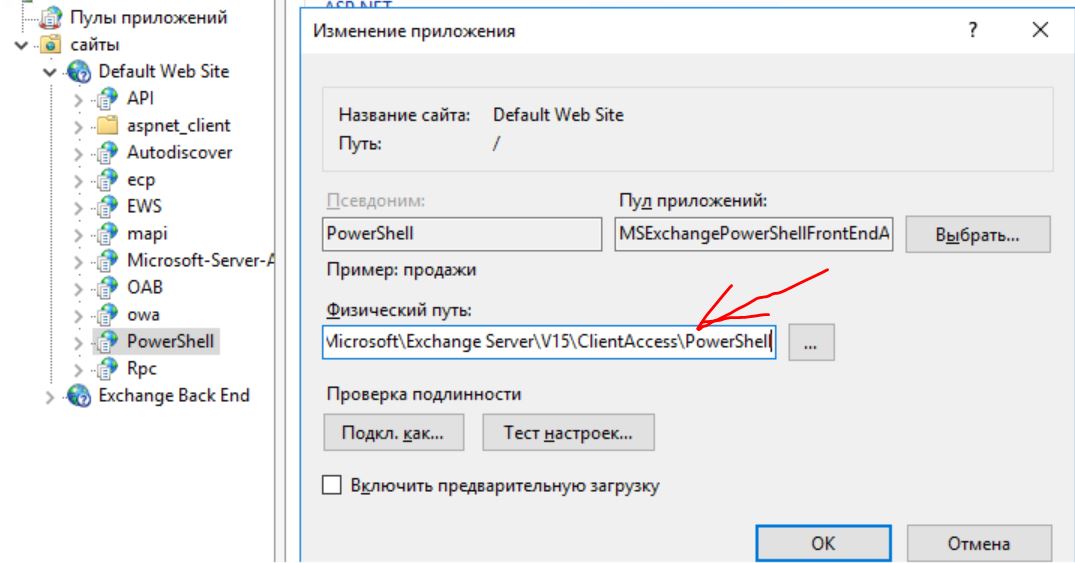
В IIS зайти Default Web Site — PowerShell. Поменять Физический путь с
C:Program FilesMicrosoftExchange ServerV15FrontEndHttpProxyPowerShell
на
C:Program FilesMicrosoftExchange ServerV15ClientAccessPowerShell
Запустить IISRESET.
One quite common error I faced during the Exchange 2010 era is the WinRM HTTP Error:
If i use the management tools GUI i get an error message saying:
“Connecting to remote server failied with the following error message: The WinRM client received an HTTP server error status (500), but the remove service did not include any other informaition about the cause of the failure. For more information, see the about_Remote_Troubleshooting Help topic. It was running the command ‘Discover-ExchangeServer -UseWIA $true -SuppressError $true’.”
Using the Exchange Management Shell is get a similar error:
“Connecting to remote server failied with the following error message: The WinRM client received an HTTP server error status (500), but the remove service did not include any other informaition about the cause of the failure. For more information, see the about_Remote_Troubleshooting Help topic.
+ CategoryInfo : OpenError: (System.Manageme….RemoteRunspace:RemoteRunspace) [], PSRemotingTransportException
+ FullyQualifiedErrorId: PSSessionOpenFailed”
FIRST THING YOU MUST DO: DO NOT PANIC !
DO NOT REBOOT THE SERVER !!!
I WILL EXPLAIN HOW TO SOLVE THIS IN A FEW EASY STEPS:
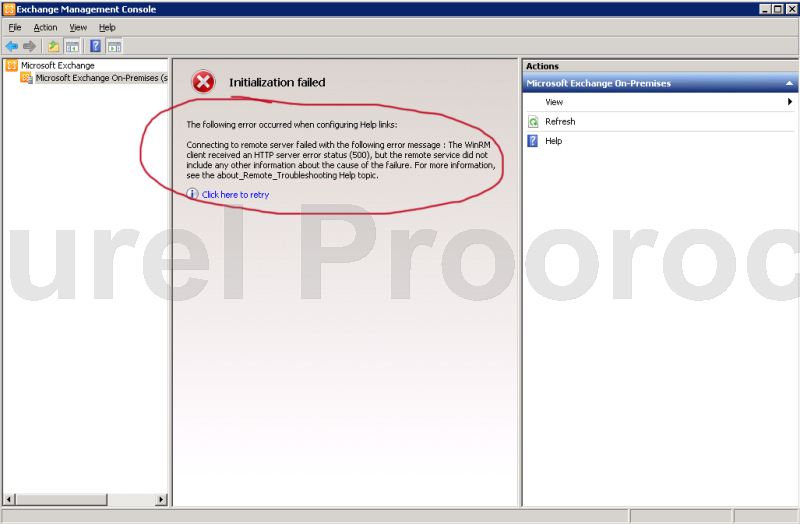
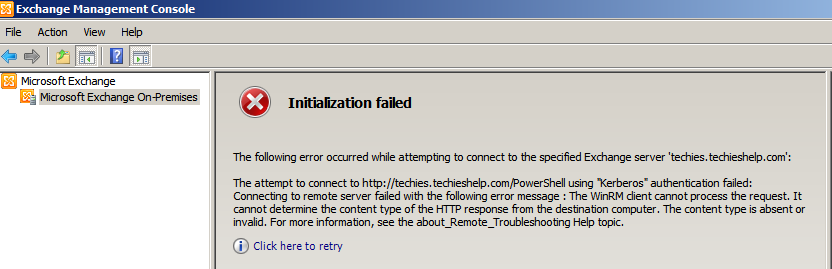
1. When you open the EMC ( Exchange Management Console ), you will get an error similar to this:
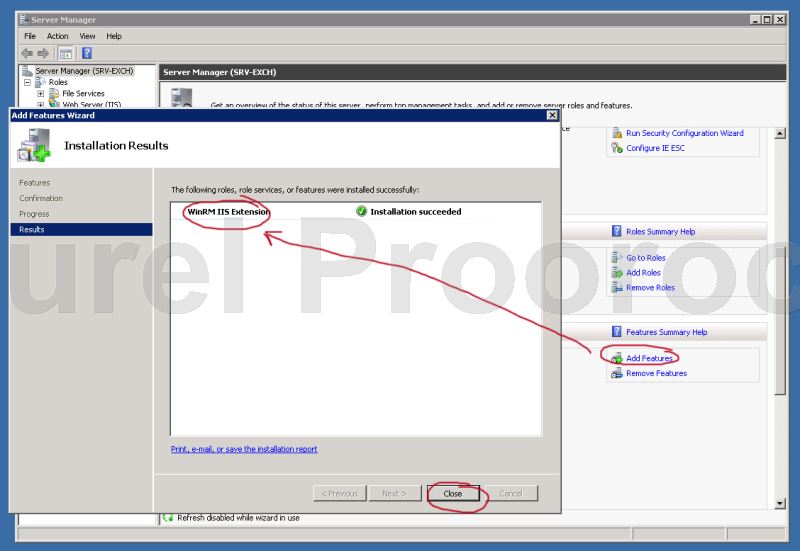
2. Go to START / Administrative Tools / Server Manager / Features / Add Features / And check WinRM IIS Extensions / NEXT / NEXT / CLOSE:
!!! IF YOU ALREADY HAVE THIS ROLE INSTALLED, JUST REINSTALL IT !
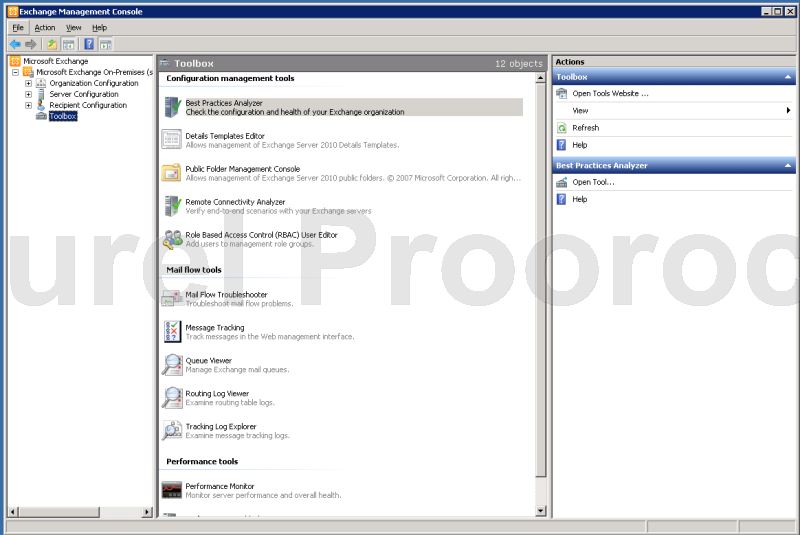
3. Close / Reopen EMC and it will work like a charm ( NO REBOOT REQUIRED ):
ENJOY.
And if you encounter any problems feel free to comment / contact me.
- Home
- Microsoft
- Exchange 2010
- The Attempt To Connect To Powershell Using Kerberos Authentication Failed The WinRM Client Received An Http Server Error Status (500)
The Attempt To Connect To Powershell Using Kerberos Authentication Failed The WinRM Client Received An Http Server Error Status (500)
Written by Allen White on June 6, 2012. Posted in Exchange 2010
After upgrading a Server 2008 server recently that was running Exchange 2010 I came across this error.
The Attempt To Connect To Powershell Using Kerberos Authentication Failed The WinRM Client Received An Http Server Error Status (500)
There are a few variations of the message also namely this one below.
The attempt to connect to http://server.domainname.com/powershell using “kerberos” authentication failed:Connecting to remote server failed with the following message:The WinRm client cannot process the request.It cannot determine the content type pf the HTTP response from the destination computer. The content type is absent or invalid.
The Attempt To Connect To Powershell Using Kerberos Authentication Failed The WinRM Client Received And Http Server Error Status (500)
This is down to the WinRM client becoming corrupt. This is an easy fix to do via the exchange powershell console. do the following.
We first need to enable to server manager plug in. To do so run this command
Import-Module ServerManager
Then run this command te remove the service.
Remove-WindowsFeature WinRM-IIS-Ext
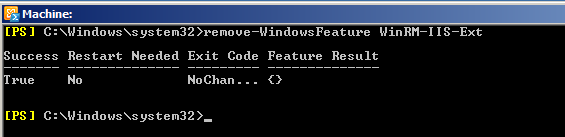
Then we need to reinstall WinRm. To do so run this command as seen below.
Add-WindowsFeature WinRM-IIS-Ext
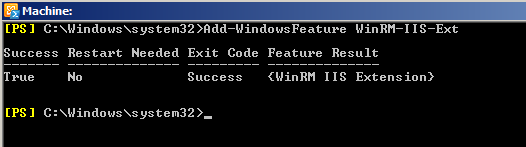
Add-WindowsFeature WinRM-IIS-Ext
You will now find that you can launch the Exchange Management console without any issues, View to video below for a full step by step guide on fixing the “The Attempt To Connect To Powershell Using Kerberos Authentication Failed The WinRM Client Received And Http Server Error Status (500) ” issue.
Tags: emc error 500

Allen White
Allen is an IT Consultant and holds the following accreditations. MCSA, MCSE, MCTS, MCITP, CCA, CCSP, VCP 4,5, 6 and HP ASE, AIS — Network Infrastructure.
Search
Background
When attempting to add the Windows Backup server role to a new Windows 2012 R2 domain controller, it failed with a WinRM error.
Trying to run winrm quickconfig from the command line resulted in the error: “The WinRM client received an HTTP server error status 500”.
Looking in the event log shows nothing special. Trying to restart the WinRM service (Windows Remote Manager) in the Services console achieves nothing.
If you read a bunch of forum posts about it, the error often seems to relate to Exchange 2010, and the fix is to (re)install the WinRM IIS Extension.
However, my DCs do not run Exchange or IIS, so this was a bit different.
Fix
In this instance, the only fix was to unconfigure and reconfigure the WinRM instance using sconfig.
In a command prompt, or PowerShell, run sconfig. The text-based console for Server Configuration will open.
Note that that option 4, Configure Remote Management, is showing Unknown. We’ll need to reset Remote Management to get it to a known state.
In the console, type 4 and hit Enter.
==================================================================
                         Server Configuration
==================================================================
1) Domain/Workgroup:                    Domain:  example.com
2) Computer Name:                       DC1
3) Add Local Administrator
4) Configure Remote Management          Unknown
5) Windows Update Settings:             Manual
6) Download and Install Updates
7) Remote Desktop:                      Enabled (more secure clients only)

8) Network Settings
9) Date and Time
10) Help improve the product with CEIP  Not participating
11) Windows Activation

12) Log Off User
13) Restart Server
14) Shut Down Server
15) Exit to Command Line

Enter number to select an option: 4
Note that the next screen shows that Remote Management is Enabled. Enter 2 to disable Remote Management.
--------------------------------
  Configure Remote Management
--------------------------------

Current Status: Remote Management is enabled

1) Enable Remote Management
2) Disable Remote Management
3) Configure Server Response to Ping

4) Return to main menu

Enter selection: 2

Disabling Remote Management...
The next screen shows that the Remote management is disabled. Enter 1 to re-enable it.
--------------------------------
  Configure Remote Management
--------------------------------

Current Status: Remote Management is disabled

1) Enable Remote Management
2) Disable Remote Management
3) Configure Server Response to Ping

4) Return to main menu

Enter selection: 1

Enabling Remote Management...
The next screen shows Remote Management is enabled again. Enter 4 to return to the main SConfig menu.
--------------------------------
  Configure Remote Management
--------------------------------

Current Status: Remote Management is enabled

1) Enable Remote Management
2) Disable Remote Management
3) Configure Server Response to Ping

4) Return to main menu

Enter selection: 4
From there, you can either close the command window, or enter 15 to exit SConfig.
In order to double-check the config, you can run winrm quickconfig.
C:>winrm quickconfig
WinRM service is already running on this machine.
WinRM is already set up for remote management on this computer.
Как мы уже обсуждали, инструменты управления в Exchange 2010 зависят от IIS. Там же мы рассматривали ситуации, когда подключение инструментов управления к целевому серверу Exchange может завершиться аварийно, а сообщение об ошибке подключения оказаться сложным для понимания. Обычно (но не всегда) это случается, когда Exchange 2010 устанавливается на IIS уже находящийся в эксплуатации, или когда в IIS вносятся изменения
после установки Exchange 2010. Мы видели, что эти изменения обычно вносятся, когда администратор IIS пытается «закрутить гайки» безопасности в IIS, редактируя настройки Default Web Site или PowerShell vdir.
Ситуация осложняется тем, что некоторые из представленных ошибок имеют похожие сообщения; кажется, что большинство из них происходит из-за WinRM (Windows Remote Management), и в некоторых случаях в корне различные проблемы могут производить совершенно одинаковое сообщение об ошибке. Другими словами в зависимости от того, насколько хорошо вы знакомы с этими ошибками, их устранение превращается в перебор всех вариантов… а это не забавляет.
И вот результат: представляем Exchange Management Troubleshooter (или кратко EMTshooter).
Что он делает?
EMTshooter запускается на локальном (целевом) сервере Exchange и пытается определить потенциальные проблемы подключения инструментов управления к этому серверу.
EMTshooter выполняется за два шага. На первом шаге он тестирует IIS Default Web Site, PowerShell vdir и другие критические области, чтобы найти известные проблемы. Если он находит известную проблему, то он выдает сообщение с рекомендациями по ее устранению. Если все проверки проходят удачно, то он пытается подключиться к серверу точно также как инструменты управления. Если это попытка подключения получит ошибку от WinRM, EMTshooter будет пытаться сравнить эту ошибку со списком текстов (строк) ошибок, который мы составили на основе решений для аналогичных ошибок в службе поддержки. Если соответствие найдено, то EMTshooter выведет в окно CMD известные причины ошибки. Вот пример того, как это выглядит:

Когда я разрабатывал EMTshooter, я мог бы просто написать маленький поисковый инструмент для анализа сообщения об ошибке, которую вы получили, но я почувствовал, что это не столь надежное решение, как я хотел (и не дающее мне никакого опыта). Но EMTshooter выполняет предварительные активные проверки до анализа текста сообщения об ошибке. Количество предварительных проверок, которые он может выполнить, зависит от свойств операционной системы, на которой вы его запустили, и опций, которые вы на ней установили (например, WMI Compatibility).
По правде говоря, я взял всю документацию об этих ошибках, которая была доступна на тот момент, и сделал инструмент, который делает эту информацию доступной для вас, основываясь на сообщении об ошибке или проблеме, которую он обнаружил. Надеюсь, это уменьшит количество времени, которое необходимо для решения этих проблем.
Журнал событий
Когда вы запускаете EMTshooter, он пишет сообщения в журнал событий. Все результаты, которые отображаются в окне CMD, также записываются в журнал событий.
События пишутся в журнал Microsoft-Exchange-Troubleshooters/Operational и не требуют пояснений.
Запомните!
В зависимости от текущих настроек вам может потребоваться настройка политики на компьютере, на котором выполняется EMTshooter :
Set-ExecutionPolicy RemoteSigned
или
Set-ExecutionPolicy Unrestricted
Не забудьте вернуть политику в исходное состояние после работы с EMTshooter.
Эта версия EMTshooter должна запускаться на сервере Exchange, к которому невозможно подключиться с помощью инструментов управления. Хотя наша цель была в том, чтобы запускать EMTshooter из любого места, где установлены инструменты управления, но он еще не готов для этого.
У нас были случаи, когда повреждение в PowerShell vdir или в самом IIS приводило к ошибкам, которые, как казалось, были вызваны чем-то другим. Например, мы работали над сервером, у которого была ошибка, которая указала на проблему с сетевым путем в PowerShell vdir. Но путь был правильным. Затем мы заметили, что PowerShell vdir потерял все свои модули, и отметили еще некоторые моменты. Так или иначе, PowerShell vdir на том сервере Exchange был безнадежно убит и не подлежал восстановлению. В этой ситуации WinRM возвращал лучшую ошибку, какую мог, EMTshooter взял эту ошибку и перечислил причины. Ни одна из них не решила проблему. Так что знайте: есть сценарии, в которых даже EMTshooter не может помочь в настоящее время.
EMTshooter еще недостаточно отточен, и мы планируем в будущем улучшить и расширить его возможности. Мы также надеемся со временем углубиться в настройки PowerShell vdir. Также отметим, что EMTshooter не будет делать изменения в конфигурации IIS без вашего разрешения.
Необходимые права
Для того, чтобы запустить EMTshooter, пользователь должен иметь права локального входа (log on locally) на Exchange сервер и права запуска Windows Powershell.
Установка EMTshooter
Во-первых, загрузите ZIP файл с EMTshooter , который находится тут.
Установка EMTshooter очень проста. Извлеките 4 файла из ZIP файла в одну папку, переименуйте их в .ps1и запустите локально EMTshooter.ps1 из окна PowerShell. Лично я создал ярлык на моем рабочем столе:
C:WindowsSystem32WindowsPowerShellv1.0powershell.exe -noexit -command «. ‘C:EMTshooterEMTshooter.ps1′»
Однако большинство пользователей не запускают его часто, и вы, скорее всего, не захотите иметь ярлык. Только помните, что нужно запускать именно файл EMTshooter.ps1.
Обратная связь
Как я упоминал ранее, EMTshooter все еще незавершен. Если вы хотите сообщить об ошибке или сделать предложение по улучшению, то оставьте, пожалуйста, комментарий к этому сообщению в блоге. Я буду их отслеживать, отвечать по возможности и вносить изменения в EMTshooter по необходимости. Если вы столкнетесь с ошибками, которые не известны EMTshooter, то запустите его, воспроизведите ошибку и отправьте мне transcript.txt file (вы найдете его в папке, где лежат 4 скрипта) вместе с пояснением, что вы сделали, чтобы устранить ошибку (если ошибка была устранена). Мой адрес: sbryant AT Microsoft DOT com.
Ошибки, которые исправляет EMTshooter
• Соединение с удаленным сервером перестало работать со следующим сообщением об ошибке: The WinRM client cannot process the request. It cannot determine the content type of the HTTP response from the destination computer. The content type is absent or invalid.
• Соединение с удаленным сервером перестало работать со следующим сообщением об ошибке: The connection to the specified remote host was refused. Verify that the WS-Management service is running on the remote host and configured to listen for requests on the correct port and HTTP URL.
• Соединение с удаленным сервером перестало работать со следующим сообщением об ошибке: The WinRM client received an HTTP server error status (500), but the remote service did not include any other information about the cause of the failure. For more information, see the about_Remote_Troubleshooting Help topic. It was running the command ‘Discover-ExchangeServer -UseWIA $true -SuppressError $true’.
• Соединение с удаленным сервером перестало работать со следующим сообщением об ошибке: The WinRM client received an HTTP status code of 403 from the remote WS-Management service.
• Соединение с удаленным сервером перестало работать со следующим сообщением об ошибке: The WinRM client sent a request to an HTTP server and got a response saying the requested HTTP URL was not available. This is usually returned by a HTTP server that does not support the WS-Management protocol.
• Соединение с удаленным сервером перестало работать со следующим сообщением об ошибке: The client cannot connect to the destination specified in the request. Verify that the service on the destination is running and is accepting requests. Consult the logs and documentation for the WS-Management service running on the destination, most commonly IIS or WinRM. If the destination is the WinRM service, run the following command on the destination to analyze and configure the WinRM service:
• Соединение с удаленным сервером перестало работать со следующим сообщением об ошибке: The WS-Management service does not support the request.
• Соединение с удаленным сервером перестало работать со следующим сообщением об ошибке: The WinRM client cannot process the request. The WinRM client tried to use Kerberos authentication mechanism, but the destination computer
Стив Брайант
Перевод: Илья Сазонов, MVP
Источник: http://blogs.technet.com/b/exchange_ru/archive/2011/01/21/resolving-winrm-errors-and-exchange-2010-management-tools-startup-failures.aspx