From Wikipedia, the free encyclopedia
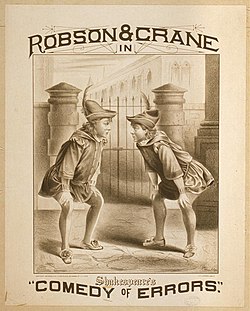
The Comedy of Errors is one of William Shakespeare’s early plays. It is his shortest and one of his most farcical comedies, with a major part of the humour coming from slapstick and mistaken identity, in addition to puns and word play. It has been adapted for opera, stage, screen and musical theatre numerous times worldwide. In the centuries following its premiere, the play’s title has entered the popular English lexicon as an idiom for «an event or series of events made ridiculous by the number of errors that were made throughout».[1]
Set in the Greek city of Ephesus, The Comedy of Errors tells the story of two sets of identical twins who were accidentally separated at birth. Antipholus of Syracuse and his servant, Dromio of Syracuse, arrive in Ephesus, which turns out to be the home of their twin brothers, Antipholus of Ephesus and his servant, Dromio of Ephesus. When the Syracusans encounter the friends and families of their twins, a series of wild mishaps based on mistaken identities lead to wrongful beatings, a near-seduction, the arrest of Antipholus of Ephesus, and false accusations of infidelity, theft, madness, and demonic possession.
Characters[edit]
- Solinus – Duke of Ephesus
- Egeon – A merchant of Syracuse – father of the Antipholus twins
- Emilia – Antipholus’ lost mother – wife to Egeon
- Antipholus of Ephesus and Antipholus of Syracuse – twin brothers, sons of Egeon and Emilia
- Dromio of Ephesus and Dromio of Syracuse – twin brothers, bondmen, each serving his respective Antipholus
- Adriana – wife of Antipholus of Ephesus
- Luciana – Adriana’s sister, love interest of Antipholus of Syracuse
- Nell/Luce – kitchen wench/maid to Adriana, Wife of Dromio of Ephesus
- Balthazar – a merchant
- Angelo – a goldsmith
- Courtesan
- First merchant – friend to Antipholus of Syracuse
- Second merchant – to whom Angelo is in debt
- Doctor Pinch – a conjuring schoolmaster
- Gaoler, Headsman, Officers, and other Attendants
Synopsis[edit]
Act I
Because a law forbids merchants from Syracuse from entering Ephesus, elderly Syracusian trader Egeon faces execution when he is discovered in the city. He can only escape by paying a fine of a thousand marks. He tells his sad story to Solinus, Duke of Ephesus. In his youth, Egeon married and had twin sons. On the same day, a poor woman without a job also gave birth to twin boys, and he purchased these as slaves to his sons. Soon afterward, the family made a sea voyage and was hit by a tempest. Egeon lashed himself to the main-mast with one son and one slave, and his wife took the other two infants. His wife was rescued by one boat, Egeon by another. Egeon never again saw his wife or the children with her. Recently his son Antipholus, now grown, and his son’s slave Dromio left Syracuse to find their brothers. When Antipholus did not return, Egeon set out in search of him. The Duke is moved by this story and grants Egeon one day to pay his fine.
That same day, Antipholus arrives in Ephesus, searching for his brother. He sends Dromio to deposit some money at The Centaur, an inn. He is confounded when the identical Dromio of Ephesus appears almost immediately, denying any knowledge of the money and asking him home to dinner, where his wife is waiting. Antipholus, thinking his servant is making insubordinate jokes, beats Dromio of Ephesus.
Act II
Dromio of Ephesus returns to his mistress, Adriana, saying that her «husband» refused to come back to his house, and even pretended not to know her. Adriana, concerned that her husband’s eye is straying, takes this news as confirmation of her suspicions.
Antipholus of Syracuse, who complains «I could not speak with Dromio since at first, I sent him from the mart,» meets up with Dromio of Syracuse who now denies making a «joke» about Antipholus having a wife. Antipholus begins beating him. Suddenly, Adriana rushes up to Antipholus of Syracuse and begs him not to leave her. The Syracusans cannot but attribute these strange events to witchcraft, remarking that Ephesus is known as a warren for witches. Antipholus and Dromio go off with this strange woman, the one to eat dinner and the other to keep the gate.
Act III
Antipholus of Ephesus returns home for dinner and is enraged to find that he is rudely refused entry to his own house by Dromio of Syracuse, who is keeping the gate. He is ready to break down the door, but his friends persuade him not to make a scene. He decides, instead, to dine with a courtesan.
Inside the house, Antipholus of Syracuse discovers that he is very attracted to his «wife’s» sister, Luciana of Smyrna, telling her «train me not, sweet mermaid, with thy note / To drown me in thy sister’s flood of tears.» She is flattered by his attention but worried about their moral implications. After she exits, Dromio of Syracuse announces that he has discovered that he has a wife: Nell, a hideous kitchen-maid. The Syracusans decide to leave as soon as possible, and Dromio runs off to make travel plans. Antipholus of Syracuse is then confronted by Angelo of Ephesus, a goldsmith, who claims that Antipholus ordered a chain from him. Antipholus is forced to accept the chain, and Angelo says that he will return for payment.
Act IV
Antipholus of Ephesus dispatches Dromio of Ephesus to purchase a rope so that he can beat his wife Adriana for locking him out, then is accosted by Angelo, who tells him «I thought to have ta’en you at the Porpentine» and asks to be reimbursed for the chain. He denies ever seeing it and is promptly arrested. As he is being led away, Dromio of Syracuse arrives, whereupon Antipholus dispatches him back to Adriana’s house to get money for his bail. After completing this errand, Dromio of Syracuse mistakenly delivers the money to Antipholus of Syracuse. The Courtesan spies Antipholus wearing the gold chain, and says he promised it to her in exchange for her ring. The Syracusans deny this and flee. The Courtesan resolves to tell Adriana that her husband is insane. Dromio of Ephesus returns to the arrested Antipholus of Ephesus, with the rope. Antipholus is infuriated. Adriana, Luciana, and the Courtesan enter with a conjurer named Pinch, who tries to exorcize the Ephesians, who are bound and taken to Adriana’s house. The Syracusans enter, carrying swords, and everybody runs off for fear: believing that they are the Ephesians, out for vengeance after somehow escaping their bonds.
Act V
Adriana reappears with henchmen, who attempt to bind the Syracusans. They take sanctuary in a nearby priory, where the Abbess resolutely protects them. Suddenly, the Abbess enters with the Syracusan twins, and everyone begins to understand the confused events of the day. Not only are the two sets of twins reunited, but the Abbess reveals that she is Egeon’s wife, Emilia of Babylon. The Duke pardons Egeon. All exit into the abbey to celebrate the reunification of the family.
Text and date[edit]

The first page of the play, printed in the First Folio of 1623
The play is a modernized adaptation of Menaechmi by Plautus. As William Warner’s translation of the classical drama was entered into the Register of the Stationers Company on 10 June 1594, published in 1595, and dedicated to Lord Hunsdon, the patron of the Lord Chamberlain’s Men, it has been supposed that Shakespeare might have seen the translation in manuscript before it was printed – though it is equally possible that he knew the play in the original Latin, as Plautus was part of the curriculum of grammar school students.
The play contains a topical reference to the wars of succession in France, which would fit any date from 1589 to 1595. Charles Whitworth argues that The Comedy of Errors was written «in the latter part of 1594» on the basis of historical records and textual similarities with other plays Shakespeare wrote around this time.[2] The play was not published until it appeared in the First Folio in 1623.
Analysis and criticism[edit]
For centuries, scholars have found little thematic depth in The Comedy of Errors. Harold Bloom, however, wrote that it «reveals Shakespeare’s magnificence at the art of comedy»,[3] and praised the work as showing «such skill, indeed mastery – in action, incipient character, and stagecraft – that it far outshines the three Henry VI plays and the rather lame comedy The Two Gentlemen of Verona«.[4] Stanley Wells also referred to it as the first Shakespeare play «in which mastery of craft is displayed».[5] The play was not a particular favourite on the eighteenth-century stage because it failed to offer the kind of striking roles that actors such as David Garrick could exploit.
The play was particularly notable in one respect. In the earlier eighteenth century, some critics followed the French critical standard of judging the quality of a play by its adherence to the classical unities, as specified by Aristotle in the fourth century BC. The Comedy of Errors and The Tempest were the only two of Shakespeare’s plays to comply with this standard.[6]
Law professor Eric Heinze, however, claims that particularly notable in the play is a series of social relationships, which is in crisis as it sheds its feudal forms and confronts the market forces of early modern Europe.[7]
Performance[edit]
Two early performances of The Comedy of Errors are recorded. One, by «a company of base and common fellows», is mentioned in the Gesta Grayorum («The Deeds of Gray») as having occurred in Gray’s Inn Hall on 28 December 1594 during the inn’s revels. The second also took place on «Innocents’ Day», but ten years later: 28 December 1604, at Court.[8]
Adaptations[edit]

Theatrical[edit]
Like many of Shakespeare’s plays, The Comedy of Errors was adapted and rewritten extensively, particularly from the 18th century on, with varying reception from audiences.
Classical adaptations[edit]
- Every Body Mistaken is a 1716 «revival» and directorial adaptation of Shakespeare’s play by an anonymous author.[9]
- See If You Like It; or, ‘Tis All a Mistake, an anonymous adaptation staged in 1734 at Covent Garden, performed in two acts with text from Plautus and Shakespeare. Shakespeare purists considered it to be the «worst alteration» available.[10][11]
- The Twins, by Thomas Hull produced an adaptation for Covent Garden in 1739, where Hull played Aegon. This production was more faithful to Shakespeare’s text, and played for several years.[10] This adaptation was performed only once in 1762, and was published in 1770. Hull adapted the play a second time as The Comedy of Errors. With Alterations from Shakespeare. This version was staged frequently from 1779 onward, and was published in 1793.[11] Hull added songs, intensified the love interest, and elaborated the recognition scene. He also expanded roles for women, including Adriana’s cousin Hermia, who sang various songs.[9]
- The Twins; or, Which is Which? A Farce. In Three Acts by William Woods, published in 1780. Produced at the Theatre-Royal, Edinburgh.[11] This adaptation reduced the play to a three-act farce, apparently believing that a longer run time should «pall upon an audience.» John Philip Kemble (see below) seemed to have extended and based his own adaptation upon The Twins.[9]
- Oh! It’s Impossible by John Philip Kemble, was produced in 1780. This adaptation caused a stir by casting the two Dromios as black-a-moors.[12] It was acted in York, but not printed.[13] Later, nearly 20 years after slavery had been abolished within British domains, James Boaden wrote, «I incline to think [Kemble’s] maturer judgement would certainly have consigned the whole impression to the flames.»)[14]
Modern adaptations[edit]
- The Flying Karamazov Brothers performed a unique adaptation, produced by Robert Woodruff, first at the Goodman Theater in Chicago in 1983, and then again in 1987 at New York’s Vivian Beaumont Theater in Lincoln Center. This latter presentation was filmed and aired on MTV and PBS. The Comedy of Errors
- The Comedy of Errors adapted and directed by Sean Graney in 2010 updated Shakespeare’s text to modern language, with occasional Shakespearean text, for The Court Theatre. The play appears to be more of a «translation» into modern-esque language, than a reimagination.[15] The play received mixed reviews, mostly criticizing Graney’s modern interpolations and abrupt ending.[16]
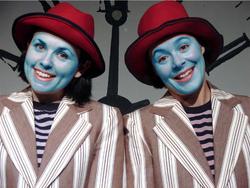
- 15 Villainous Fools, written and performed by Olivia Atwood and Maggie Seymour, a two-woman clown duo, produced by The 601 Theatre Company.[17][18] The play was performed several times, premiering in 2015 at Bowdoin College, before touring fringe festivals including Portland, San Diego, Washington, DC, Providence, and New York City. Following this run, the show was picked up by the People’s Improv Theater for an extended run.[19] While the play included pop culture references and original raps, it kept true to Shakespeare’s text for the characters of the Dromios.[20]
- A Comedy of Heirors, or The Imposters by feminist verse playwright, Emily C. A. Snyder, performed a staged reading through Turn to Flesh Productions in 2017, featuring Abby Wilde as Glorielle of Syracuse. The play received acclaim, being named a finalist with the American Shakespeare Center, as part of the Shakespeare’s New Contemporaries program,[21] as well as «The Top 15 NYC Plays of ’17» by A Work Unfinishing.[22] The play focuses on two sets of female twins, who also interact with Shakespeare’s Antipholi. The play is in conversation with several of Shakespeare’s comedies, including characters from The Comedy of Errors, Twelfth Night, As You Like It, and Much Ado About Nothing.
Opera[edit]
- On 27 December 1786, the opera Gli equivoci by Stephen Storace received its première at the Burgtheater in Vienna. The libretto, by Lorenzo da Ponte, Mozart’s frequent librettist, worked off a French translation of Shakespeare’s play, follows the play’s plot fairly closely, though some characters were renamed, Aegeon and Emilia are cut, and Euphemio (previously Antipholus) and Dromio are shipwrecked on Ephesus.[23][24]
- Frederic Reynolds staged an operatic version in 1819, with music by Henry Bishop supplemented lyrics from various Shakespeare plays, and sonnets set to melodies by Mozart, Thomas Arrne, and others.[9] The opera was performed at Covent Gardens under Charles Kemble’s management. The opera included several additional scenes from the play, which were considered necessary for the sake of introducing songs. The same operatic adaptation was revived in 1824 for Drury Lane.[10]
- Various other adaptations were performed down to 1855 when Samuel Phelps revived the Shakespearean original at Sadler’s Wells Theatre.[25]
- The Czech composer Iša Krejčí’s 1943 opera Pozdvižení v Efesu (Turmoil in Ephesus) is also based on the play.[26]
Musicals[edit]
The play has been adapted as a musical several times, frequently by inserting period music into the light comedy. Some musical adaptations include a Victorian musical comedy (Arts Theatre, Cambridge, England, 1951), Brechtian folk opera (Arts Theatre, London, 1956), and a two-ring circus (Delacorte Theater, New York, 1967).
Fully original musical adaptations include:
- The Boys from Syracuse, composed by Richard Rodgers and lyrics by Lorenz Hart. The play premiered on Broadway in 1938 and Off-Broadway in 1963, with later productions including a West End run in 1963 and in a Broadway revival in 2002. A film adaptation was released in 1940.
- A New Comedy of Errors, or Too Many Twins (1940), adapted from Plautus, Shakespeare, and Molière, staged in modern dress at London’s Mercury Theatre.[9][27]
- The Comedy of Errors (1972) adaptation by James McCloskey, music and lyrics by Bruce Kimmel. Premiered at Los Angeles City College and went on to the American College Theatre Festival.
- The Comedy of Errors is a musical with book and lyrics by Trevor Nunn, and music by Guy Woolfenden. It was produced for the Royal Shakespeare Company in 1976, winning the Laurence Olivier Award for best musical on its transfer to the West End in 1977.
- Oh, Brother! is a musical comedy in one act, with music by Michael Valenti and books and lyrics by Donald Driver, which premiered at ANTA Theatre in 1981, also directed by Driver. The musical takes place during a revolution in an oil rich Middle Eastern country on the Persian Gulf in a quaint resort town where its populace of merchants and revolutionaries mix Eastern tradition with Western consumerism.[28] Unfortunately, the New York Times gave it a poor review, criticizing Driver’s heavy handedness, while praising some of the music and performances.[29]
- The Bomb-itty of Errors, a one-act hip-hop musical adaptation, by Jordan Allen-Dutton, Jason Catalano, Gregory J. Qaiyum, Jeffrey Qaiyum, and Erik Weinner, won 1st Prize at HBO’s Comedy Festival and was nominated opposite Stephen Sondheim for the Best Lyrics Drama Desk Award in 2001.[30]
- In 1940 the film The Boys from Syracuse was released, starring Alan Jones and Joe Penner as Antipholus and Dromio. It was a musical, loosely based on «Comedy of Errors».
Novel[edit]
In India, Ishwar Chandra Vidyasagar adapted Shakespeare’s play in his Bengali novel Bhranti Bilash (1869). Vidyasagar’s efforts were part of the process of championing Shakespeare and the Romantics during the Bengal Renaissance.[31][32]
Film[edit]
The film Big Business (1988) is a modern take on A Comedy of Errors, with female twins instead of male. Bette Midler and Lily Tomlin star in the film as two sets of twins separated at birth, much like the characters in Shakespeare’s play.
Indian cinema has made nine films based on the play:
- Bhrantibilas (1963 Bengali film) starring Uttam Kumar
- Do Dooni Char starring Kishore Kumar
- Angoor starring Sanjeev Kumar
- Oorantha Golanta starring Chandra Mohan
- A movie in the Kannada language titled Ulta Palta starring Ramesh Aravind
- A movie in the Telugu language titled Ulta Palta starring Rajendra Prasad
- A movie in the Tamil language titled Ambuttu Imbuttu Embuttu
- A movie in the Tulu language titled Aamait Asal Eemait Kusal starring Naveen D Padil
- Double Di Trouble (2014 Punjabi Film) directed by Smeep Kang and starring Dharmendra, Gippy Grewal
- Local Kung Fu 2 (2017 Assamese martial arts film)
- 2022 movie in Hindi language titled Cirkus starring Ranveer Singh
Television[edit]
- Roger Daltrey played both Dromios in the BBC complete works series directed by James Cellan Jones in 1983.
- A two-part TV adaptation was produced in 1978 in the USSR, with a Russian–Georgian cast of notable stage actors.
- In the Yes Prime Minister episode «The Patron of the Arts» Prime Minister James Hacker complains that «they [the National Theatre] set The Comedy of Errors in Number 10 Downing Street».
- The Inside No. 9 episode ”Zanzibar” (season 4, episode 1) was based on The Comedy of Errors
- Season 13 Episode 4 of Bob’s Burgers: ‘Comet-y of Errors’ is also a reference to Shakespeare’s play.
References[edit]
- ^ «Definition of ‘Comedy of Errors’«. merriam-webster.com.
- ^ Charles Walters Whitworth, ed., The Comedy of Errors, Oxford: Oxford University Press, 2003; pp. 1–10.[ISBN missing]
- ^ Bloom, Harold, ed. (2010). The Comedy of Errors. Infobase Publishing. ISBN 978-1438134406.
- ^ Bloom, Harold. «Shakespeare: The Comedy of Errors». The New York Times. Retrieved 5 May 2018.
- ^ Billington, Michael (2 April 2014). «Best Shakespeare productions: The Comedy of Errors». The Guardian. Retrieved 15 May 2018.
- ^ Bloom, Harold (2010). Marson, Janyce (ed.). The Comedy of Errors. Bloom’s Literary Criticism. New York: Infobase. p. 57. ISBN 978-1-60413-720-0.
It is noteworthy that The Comedy of Errors and Shakespeare’s last play, The Tempest, are the only two plays that strictly adhere to the classical unities.
- ^ Eric Heinze, ‘»Were it not against our laws»: Oppression and Resistance in Shakespeare’s Comedy of Errors, 29 Legal Studies (2009), pp. 230–263
- ^ The identical dates may not be coincidental; the Pauline and Ephesian aspect of the play, noted under Sources, may have had the effect of linking The Comedy of Errors to the holiday season – much like Twelfth Night, another play secular on its surface but linked to the Christmas holidays.
- ^ a b c d e Shakespeare, William (2009). The Comedy of Errors. Random House Publishing Group. ISBN 978-0-307-41928-6.
- ^ a b c The Gentleman’s Magazine. R. Newton. 1856.
- ^ a b c Ritchie, Fiona; Sabor, Peter (2012). Shakespeare in the Eighteenth Century. Cambridge University Press. ISBN 978-1-107-37765-3.
- ^ Galt, John (1886). The Lives of the Players. Hamilton, Adams. p. 309.
oh! it’s impossible kemble.
- ^ Dictionary of National Biography. 1892.
- ^ Holland, Peter (2014). Garrick, Kemble, Siddons, Kean: Great Shakespeareans. A&C Black. ISBN 978-1-4411-6296-0.
- ^ «The Comedy of Errors». Court Theatre. Retrieved 12 December 2019.
- ^ «Shakespeare Reviews: The Comedy of Errors». shaltzshakespearereviews.com. Retrieved 12 December 2019.
- ^ «Theatre Is Easy | Reviews | 15 Villainous Fools». www.theasy.com. Retrieved 12 December 2019.
- ^ «15 Villainous Fools (review)». DC Theatre Scene. 11 July 2016. Retrieved 12 December 2019.
- ^ «15 Villainous Fools». Liv & Mags. Retrieved 12 December 2019.
- ^ Smith, Matt (29 August 2017). «Review: 15 Villainous Fools». Stage Buddy. Stage Buddy. Retrieved 10 March 2019.
- ^ «A Comedy of Heirors | New Play Exchange». newplayexchange.org. Retrieved 12 December 2019.
- ^ Knapp, Zelda (28 December 2017). «A work unfinishing: My Favorite Theater of 2017». A work unfinishing. Retrieved 12 December 2019.
- ^ Holden, Amanda; Kenyon, Nicholas; Walsh, Stephen, eds. (1993). The Viking Opera Guide. London: Viking. p. 1016. ISBN 0-670-81292-7.
- ^ «Stage history | The Comedy of Errors | Royal Shakespeare Company». www.rsc.org.uk. Retrieved 12 December 2019.
- ^ F. E. Halliday, A Shakespeare Companion 1564–1964, Baltimore, Penguin, 1964; p. 112.
- ^ Neill, Michael; Schalkwyk, David (2016). The Oxford Handbook of Shakespearean Tragedy. Oxford University Press. ISBN 978-0-19-872419-3.
- ^ Shakespeare, William (1962). The Comedy of Errors: Second Series. Cengage Learning EMEA. ISBN 978-0-416-47460-2.
- ^ «Oh, Brother – The Guide to Musical Theatre». guidetomusicaltheatre.com. Retrieved 12 December 2019.
- ^ Rich, Frank (11 November 1981). «The Stage: ‘Oh, Brother!,’ a Musical». The New York Times. ISSN 0362-4331. Retrieved 12 December 2019.
- ^ «The Bomb-itty of Errors | Samuel French». www.samuelfrench.com. Retrieved 12 December 2019.
- ^ Bhattacharya, Budhaditya (2 September 2014). «The Bard in Bollywood». The Hindu. Archived from the original on 2 September 2014.
- ^ «Archived copy» (PDF). Archived from the original (PDF) on 3 September 2014. Retrieved 1 September 2014.
{{cite web}}: CS1 maint: archived copy as title (link)
 This article incorporates text from a publication now in the public domain: Chisholm, Hugh, ed. (1911). «Shakespeare, William». Encyclopædia Britannica. Vol. 24 (11th ed.). Cambridge University Press. pp. 772–797. (See p. 778; section Dramas.)
Editions of The Comedy of Errors[edit]
- Bate, Jonathan and Rasmussen, Eric (eds.), The Comedy of Errors (The RSC Shakespeare; London: Macmillan, 2011)
- Cunningham, Henry (ed.) The Comedy of Errors (The Arden Shakespeare, 1st Series; London: Arden, 1907)
- Dolan, Francis E. (ed.) The Comedy of Errors (The Pelican Shakespeare, 2nd edition; London, Penguin, 1999)
- Dorsch, T.S. (ed.) The Comedy of Errors (The New Cambridge Shakespeare; Cambridge: Cambridge University Press, 1988; 2nd edition 2004)
- Dover Wilson, John (ed.) The Comedy of Errors (The New Shakespeare; Cambridge: Cambridge University Press, 1922; 2nd edition 1962)
- Evans, G. Blakemore (ed.) The Riverside Shakespeare (Boston: Houghton Mifflin, 1974; 2nd edn., 1997)
- Foakes, R.A. (ed.) The Comedy of Errors (The Arden Shakespeare, 2nd Series; London: Arden, 1962)
- Greenblatt, Stephen; Cohen, Walter; Howard, Jean E., and Maus, Katharine Eisaman (eds.) The Norton Shakespeare: Based on the Oxford Shakespeare (London: Norton, 1997)
- Jorgensen, Paul A. (ed.) The Comedy of Errors (The Pelican Shakespeare; London, Penguin, 1969; revised edition 1972)
- Levin, Harry (ed.) The Comedy of Errors (Signet Classic Shakespeare; New York: Signet, 1965; revised edition, 1989; 2nd revised edition 2002)
- Martin, Randall (ed.) The Comedy of Errors (The New Penguin Shakespeare, 2nd edition; London: Penguin, 2005)
- Wells, Stanley (ed.) The Comedy of Errors (The New Penguin Shakespeare; London: Penguin, 1972)
- SwipeSpeare The Comedy of Errors (Golgotha Press, Inc., 2011)
- Wells, Stanley; Taylor, Gary; Jowett, John and Montgomery, William (eds.) The Oxford Shakespeare: The Complete Works (Oxford: Oxford University Press, 1986; 2nd edn., 2005)
- Werstine, Paul and Mowat, Barbara A. (eds.) The Comedy of Errors (Folger Shakespeare Library; Washington: Simon & Schuster, 1996)
- Whitworth, Charles (ed.) The Comedy of Errors (The Oxford Shakespeare: Oxford: Oxford University Press, 2002)
Further reading[edit]
- O’Brien, Robert Viking (1996). «The Madness of Syracusan Antipholus». Early Modern Literary Studies. 2 (1): 3.1–26. ISSN 1201-2459.
External links[edit]

Wikisource has original text related to this article:
- The Comedy of Errors at Standard Ebooks
- The Comedy of Errors at Project Gutenberg
 The Comedy of Errors public domain audiobook at LibriVox
- «Modern Translation of the Play» – Modern version of the play
- The Comedie of Errors – HTML version of this title.
- Photos of Gray’s Inn Hall – the hall where the play was once performed
- Lesson plans for teaching The Comedy of Errors at Web English Teacher
- Information on the 1987 Broadway production
From Wikipedia, the free encyclopedia
The Comedy of Errors is one of William Shakespeare’s early plays. It is his shortest and one of his most farcical comedies, with a major part of the humour coming from slapstick and mistaken identity, in addition to puns and word play. It has been adapted for opera, stage, screen and musical theatre numerous times worldwide. In the centuries following its premiere, the play’s title has entered the popular English lexicon as an idiom for «an event or series of events made ridiculous by the number of errors that were made throughout».[1]
Set in the Greek city of Ephesus, The Comedy of Errors tells the story of two sets of identical twins who were accidentally separated at birth. Antipholus of Syracuse and his servant, Dromio of Syracuse, arrive in Ephesus, which turns out to be the home of their twin brothers, Antipholus of Ephesus and his servant, Dromio of Ephesus. When the Syracusans encounter the friends and families of their twins, a series of wild mishaps based on mistaken identities lead to wrongful beatings, a near-seduction, the arrest of Antipholus of Ephesus, and false accusations of infidelity, theft, madness, and demonic possession.
Characters[edit]
- Solinus – Duke of Ephesus
- Egeon – A merchant of Syracuse – father of the Antipholus twins
- Emilia – Antipholus’ lost mother – wife to Egeon
- Antipholus of Ephesus and Antipholus of Syracuse – twin brothers, sons of Egeon and Emilia
- Dromio of Ephesus and Dromio of Syracuse – twin brothers, bondmen, each serving his respective Antipholus
- Adriana – wife of Antipholus of Ephesus
- Luciana – Adriana’s sister, love interest of Antipholus of Syracuse
- Nell/Luce – kitchen wench/maid to Adriana, Wife of Dromio of Ephesus
- Balthazar – a merchant
- Angelo – a goldsmith
- Courtesan
- First merchant – friend to Antipholus of Syracuse
- Second merchant – to whom Angelo is in debt
- Doctor Pinch – a conjuring schoolmaster
- Gaoler, Headsman, Officers, and other Attendants
Synopsis[edit]
Act I
Because a law forbids merchants from Syracuse from entering Ephesus, elderly Syracusian trader Egeon faces execution when he is discovered in the city. He can only escape by paying a fine of a thousand marks. He tells his sad story to Solinus, Duke of Ephesus. In his youth, Egeon married and had twin sons. On the same day, a poor woman without a job also gave birth to twin boys, and he purchased these as slaves to his sons. Soon afterward, the family made a sea voyage and was hit by a tempest. Egeon lashed himself to the main-mast with one son and one slave, and his wife took the other two infants. His wife was rescued by one boat, Egeon by another. Egeon never again saw his wife or the children with her. Recently his son Antipholus, now grown, and his son’s slave Dromio left Syracuse to find their brothers. When Antipholus did not return, Egeon set out in search of him. The Duke is moved by this story and grants Egeon one day to pay his fine.
That same day, Antipholus arrives in Ephesus, searching for his brother. He sends Dromio to deposit some money at The Centaur, an inn. He is confounded when the identical Dromio of Ephesus appears almost immediately, denying any knowledge of the money and asking him home to dinner, where his wife is waiting. Antipholus, thinking his servant is making insubordinate jokes, beats Dromio of Ephesus.
Act II
Dromio of Ephesus returns to his mistress, Adriana, saying that her «husband» refused to come back to his house, and even pretended not to know her. Adriana, concerned that her husband’s eye is straying, takes this news as confirmation of her suspicions.
Antipholus of Syracuse, who complains «I could not speak with Dromio since at first, I sent him from the mart,» meets up with Dromio of Syracuse who now denies making a «joke» about Antipholus having a wife. Antipholus begins beating him. Suddenly, Adriana rushes up to Antipholus of Syracuse and begs him not to leave her. The Syracusans cannot but attribute these strange events to witchcraft, remarking that Ephesus is known as a warren for witches. Antipholus and Dromio go off with this strange woman, the one to eat dinner and the other to keep the gate.
Act III
Antipholus of Ephesus returns home for dinner and is enraged to find that he is rudely refused entry to his own house by Dromio of Syracuse, who is keeping the gate. He is ready to break down the door, but his friends persuade him not to make a scene. He decides, instead, to dine with a courtesan.
Inside the house, Antipholus of Syracuse discovers that he is very attracted to his «wife’s» sister, Luciana of Smyrna, telling her «train me not, sweet mermaid, with thy note / To drown me in thy sister’s flood of tears.» She is flattered by his attention but worried about their moral implications. After she exits, Dromio of Syracuse announces that he has discovered that he has a wife: Nell, a hideous kitchen-maid. The Syracusans decide to leave as soon as possible, and Dromio runs off to make travel plans. Antipholus of Syracuse is then confronted by Angelo of Ephesus, a goldsmith, who claims that Antipholus ordered a chain from him. Antipholus is forced to accept the chain, and Angelo says that he will return for payment.
Act IV
Antipholus of Ephesus dispatches Dromio of Ephesus to purchase a rope so that he can beat his wife Adriana for locking him out, then is accosted by Angelo, who tells him «I thought to have ta’en you at the Porpentine» and asks to be reimbursed for the chain. He denies ever seeing it and is promptly arrested. As he is being led away, Dromio of Syracuse arrives, whereupon Antipholus dispatches him back to Adriana’s house to get money for his bail. After completing this errand, Dromio of Syracuse mistakenly delivers the money to Antipholus of Syracuse. The Courtesan spies Antipholus wearing the gold chain, and says he promised it to her in exchange for her ring. The Syracusans deny this and flee. The Courtesan resolves to tell Adriana that her husband is insane. Dromio of Ephesus returns to the arrested Antipholus of Ephesus, with the rope. Antipholus is infuriated. Adriana, Luciana, and the Courtesan enter with a conjurer named Pinch, who tries to exorcize the Ephesians, who are bound and taken to Adriana’s house. The Syracusans enter, carrying swords, and everybody runs off for fear: believing that they are the Ephesians, out for vengeance after somehow escaping their bonds.
Act V
Adriana reappears with henchmen, who attempt to bind the Syracusans. They take sanctuary in a nearby priory, where the Abbess resolutely protects them. Suddenly, the Abbess enters with the Syracusan twins, and everyone begins to understand the confused events of the day. Not only are the two sets of twins reunited, but the Abbess reveals that she is Egeon’s wife, Emilia of Babylon. The Duke pardons Egeon. All exit into the abbey to celebrate the reunification of the family.
Text and date[edit]
The first page of the play, printed in the First Folio of 1623
The play is a modernized adaptation of Menaechmi by Plautus. As William Warner’s translation of the classical drama was entered into the Register of the Stationers Company on 10 June 1594, published in 1595, and dedicated to Lord Hunsdon, the patron of the Lord Chamberlain’s Men, it has been supposed that Shakespeare might have seen the translation in manuscript before it was printed – though it is equally possible that he knew the play in the original Latin, as Plautus was part of the curriculum of grammar school students.
The play contains a topical reference to the wars of succession in France, which would fit any date from 1589 to 1595. Charles Whitworth argues that The Comedy of Errors was written «in the latter part of 1594» on the basis of historical records and textual similarities with other plays Shakespeare wrote around this time.[2] The play was not published until it appeared in the First Folio in 1623.
Analysis and criticism[edit]
For centuries, scholars have found little thematic depth in The Comedy of Errors. Harold Bloom, however, wrote that it «reveals Shakespeare’s magnificence at the art of comedy»,[3] and praised the work as showing «such skill, indeed mastery – in action, incipient character, and stagecraft – that it far outshines the three Henry VI plays and the rather lame comedy The Two Gentlemen of Verona«.[4] Stanley Wells also referred to it as the first Shakespeare play «in which mastery of craft is displayed».[5] The play was not a particular favourite on the eighteenth-century stage because it failed to offer the kind of striking roles that actors such as David Garrick could exploit.
The play was particularly notable in one respect. In the earlier eighteenth century, some critics followed the French critical standard of judging the quality of a play by its adherence to the classical unities, as specified by Aristotle in the fourth century BC. The Comedy of Errors and The Tempest were the only two of Shakespeare’s plays to comply with this standard.[6]
Law professor Eric Heinze, however, claims that particularly notable in the play is a series of social relationships, which is in crisis as it sheds its feudal forms and confronts the market forces of early modern Europe.[7]
Performance[edit]
Two early performances of The Comedy of Errors are recorded. One, by «a company of base and common fellows», is mentioned in the Gesta Grayorum («The Deeds of Gray») as having occurred in Gray’s Inn Hall on 28 December 1594 during the inn’s revels. The second also took place on «Innocents’ Day», but ten years later: 28 December 1604, at Court.[8]
Adaptations[edit]
Theatrical[edit]
Like many of Shakespeare’s plays, The Comedy of Errors was adapted and rewritten extensively, particularly from the 18th century on, with varying reception from audiences.
Classical adaptations[edit]
- Every Body Mistaken is a 1716 «revival» and directorial adaptation of Shakespeare’s play by an anonymous author.[9]
- See If You Like It; or, ‘Tis All a Mistake, an anonymous adaptation staged in 1734 at Covent Garden, performed in two acts with text from Plautus and Shakespeare. Shakespeare purists considered it to be the «worst alteration» available.[10][11]
- The Twins, by Thomas Hull produced an adaptation for Covent Garden in 1739, where Hull played Aegon. This production was more faithful to Shakespeare’s text, and played for several years.[10] This adaptation was performed only once in 1762, and was published in 1770. Hull adapted the play a second time as The Comedy of Errors. With Alterations from Shakespeare. This version was staged frequently from 1779 onward, and was published in 1793.[11] Hull added songs, intensified the love interest, and elaborated the recognition scene. He also expanded roles for women, including Adriana’s cousin Hermia, who sang various songs.[9]
- The Twins; or, Which is Which? A Farce. In Three Acts by William Woods, published in 1780. Produced at the Theatre-Royal, Edinburgh.[11] This adaptation reduced the play to a three-act farce, apparently believing that a longer run time should «pall upon an audience.» John Philip Kemble (see below) seemed to have extended and based his own adaptation upon The Twins.[9]
- Oh! It’s Impossible by John Philip Kemble, was produced in 1780. This adaptation caused a stir by casting the two Dromios as black-a-moors.[12] It was acted in York, but not printed.[13] Later, nearly 20 years after slavery had been abolished within British domains, James Boaden wrote, «I incline to think [Kemble’s] maturer judgement would certainly have consigned the whole impression to the flames.»)[14]
Modern adaptations[edit]
- The Flying Karamazov Brothers performed a unique adaptation, produced by Robert Woodruff, first at the Goodman Theater in Chicago in 1983, and then again in 1987 at New York’s Vivian Beaumont Theater in Lincoln Center. This latter presentation was filmed and aired on MTV and PBS. The Comedy of Errors
- The Comedy of Errors adapted and directed by Sean Graney in 2010 updated Shakespeare’s text to modern language, with occasional Shakespearean text, for The Court Theatre. The play appears to be more of a «translation» into modern-esque language, than a reimagination.[15] The play received mixed reviews, mostly criticizing Graney’s modern interpolations and abrupt ending.[16]
- 15 Villainous Fools, written and performed by Olivia Atwood and Maggie Seymour, a two-woman clown duo, produced by The 601 Theatre Company.[17][18] The play was performed several times, premiering in 2015 at Bowdoin College, before touring fringe festivals including Portland, San Diego, Washington, DC, Providence, and New York City. Following this run, the show was picked up by the People’s Improv Theater for an extended run.[19] While the play included pop culture references and original raps, it kept true to Shakespeare’s text for the characters of the Dromios.[20]
- A Comedy of Heirors, or The Imposters by feminist verse playwright, Emily C. A. Snyder, performed a staged reading through Turn to Flesh Productions in 2017, featuring Abby Wilde as Glorielle of Syracuse. The play received acclaim, being named a finalist with the American Shakespeare Center, as part of the Shakespeare’s New Contemporaries program,[21] as well as «The Top 15 NYC Plays of ’17» by A Work Unfinishing.[22] The play focuses on two sets of female twins, who also interact with Shakespeare’s Antipholi. The play is in conversation with several of Shakespeare’s comedies, including characters from The Comedy of Errors, Twelfth Night, As You Like It, and Much Ado About Nothing.
Opera[edit]
- On 27 December 1786, the opera Gli equivoci by Stephen Storace received its première at the Burgtheater in Vienna. The libretto, by Lorenzo da Ponte, Mozart’s frequent librettist, worked off a French translation of Shakespeare’s play, follows the play’s plot fairly closely, though some characters were renamed, Aegeon and Emilia are cut, and Euphemio (previously Antipholus) and Dromio are shipwrecked on Ephesus.[23][24]
- Frederic Reynolds staged an operatic version in 1819, with music by Henry Bishop supplemented lyrics from various Shakespeare plays, and sonnets set to melodies by Mozart, Thomas Arrne, and others.[9] The opera was performed at Covent Gardens under Charles Kemble’s management. The opera included several additional scenes from the play, which were considered necessary for the sake of introducing songs. The same operatic adaptation was revived in 1824 for Drury Lane.[10]
- Various other adaptations were performed down to 1855 when Samuel Phelps revived the Shakespearean original at Sadler’s Wells Theatre.[25]
- The Czech composer Iša Krejčí’s 1943 opera Pozdvižení v Efesu (Turmoil in Ephesus) is also based on the play.[26]
Musicals[edit]
The play has been adapted as a musical several times, frequently by inserting period music into the light comedy. Some musical adaptations include a Victorian musical comedy (Arts Theatre, Cambridge, England, 1951), Brechtian folk opera (Arts Theatre, London, 1956), and a two-ring circus (Delacorte Theater, New York, 1967).
Fully original musical adaptations include:
- The Boys from Syracuse, composed by Richard Rodgers and lyrics by Lorenz Hart. The play premiered on Broadway in 1938 and Off-Broadway in 1963, with later productions including a West End run in 1963 and in a Broadway revival in 2002. A film adaptation was released in 1940.
- A New Comedy of Errors, or Too Many Twins (1940), adapted from Plautus, Shakespeare, and Molière, staged in modern dress at London’s Mercury Theatre.[9][27]
- The Comedy of Errors (1972) adaptation by James McCloskey, music and lyrics by Bruce Kimmel. Premiered at Los Angeles City College and went on to the American College Theatre Festival.
- The Comedy of Errors is a musical with book and lyrics by Trevor Nunn, and music by Guy Woolfenden. It was produced for the Royal Shakespeare Company in 1976, winning the Laurence Olivier Award for best musical on its transfer to the West End in 1977.
- Oh, Brother! is a musical comedy in one act, with music by Michael Valenti and books and lyrics by Donald Driver, which premiered at ANTA Theatre in 1981, also directed by Driver. The musical takes place during a revolution in an oil rich Middle Eastern country on the Persian Gulf in a quaint resort town where its populace of merchants and revolutionaries mix Eastern tradition with Western consumerism.[28] Unfortunately, the New York Times gave it a poor review, criticizing Driver’s heavy handedness, while praising some of the music and performances.[29]
- The Bomb-itty of Errors, a one-act hip-hop musical adaptation, by Jordan Allen-Dutton, Jason Catalano, Gregory J. Qaiyum, Jeffrey Qaiyum, and Erik Weinner, won 1st Prize at HBO’s Comedy Festival and was nominated opposite Stephen Sondheim for the Best Lyrics Drama Desk Award in 2001.[30]
- In 1940 the film The Boys from Syracuse was released, starring Alan Jones and Joe Penner as Antipholus and Dromio. It was a musical, loosely based on «Comedy of Errors».
Novel[edit]
In India, Ishwar Chandra Vidyasagar adapted Shakespeare’s play in his Bengali novel Bhranti Bilash (1869). Vidyasagar’s efforts were part of the process of championing Shakespeare and the Romantics during the Bengal Renaissance.[31][32]
Film[edit]
The film Big Business (1988) is a modern take on A Comedy of Errors, with female twins instead of male. Bette Midler and Lily Tomlin star in the film as two sets of twins separated at birth, much like the characters in Shakespeare’s play.
Indian cinema has made nine films based on the play:
- Bhrantibilas (1963 Bengali film) starring Uttam Kumar
- Do Dooni Char starring Kishore Kumar
- Angoor starring Sanjeev Kumar
- Oorantha Golanta starring Chandra Mohan
- A movie in the Kannada language titled Ulta Palta starring Ramesh Aravind
- A movie in the Telugu language titled Ulta Palta starring Rajendra Prasad
- A movie in the Tamil language titled Ambuttu Imbuttu Embuttu
- A movie in the Tulu language titled Aamait Asal Eemait Kusal starring Naveen D Padil
- Double Di Trouble (2014 Punjabi Film) directed by Smeep Kang and starring Dharmendra, Gippy Grewal
- Local Kung Fu 2 (2017 Assamese martial arts film)
- 2022 movie in Hindi language titled Cirkus starring Ranveer Singh
Television[edit]
- Roger Daltrey played both Dromios in the BBC complete works series directed by James Cellan Jones in 1983.
- A two-part TV adaptation was produced in 1978 in the USSR, with a Russian–Georgian cast of notable stage actors.
- In the Yes Prime Minister episode «The Patron of the Arts» Prime Minister James Hacker complains that «they [the National Theatre] set The Comedy of Errors in Number 10 Downing Street».
- The Inside No. 9 episode ”Zanzibar” (season 4, episode 1) was based on The Comedy of Errors
- Season 13 Episode 4 of Bob’s Burgers: ‘Comet-y of Errors’ is also a reference to Shakespeare’s play.
References[edit]
- ^ «Definition of ‘Comedy of Errors’«. merriam-webster.com.
- ^ Charles Walters Whitworth, ed., The Comedy of Errors, Oxford: Oxford University Press, 2003; pp. 1–10.[ISBN missing]
- ^ Bloom, Harold, ed. (2010). The Comedy of Errors. Infobase Publishing. ISBN 978-1438134406.
- ^ Bloom, Harold. «Shakespeare: The Comedy of Errors». The New York Times. Retrieved 5 May 2018.
- ^ Billington, Michael (2 April 2014). «Best Shakespeare productions: The Comedy of Errors». The Guardian. Retrieved 15 May 2018.
- ^ Bloom, Harold (2010). Marson, Janyce (ed.). The Comedy of Errors. Bloom’s Literary Criticism. New York: Infobase. p. 57. ISBN 978-1-60413-720-0.
It is noteworthy that The Comedy of Errors and Shakespeare’s last play, The Tempest, are the only two plays that strictly adhere to the classical unities.
- ^ Eric Heinze, ‘»Were it not against our laws»: Oppression and Resistance in Shakespeare’s Comedy of Errors, 29 Legal Studies (2009), pp. 230–263
- ^ The identical dates may not be coincidental; the Pauline and Ephesian aspect of the play, noted under Sources, may have had the effect of linking The Comedy of Errors to the holiday season – much like Twelfth Night, another play secular on its surface but linked to the Christmas holidays.
- ^ a b c d e Shakespeare, William (2009). The Comedy of Errors. Random House Publishing Group. ISBN 978-0-307-41928-6.
- ^ a b c The Gentleman’s Magazine. R. Newton. 1856.
- ^ a b c Ritchie, Fiona; Sabor, Peter (2012). Shakespeare in the Eighteenth Century. Cambridge University Press. ISBN 978-1-107-37765-3.
- ^ Galt, John (1886). The Lives of the Players. Hamilton, Adams. p. 309.
oh! it’s impossible kemble.
- ^ Dictionary of National Biography. 1892.
- ^ Holland, Peter (2014). Garrick, Kemble, Siddons, Kean: Great Shakespeareans. A&C Black. ISBN 978-1-4411-6296-0.
- ^ «The Comedy of Errors». Court Theatre. Retrieved 12 December 2019.
- ^ «Shakespeare Reviews: The Comedy of Errors». shaltzshakespearereviews.com. Retrieved 12 December 2019.
- ^ «Theatre Is Easy | Reviews | 15 Villainous Fools». www.theasy.com. Retrieved 12 December 2019.
- ^ «15 Villainous Fools (review)». DC Theatre Scene. 11 July 2016. Retrieved 12 December 2019.
- ^ «15 Villainous Fools». Liv & Mags. Retrieved 12 December 2019.
- ^ Smith, Matt (29 August 2017). «Review: 15 Villainous Fools». Stage Buddy. Stage Buddy. Retrieved 10 March 2019.
- ^ «A Comedy of Heirors | New Play Exchange». newplayexchange.org. Retrieved 12 December 2019.
- ^ Knapp, Zelda (28 December 2017). «A work unfinishing: My Favorite Theater of 2017». A work unfinishing. Retrieved 12 December 2019.
- ^ Holden, Amanda; Kenyon, Nicholas; Walsh, Stephen, eds. (1993). The Viking Opera Guide. London: Viking. p. 1016. ISBN 0-670-81292-7.
- ^ «Stage history | The Comedy of Errors | Royal Shakespeare Company». www.rsc.org.uk. Retrieved 12 December 2019.
- ^ F. E. Halliday, A Shakespeare Companion 1564–1964, Baltimore, Penguin, 1964; p. 112.
- ^ Neill, Michael; Schalkwyk, David (2016). The Oxford Handbook of Shakespearean Tragedy. Oxford University Press. ISBN 978-0-19-872419-3.
- ^ Shakespeare, William (1962). The Comedy of Errors: Second Series. Cengage Learning EMEA. ISBN 978-0-416-47460-2.
- ^ «Oh, Brother – The Guide to Musical Theatre». guidetomusicaltheatre.com. Retrieved 12 December 2019.
- ^ Rich, Frank (11 November 1981). «The Stage: ‘Oh, Brother!,’ a Musical». The New York Times. ISSN 0362-4331. Retrieved 12 December 2019.
- ^ «The Bomb-itty of Errors | Samuel French». www.samuelfrench.com. Retrieved 12 December 2019.
- ^ Bhattacharya, Budhaditya (2 September 2014). «The Bard in Bollywood». The Hindu. Archived from the original on 2 September 2014.
- ^ «Archived copy» (PDF). Archived from the original (PDF) on 3 September 2014. Retrieved 1 September 2014.
{{cite web}}: CS1 maint: archived copy as title (link)
This article incorporates text from a publication now in the public domain: Chisholm, Hugh, ed. (1911). «Shakespeare, William». Encyclopædia Britannica. Vol. 24 (11th ed.). Cambridge University Press. pp. 772–797. (See p. 778; section Dramas.)
Editions of The Comedy of Errors[edit]
- Bate, Jonathan and Rasmussen, Eric (eds.), The Comedy of Errors (The RSC Shakespeare; London: Macmillan, 2011)
- Cunningham, Henry (ed.) The Comedy of Errors (The Arden Shakespeare, 1st Series; London: Arden, 1907)
- Dolan, Francis E. (ed.) The Comedy of Errors (The Pelican Shakespeare, 2nd edition; London, Penguin, 1999)
- Dorsch, T.S. (ed.) The Comedy of Errors (The New Cambridge Shakespeare; Cambridge: Cambridge University Press, 1988; 2nd edition 2004)
- Dover Wilson, John (ed.) The Comedy of Errors (The New Shakespeare; Cambridge: Cambridge University Press, 1922; 2nd edition 1962)
- Evans, G. Blakemore (ed.) The Riverside Shakespeare (Boston: Houghton Mifflin, 1974; 2nd edn., 1997)
- Foakes, R.A. (ed.) The Comedy of Errors (The Arden Shakespeare, 2nd Series; London: Arden, 1962)
- Greenblatt, Stephen; Cohen, Walter; Howard, Jean E., and Maus, Katharine Eisaman (eds.) The Norton Shakespeare: Based on the Oxford Shakespeare (London: Norton, 1997)
- Jorgensen, Paul A. (ed.) The Comedy of Errors (The Pelican Shakespeare; London, Penguin, 1969; revised edition 1972)
- Levin, Harry (ed.) The Comedy of Errors (Signet Classic Shakespeare; New York: Signet, 1965; revised edition, 1989; 2nd revised edition 2002)
- Martin, Randall (ed.) The Comedy of Errors (The New Penguin Shakespeare, 2nd edition; London: Penguin, 2005)
- Wells, Stanley (ed.) The Comedy of Errors (The New Penguin Shakespeare; London: Penguin, 1972)
- SwipeSpeare The Comedy of Errors (Golgotha Press, Inc., 2011)
- Wells, Stanley; Taylor, Gary; Jowett, John and Montgomery, William (eds.) The Oxford Shakespeare: The Complete Works (Oxford: Oxford University Press, 1986; 2nd edn., 2005)
- Werstine, Paul and Mowat, Barbara A. (eds.) The Comedy of Errors (Folger Shakespeare Library; Washington: Simon & Schuster, 1996)
- Whitworth, Charles (ed.) The Comedy of Errors (The Oxford Shakespeare: Oxford: Oxford University Press, 2002)
Further reading[edit]
- O’Brien, Robert Viking (1996). «The Madness of Syracusan Antipholus». Early Modern Literary Studies. 2 (1): 3.1–26. ISSN 1201-2459.
External links[edit]
Wikisource has original text related to this article:
- The Comedy of Errors at Standard Ebooks
- The Comedy of Errors at Project Gutenberg
- The Comedy of Errors public domain audiobook at LibriVox
- «Modern Translation of the Play» – Modern version of the play
- The Comedie of Errors – HTML version of this title.
- Photos of Gray’s Inn Hall – the hall where the play was once performed
- Lesson plans for teaching The Comedy of Errors at Web English Teacher
- Information on the 1987 Broadway production

«Комедия ошибок» (англ. The Comedy of Errors) — одна из ранних комедий Уильяма Шекспира. При жизни писателя не издавалась и впервые была напечатана в посмертном фолио. Известно, что комедия шла на сцене уже до 1594 года. Текст пьесы позволяет исследователям творчества писателя предполагать, что она была написана около 1591 года.
«Комедия ошибок» — одна из самых коротких пьес писателя (1777 строк) и единственная (за исключением «Бури»), относящаяся к «классическим». В ней соблюдается единство времени — все события происходят в один день — и, в обобщенном смысле, единство места — все события происходят в одном городе.
Сюжет
Сиракузский купец Эгеон был вынужден уехать по делам в Эпидамн. Его беременная жена Эмилия через шесть месяцев неожиданно последовала за ним и родила по прибытии двух сыновей-близнецов. В то же время в том же самом доме у одной из нищих женщин также появились дети-близнецы. Эгеон купил их у родителей, чтобы воспитать слуг своим сыновьям. Вскоре семья решила вернуться домой, но корабль попал в бурю. Тогда Эгеон и Эмилия каждый взял одного из своих сыновей и младенцев-слуг и привязались к запасным мачтам. После бури их подобрали моряки: Эгеона спас корабль из Эпидавра, а Эмилию — коринфское судно.
Через восемнадцать лет Антифол Сиракузский, воспитанный отцом, пустился по всему свету искать брата, взяв с собой лишь слугу. Ещё через пять лет судьба привела его в Эфес, где как раз-таки и живёт его брат.
Весь сюжет пьесы построен на фарсовой основе. Из-за внешней схожести персонажи пьесы все время путают близнецов между собой: в конце концов жена Антифола Эфеского принимает мужа за сумасшедшего, а он влюбляется в её кроткую сестру Люциану. В конце все персонажи собираются вместе у монастыря, где укрылся Антифол Эфеский, спасаясь от врача Пинча, призванного женой. В это время мимо проходит герцог и Эгеон, который прибыл в Эфес, ища сыновей, но по причине раздора между Эфесом и Сиракузами его должны были казнить. Эгеон признает сыновей и Эмилию, которая оказалась аббатисой того самого монастыря, где они собрались. Герцог помиловал Эгеона и созвал всех на пир, чем и заканчивается комедия.
Действующие лица
Среди имен персонажей смешаны латинские (Антифол, Эгеон) и итальянские (Анджело, Бальтазар) формы. Единственное значимое имя — Пинч: англ. pinch — «ущемление, стеснённое положение».
- Солин, герцог Эфесский.
- Эгеон, сиракузский купец.
- Антифол Эфесский, Антифол Сиракузский, братья-близнецы, сыновья Эгеона и Эмилии.
- Дромио Эфесский, Дромио Сиракузский, братья-близнецы, слуги двух Антифолов.
- Бальтазар, купец.
- Анджело, ювелир.
- Первый купец, друг Антифола Сиракузского.
- Второй купец, кредитор Анджело.
- Пинч, школьный учитель.
- Эмилия или Игуменья — жена Эгеона, аббатиса монастыря в Эфесе.
- Адриана, жена Антифола Эфесского.
- Люциана, её сестра.
- Люция, служанка Адрианы.
- Куртизанка
Тюремщик, приставы, свита, слуги
Прототипы комедии
В основу сюжета комедии легло произведение римского писателя Плавта «Менехмы», но также Шекспиром были добавлены элементы и из других комедий автора: например, из «Амфитриона» была взята вторая пара близнецов — слуги.
История постановок
Первые известные представления этой комедии Шекспира состоялись в 1594 году на закрытом спектакле в зале собраний лондонских юристов. В 1604 году — в дворцовом театре Якова I. Информации, подтверждающей, что эта пьеса шла на сценах публичных театров, нет.
- 15 декабря 1852 — Московские императорские театры, перевод с англ. Н. X. Кетчера, в бенефис актёра И. В. Самарина.
- 1949 — Московский академический театр Сатиры, постановка В. Э. Краснянского.
Адаптации
Мюзиклы и кинематограф
По сюжету этой шекспировской пьесы снято несколько фильмов — в частности, немой американский фильм 1908 года, советская «Комедия ошибок» и индийский «Ангур». В 2008 году был снят новый фильм, режиссёр Кери Коллинз.
Эта комедия также легла в основу Бродвейского мюзикла Ричарда Роджерса и Лоренца Харта «Парни из Сиракуз» (The Boys from Syracuse, 1938), который был экранизирован в 1940 году (Парни из Сиракуз), режиссёр А. Эдвард Сазерленд. В главных ролях идентичных близнецов снялся Аллан Джонс.
Кинофильмы и телевизионные постановки
- 1940 — Парни из Сиракуз /The Boys from Syracuse , США, режиссёр А. Эдвард Сазерленд (современная адаптация пьесы) Фильм основан на одноимённом мюзикле Ричарда Роджерса и Лоренца Харта
- 1949 — Комедия ошибок, США, режиссёр Стэнли Куинн (эпизод из сериала «Телевизионный театр Крафта»)
- 1954 — Комедия ошибок, Великобритания (эпизод телесериала Театр воскресным вечером), режиссёр Лайонел Харрис
- 1956 — Комедия ошибок, Великобритания (эпизод телесериала ITV Пьеса месяца)
- 1960 — Комедия ошибок / Komödie der Irrungen, ГДР (ТВ), режиссёр Отто Таузиг
- 1963 — Комедия ошибок / Komödie der Irrungen, Австрия (ТВ), режиссёры Питер Дорре, Петер Вайхс
- 1963 — Иллюзия иллюзии /Bhranti Bilas, Индия, режиссёр Ману Сен, фильм на бенгальском языке по одноимённой пьесе Ишвара Чандры Видьясагара, которая в свою очередь основана на Комедии ошибок Уильяма Шекспира
- 1964 — Комедия ошибок, Великобритания, режиссёры Питер Дагид, Клиффорд Уильямс (эпизод телесериала Фестиваль)
- 1965 — Комедия ошибок / Komödie der Irrungen, ФРГ (ТВ), режиссёр Ханс-Дитер Шварце
- 1966 — Мы оба встретимся снова(Комедия ошибок) / Phir Milengey Hum Dono, Бангладеш, режиссёр Syed Shamsul Haque
- 1968 — Комедия ошибок / Komödie der Irrungen, ГДР (ТВ), режиссёр Петер Купке
- 1968 — Две двойки это четыре / Do Dooni Char, Индия, режиссёр Добу Сен, мюзикл, ремейк фильма Иллюзия иллюзии 1963 года, основанный на пьесе Шекспира.
- 1970 — Комедия ошибок / Komödie der Irrungen, Австрия (ТВ), режиссёры Georg Madeja, Herbert Wochinz
- 1970 — Комедия ошибок / La comedia de las equivocaciones (ТВ), Испания (эпизод телесериала Вечный театр, режиссёр Федерико Руис
- 1978 — Комедия ошибок, СССР (ТВ), режиссёр Вадим Гаузнер
- 1978 — Комедия ошибок, Великобритания (ТВ), режиссёр Филип Кассон
- 1982 — Ангур, Другое название фильма «Виноград», Индия, режиссёр Гулзар (ремейк индийского фильма Do Dooni Char, который был ремейком бенгальского языкового комедийного фильма 1963 года Bhrantibilas, основанного на пьесе Шекспира )
- 1983 — Комедия ошибок / The Comedy of Errors (ТВ) Великобритания, США, режиссёр Джеймс Селлан Джонс BBC Television Shakespeare
- 1986 — Парни из Сиракуз / The Boys from Syracuse, Канада (ТВ), режиссёр Норман Кэмпбелл. Фильм основан на одноимённом мюзикле Ричарда Роджерса и Лоренца Харта. Стратфордский фестиваль
- 1987 — Комедия ошибок / The Comedy of Errors (ТВ) США, режиссёр Роберт Вудрафф
- 1988 — Комедия ошибок, или весёлая игра ошибок / Tévedések vígjátéka, avagy Tévedések víg játéka (ТВ), Венгрия, режиссёр Янош Мохачи
- 1988 — Большой бизнес / Big Business (США), режиссёр Джим Абрахамс. Сюжет основан на вольной трактовке комедии У. Шекспира.
- 1989 — Комедия ошибок / The Comedy of Errors (ТВ), Канада, Стратфордский фестиваль, режиссёр Ричард Монетт
- 2000 — Комедия ошибок / The Comedy of Errors, США, режиссёр Уенделл Сведа
- 2012 — Комедия ошибок / The Comedy of Errors, Великобритания, цикл Королевский национальный театр в прямом эфире, режиссёры Доминик Кук, Тим Ван Сомерен
- 2012 — Комедия ошибок / The Comedy of Errors, (США) (видео), режиссёр Рид Эдельман
| Комедия ошибок | |
| The Comedy of Errors | |
 |
|
| Жанр: |
Комедия |
|---|---|
| Автор: |
Уильям Шекспир |
| Язык оригинала: |
английский |
| Год написания: |
1592-1594 |
 Текст произведения в Викитеке Текст произведения в Викитеке |
«Комедия ошибок» (англ. The Comedy of Errors) — одна из ранних пьес Уильяма Шекспира, первая из его комедий. При жизни писателя никогда не издавалась и впервые была напечатана в посмертном фолио. Известно, что комедия шла на сцене уже до 1594 года. Текст пьесы позволяет исследователям творчества писателя предполагать, что она была написана около 1591 года.
«Комедия ошибок» — одна из самых коротких пьес писателя (1777 строк) и единственная (за исключением «Бури») относящаяся к «классическим». В ней соблюдается единство времени — все события происходят в один день — и, в обобщенном смысле, единство места — все события имеют место в одном городе.
Содержание
- 1 Сюжет
- 2 Действующие лица
- 3 Прототипы комедии
- 4 История постановок
- 5 Адаптации
- 5.1 Кинематограф
- 6 Примечания
- 7 Ссылки
Сюжет
Сиракузский купец Эгеон был вынужден уехать по делам в Эпидамн. Его беременная жена Эмилия через шесть месяцев неожиданно последовала за ним и родила по прибытии двух сыновей-близнецов. В то же время в том же самом доме у одной из нищих женщин также появились дети-близнецы. Эгеон купил их у родителей, чтобы воспитать слуг своим сыновьям. Вскоре семья решила вернуться домой, но корабль попал в бурю. Тогда Эгеон и Эмилия каждый взял одного из своих сыновей и младенцев-слуг и привязались к запасным мачтам. После бури их подобрали моряки: Эгеона спас корабль из Эпидавра, а Эмилию — коринфское судно.
Через восемнадцать лет Антифол Сиракузский, воспитанный отцом, пустился по всему свету искать брата, взяв с собой лишь слугу. Ещё через пять лет судьба привела его в Эфес, где как раз-таки и живет его брат.
Весь сюжет пьесы построен на фарсовой основе. Из-за внешней схожести персонажи пьесы все время путают близнецов между собой: в конце концов жена Антифола Эфеского принимает мужа за сумашедшего, а он влюбляется в ее кроткую сестру Люциану. В конце все персонажи собираются вместе у монастыря, где укрылся Антифол Эфеский, спасаясь от врача Пинча, призванного женой. В это время мимо проходит герцог и Эгеон, который прибыл в Эфес, ища сыновей, но по причине раздора между Эфесом и Сиракузами его должны были казнить. Эгеон признает сыновей и Эмилию, которая оказалась аббатисой того самого монастыря, где они собрались. Герцог помиловал Эгеона и созвал всех на пир, чем и заканчивается комедия.
Действующие лица
Среди имен персонажей смешаны латинские (Антифол, Эгеон) и итальянские (Анджело, Бальтазар) формы. Единственное значимое имя — Пинч: англ. pinch — «ущемление, стеснённое положение».
- Солин[1], герцог Эфесский.
- Эгеон, сиракузский купец.
- Антифол Эфесский, Антифол Сиракузский, братья-близнецы, сыновья Эгеона и Эмилии.
- Дромио Эфесский, Дромио Сиракузский, братья-близнецы, слуги двух Антифолов.
- Бальтазар, купец.
- Анджело, ювелир.
- Первый купец, друг Антифола Сиракузского.
- Второй купец, кредитор Анджело.
- Пинч, школьный учитель.
- Эмилия или Игуменья — жена Эгеона, аббатиса монастыря в Эфесе.
- Адриана, жена Антифола Эфесского.
- Люциана, её сестра.
- Люция, служанка Адрианы.
- Куртизанка
Тюремщик, приставы, свита, слуги
Прототипы комедии
В основу сюжета комедии легло произведение римского писателя Плавта «Менехмы», но также Шекспиром были добавлены элементы и из других комедий автора: например, из «Амфитриона» была взята вторая пара близнецов — слуги.
История постановок
Первые известные представления этой комедии Шекспира состоялись в 1594 году на закрытом спектакле в зале собраний лондонских юристов. В 1604 году — в дворцовом театре Якова I. Информации, подтверждающей, что эта пьеса шла на сценах публичных театров, нет.
- 1949 — Московский академический театр Сатиры, постановка Э.Краснянского.
Адаптации
Кинематограф
По сюжету этой шекспировской пьесы снято несколько фильмов — в частности, советская «Комедия ошибок» и индийский «Ангур». В 2008 году был снят новый фильм, режиссёр Кери Коллинз.
Примечания
- ↑ Имена даны по переводу А. Некора
Ссылки
- Зѣлинскій Ѳ. Комедія ошибокъ
 |
Комедия ошибок на Викискладе? |
|---|

В Викитеке есть оригинал текста по этой теме.
 Уильям Шекспир Уильям Шекспир |
||||||||
|---|---|---|---|---|---|---|---|---|
|
Attribution studies • Вопрос авторства • Биография • Влияние • Портреты • Религия • Репутация • Сексуальность • Стиль • Список произведений • Ранние издания • Список пьес Шекспира in quarto • Датировка пьес • Problem plays • Late romances • Complete Works |
||||||||
| Пьесы |
|
 |
||||||
| Поэмы | Сонеты • Венера и Адонис • Обесчещенная Лукреция • Феникс и голубка • Страстный пилигрим • Жалоба влюблённой | |||||||
| Апокрифы |
|
|||||||
| Разное | Чандосовский портрет • Честеровский сборник • Шекспировская библиотека Фолджера • • Адаптации • Shakespeare (язык программирования) • Шекспировский Глобус) • Стратфорд-на-Эйвоне • Скульптуры • Надгробный памятник Шескпиру • Экранизации произведений • Something wicked this way comes • Королевский шекспировский театр • ShakespeaRe-Told • Шекспировские персонажи • Театральная техника в эпоху Шекспира • Жена Шекспира • | |||||||
| Категория • Портал |
23.01.2014
«Бесчувственная, изобретательная, неправдоподобная путаница, не блещущая особым дарованием», — Энтони Бёрджесс. «Слегка банальная и старомодная пьеса», — Питер Акройд. «Комедия ошибок» не принадлежит к тем драмам, которые сделали бессмертным Шекспира», — Фаддей Зелинский.
Звучит как приговор. Зато рекламу делает тот факт, что это, вероятно, первый комедийный опыт классика. Да, здесь еще нет самостоятельной драматургии, зато уже узнается блестящий слог. А мотивы из этой пьесы встречаются в признанных шедеврах — «Двенадцатой ночи» и «Укрощении строптивой».
«Комедия ошибок» написана по образцу плавтовских «Менехмов». Впрочем, и античный драматург был в выборе сюжета не оригинален, почерпнув вдохновение в греческой сказке о разлученных близнецах. В версии Плавта, они выросли вдали друг от друга, но случайно оказались в одном городе и стали причиной большой путаницы. Герои так полюбились народу, что надолго остались в его памяти. Наряду с Арлекино в комедии дель арте ренессансную публику развлекал Менегино. Может, какая-то из поздних версий сюжета добралась и до английских подмостков? Ранние исследователи скорее готовы были допустить это, нежели самостоятельное знакомство Шекспира с античным текстом. Широко известно высказывание современника Бена Джонсона о драматурге: «Латинский язык знал плохо, а греческий и того хуже».
Шекспир ввел в комедию еще и пару двойняшек-слуг, обострив конфликт. Кстати, у него подрастали близнецы. Гамнета и Джудит крестили в 1585 году (не правда ли, напоминает героев других пьес?). Может быть, они вдохновили взяться за перо? Новые персонажи, братья Дромио, похожи на Меркурия и Сосию из «Амфитриона» Плавта. Одноименный герой присутствовал в пьесе Теренция «Андрия» и тоже раб. Вывод: Шекспир все-таки был хорошо знаком с античной литературой. Известно, что драматург изучал древние языки в школе. Средний школяр той эпохи мог заткнуть за пояс сегодняшнего филолога-латиниста. В произведениях Шекспира более 200 реминисценций из учебника по латинской грамматике.
Тогда чем же объяснить укол Бена Джонсона? Вероятно, тем же самым, что и выпад Роберта Грина, назвавшего Шекспира «вороной-выскочкой» — старым, как сам человек, грехом — завистью. Ведь деревенский поэт-самоучка Уилл отбирал хлеб у «университетских умов». Классическая пьеса (в отличие от большинства других произведений барда, здесь соблюдаются три Аристотелевских единства) могла стать ответом на подобную критику — Шекспир утер нос злопыхателям.
Вероятно, он старался закончить пьесу как можно быстрее. И все-таки допустил несколько досадных промахов, которые могли бы послужить очередным поводом для насмешки парням из богемной тусовки. Например, в Эфесе герои расплачиваются английскими пенсами. Античные имена перемешаны с итальянскими. Да и близнецы, что особенно неловко, получились разного возраста.
Кстати пьеса отмечена настолько же неудачной (если это слово применимо к творчеству Шекспира) сценической судьбой, сколь и негативной критикой. А началось все с премьеры.
28 декабря 1594 года «Комедия ошибок» игралась в Грейз-Инн — одной из четырех юридических школ Лондона — на грандиозном «Празднике дураков». Дураков оказалось так много (кое-кто из них, видимо, даже затесался в ряды организаторов действа), что сцена почти полностью была занята зрителями, а в зале стоял несмолкаемый гул. «Царила такая суматоха, что невозможно было начать спектакль.
Только в полночь удалось навести порядок, и Шекспир с товарищами смогли начать представление», — пишет Александр Аникст. Представление в такой обстановке не клеилось. Говорят, старейшины покинули зал «удрученными и разочарованными», а зрители осаждали сцену, намереваясь расправиться с актерами.
Один из дураков засвидетельствовал: «Этот вечер от начала и до конца был полон недоразумений и неудач; вследствие этого его стали называть не иначе как «вечер ошибок». Посему студенты-юристы решили организовать шуточное расследование. Следствие показало, что спектакль не удался в результате колдовства.
За всю историю успешных постановок «Комедии ошибок» — единицы. Можно привести в пример советскую телеверсию 1978 года. Правда, несмотря на то, что роли близнецов исполняла звездная пара Козаков и Кононов, большой популярности она не завоевала. Вэст-эндский мюзикл 1983 года, нашему зрителю и вовсе незнакомый, выиграл премию Лоуренса Оливье, что можно считать несомненной удачей. А вообще пьесу ставят нечасто, экранизируют еще реже — уж слишком легкомысленна и неправдоподобна. Пожалуй, поэтому больше всего она привлекает внимание индусов. Такой поворот событий предсказать не мог бы и Шекспир. В Болливуде его первую комедию разыграли минимум пять раз.
Пьеса эта — одно из самых ранних произведений Шекспира — при жизни его никогда не издавалась и была напечатана лишь в посмертном фолио 1623 года. Известно, что на сцене она шла уже до 1594 года. Но установить еще точнее время ее возникновения помогает один намек, содержащийся в ее тексте.
В акте III, сцене 2 Дромио Сиракузский, уподобляя отдельные части тела дородной кухарки разным странам, на вопрос своего хозяина: «А где находится у нее Франция?» — отвечает: «На лбу, вооружившемся и поднявшемся войною против собственных волос (against her hair)». В этих словах содержится каламбур, основанный на созвучии слов hair — «волосы» и heir — «наследник». Именно, помимо прямого смысла — что кухарка лысеет, — здесь можно обнаружить еще и скрытый — что Франция воюет со своим наследником. А это намек на гражданскую войну, начавшуюся в августе 1589 года, после смерти Генриха III Валуа, между новым королем, протестантом Генрихом IV, основателем династии Бурбонов, и Католической лигой. Война эта закончилась в 1593 году, когда Генрих IV, перешедший в католичество, окончательно утвердился на французском престоле. Отсюда можно заключить, что пьеса написана до 1593 года, вернее всего — в 1591 году, когда королева Елизавета послала на помощь Генриху IV отряд войск под начальством Эссекса: именно в этом году намек на французские дела должен был быть особенно злободневным.
Существует, правда, и другое толкование, основанное на том, что слово France может означать не только «Франция», но и «французский король», и на том, что в момент смерти Генриха III других «королей» во Франции, кроме Генриха IV, не было. А между тем Генрих III, хотя и назначил этого последнего своим наследником, находился с ним во враждебных отношениях, доходивших до военных столкновений. В таком случае пришлось бы признать, что пьеса возникла не после, а до августа 1589 года.
Такое толкование, однако, совершенно не обязательно, да и вообще очень маловероятно, чтобы Шекспир уже до 1589 года, то есть через каких-нибудь два года после приезда в Лондон, писал и ставил на сцене свои пьесы. Но практически это разногласие не представляет никакого значения, ибо и в том и в другом случае пьеса является первой комедией, написанной Шекспиром. 3а это говорят и многие ее стилистические черты, характерные для «первой манеры» Шекспира, как обилие рифмованных стихов, каламбуров, симметрическое расположение действующих лиц и т. п. На то же указывают влечение к школьной эрудиции, проявившееся в выборе сюжета, и решительное преобладание игровой занимательности над разработкой характеров и какой-либо социально-моральной проблематикой.
«Комедия ошибок» — не что иное, как переделка комедии римского писателя III-II века до н. э. Плавта «Менехмы» (личное имя обоих героев ее), где развертывается аналогичная история двух близнецов со всеми вытекающими из их сходства недоразумениями. К фабуле этого основного источника Шекспир добавил еще несколько черт, взятых из других комедий Плавта, особенно из «Амфитриона», откуда почерпнута вторая, дополнительная пара двойников — слуг. Этот выбор материала и манера его обработки проливают свет на истинный характер шекспировской пьесы.
Интерес к античной комедии возник в Англии — как и в других странах Европы — в конце XV века. Сперва подлинные пьесы Плавта — на латинском языке или в переводе на английский, — а затем вольные подражания им появляются на английской сцене начиная с 1520 года. Но всякий раз эти постановки происходят либо в университетских колледжах — в порядке практики студентов в латинском языке или для более глубокого ознакомления с античной литературой, — либо в придворном театре, либо, наконец, на закрытых сценах в домах каких-нибудь вельмож. Так, например, «Менехмы» Плавта исполнялись в 1527 году в присутствии кардинала Вулси, первого министра Генриха VIII, а «Комедия ошибок», поставленная в 1594 году на закрытом спектакле в зале собраний лондонских юристов, была затем возобновлена в 1604 году в дворцовом театре Иакова I, тогда как нет никаких следов того, чтобы она шла когда-либо на сценах публичных театров. 3а пределы узкого круга интеллигенции — преимущественно аристократической — интерес к этой классицизирующей драматургии ни в дошекспировскую, ни в шекспировскую эпоху никогда не выходил.
«Комедия ошибок» — определенно «классическая» пьеса, притом единственная из всех пьес Шекспира, принадлежащая к данному типу. На то, что пьеса предназначалась для закрытой сцены, указывает и необычайная краткость ее (всего лишь 1777 строк). Характерно также подсказанное античностью соблюдение в ней не только единства времени (одни сутки), но и — в слегка расширенном смысле — единство места (в одном городе).
Все это находится в полном согласии с тем, что в первые годы по прибытии в Лондон, стремясь в своих хрониках, ставившихся на сцене публичного театра, к общению с самым широким, народным зрителем, Шекспир в то же время жадно пытался овладеть знаниями, художественным мастерством, всей культурой Возрождения, а это лучше всего он мог приобрести в среде образованных молодых юристов или в кружках просвещенных аристократов, как Саутгемптон и его друг Эссекс, Уолтер Роли, Филипп Сидни и другие. Некоторые из этих вельмож держались весьма передовых взглядов и были склонны к вольномыслию, питательной средой для которого была античная, а также итальянская ренессансная культура. Б этой атмосфере, очень далекой от каких-либо феодальных и реакционных традиций, и возникла «Комедия ошибок»; знакомство с этой средой чувствуется также в сонетах и обеих поэмах Шекспира, в «Бесплодных усилиях любви», в «Сне в летнюю ночь» и в некоторых фразах интродукции к «Укрощению строптивой». Во всех этих произведениях Шекспир не отходит от народного и национального начала, а приближается к нему, но сложным путем, развивающим и обогащающим его искусство. Он берет из этой культуры не эстетизированные и окаменелые, а наиболее живые и передовые черты, отлично соединяющиеся с его народным и гуманистическим мироощущением.
Своеобразие освоения Шекспиром античности хорошо раскрывается при сопоставлении его комедии с возникшей лет за сорок до того на основе другой плавтовской комедии пьесы Николаса Юделла «Ралф Ройстер-Дойстер». Тогда как Юделл делает плавтовскую пьесу лишь своей исходной точкой, развивая сюжет по-своему и всюду вводя английские типы, нравы и понятия, Шекспир сохраняет почти весь сценарий, основной дух и тон античной комедии. Но при этом — как он умеет это делать, обрабатывая готовые сюжеты, — немногими добавочными, взятыми из современности чертами и оттенками он придает заимствованному материалу совсем иное звучание и новую выразительность. В результате получается как бы своеобразное слияние двух культур.
Отклонения от римского образца и добавления к нему идут по трем основным линиям. С одной стороны, Шекспир разными средствами еще усиливает фарсовый комизм. Прежде всего он еще более усложняет головоломные недоразумения плавтовской комедии, введя вторую пару близнецов (двоих Дромио), а также гротескную фигуру заклинателя Пинча, прообразом которого, возможно, послужил известный лондонский шарлатан того времени Джон Ди. Комизм усилен также внесением черт современности и шуток на злободневные сюжеты, например политические намеки при обсуждении прелестей кухарки (III, 2), фейерверк английских каламбуров в устах слуг и т. п.
Более близкой шекспировскому зрителю — а тем самым и более забавной — делало пьесу включение черт английского быта. Так, например, в древнем Эфесе действуют пристава; дома, как и в шекспировском Лондоне, носят собственные имена («Дикобраз», «Кентавр» и т. д.); мать Антифолов оказывается «аббатисой»; бойкот Эфесом сиракузских купцов должен был напоминать тогдашние отношения между Англией и Испанией. Но все эти черточки рассыпаны в пьесе очень умело и бережно, и они не стирают ее древнеримского колорита. Тот же самый метод мы обнаружим позже и в «римских» трагедиях Шекспира. Отличие от Юделла, с одной стороны, и от археологизирующего Бена Джонсона («Сеян»), с другой, — очевидно.
Добавим, что живописность и гротескная занимательность повышаются в пьесе использованием добавочных красок из итальянской комедии дель арте. Это особенно относится к ролям обоих Дромио, весьма напоминающих разбитного и дурашливого Дзанни итальянской комедии. Любопытно, что наряду с античными формами имен некоторые персонажи носят итальянские имена — Анджело, Бальтаэар, Адриана, Люциана. Один раз даже встречается выражение «синьор Антифол». Хотя не всегда итальянский колорит выступает осязательно, легкий оттенок его не раз чувствуется в пьесе.
Существеннее, чем все это, смягчение и облагораживание многих образов и мотивов комедии. С этим связана и известная индивидуализация их, совершенно отсутствующая у Плавта. Приезжий Антифол, воспитанный у отца, мягче, тоньше, чем его брат. На его характере лежит отпечаток какой-то меланхолии, мечтательности. Но и Антифол Эфесский при всей своей грубости не лишен честности и прямоты. Это не бесчувственный солдат Плавта, ворующий плащ у своей жены. Напротив, он хочет сам подарить ей золотую цепь, и, только когда дверь собственного дома оказывается перед ним запертой, он отправляется обедать к «веселой девчонке», отношения с которой у него не до конца ясны (у Плавта это обыкновенная гетера), ибо, по его уверению, жена ревнует его к этой особе «без достаточной причины» (III, 1). Вообще эпизод с куртизанкой сильно отодвинут Шекспиром на задний план.
Есть также различие и между обоими слугами. Дромио Эфесский, под стать своему хозяину, грубее своего брата; он приучен к побоям и обладает лишь пассивным комизмом, будучи лишен самобытного, творческого остроумия. Еще более отчетлива разница в обрисовке ревнивой жены. У Плавта комедия кончается тем, что раб местного Менехма ввиду отъезда своего хозяина в Сиракузы объявляет к продаже его дом, все имущество и заодно его сварливую жену. Последнее добавление он делает, конечно, в шутку, но все же в пьесе хозяйка его обрисована истинной фурией. Между тем у Шекспира ревность Адрианы основана на подлинной любви к мужу и изображена в более мягких тонах. То, как она расписывает перед аббатисой свое обращение с мужем (V, 1), объясняется ее желанием заслужить одобрение этой почтенной особы. На самом деле у Адрианы есть глубокочеловечные черты. Она оплакивает свою полуувядшую красоту и недостаток ума и в светлые минуты искренне сожалеет о своем характере.
Но наиболее важным новшеством, крайне характерным для Шекспира, является внесение в этот, казалось бы, насквозь фарсовый сюжет идеальных чувств и лирических тонов. Это относится, во-первых, к драматизации роли отца, который у Шекспира отправляется на поиски утраченного нежно любимого сына и при этом чуть не платится жизнью, попав во враждебный его родине город. Великолепен по своим краскам и глубине чувства монолог Эгеона (I, 1), вызывающий сострадание у всех присутствующих. И еще раз нотки той же семейной и человеческой нежности звучат в сцене счастливой развязки (V, 1).
Второй момент лирического характера — это эпизод, когда приезжий Антифол влюбляется в сестру ревнивой Адрианы — Люциану (образ, кстати сказать, целиком созданный Шекспиром, как и образ матери Антифолов), и его пламенное признание ей в своем чувстве. Получается трогательная и вместе с тем острокомическая ситуация. Люциана, принимая приезжего Антифола за мужа сестры, приходит в ужас от его чувства и всячески убеждает его быть верным Адриане. А в то же время какой-то инстинкт влечет ее к нему, и она не в силах его отвергнуть. Здесь, в этой первой комедии Шекспира, мы уже встречаем мотив, который станет потом одним из самых типичных для него и найдет свое наиболее полное и законченное выражение в двух последних его «романтических» комедиях: чем смешнее, тем трогательнее, — и чем трогательнее, тем забавнее.
А вместе с тем внесение в фарсовую основу элемента лиризма и высоких чувств намечает путь развития общей концепции комедии у Шекспира, стремящегося к синтезу этих двух начал. То, что включение лирического элемента произведено не случайно, не просто ради разнообразия, доказывается тем, в каких местах он помещен в пьесе: в самом начале, в середине, где происходит кульминация интриги, и в финале — как раз там, где Шекспир обычно расставлял «сигналы», долженствующие помочь зрителю верно понять общий характер, «тональность» пьесы. Из этих трех точек «романтическое» начало бросает свой светлый отблеск на всю пьесу, соответственным образом настраивая зрителя.
Все это сделано настолько свежо и оригинально, до такой степени по-шекспировски, что совершенно отпадает предположение некоторых исследователей, будто Шекспир мог почерпнуть кое-какие из своих новшеств и дополнений к Плавту в промежуточном звене между римской пьесой и его комедией. А именно: до нас дошло сведение, что в 1576 году в Лондоне шла пьеса под названием «История ошибок»; но мы не знаем ни ее содержания, ни имени автора, и, если эта пьеса действительно разрабатывала сюжет «Менехмов», она была, вероятно, механическим переложением комедии Плавта, не оставившим в английской драматургии никакого следа.
«Комедия ошибок» писалась, видимо, очень торопливо, на что в ее тексте указывают несколько мелких несогласованностей. Возраст близнецов в I, 1 и V, 1 дан по-разному; рассказ их матери в V, 1 не вполне согласован с рассказом отца в I, 1; кухарка в III, 1 называется Люс, а в III, 2 — Нелль; Анджело в III, 2 забыл то, что он говорил в III, 1. Но эти мелкие царапинки, попадающиеся иногда и в других пьесах Шекспира и почти не встречающиеся у прочих драматургов, его современников, — служат тоже своеобразной «меткой» его стремительного, но глубокого творчества, в котором фактическая точность всегда отступала на второй план перед остротой и верностью мысли.
- Начало
- Галерея
- Артклуб
- Магазин
- Новости
- Форум
«Комедия ошибок» Уильяма Шекспира 548 слов читать ~4 мин.
- 0
«Комедия ошибок» – одна из самых ранних пьес Шекспира, но неверно считать её ученической работой. Впервые она была напечатана в Первом фолио в 1623 году, а самое раннее известное представление зафиксировано в Грейс-Инн, одной из юридических школ Лондона, 28 декабря 1594 года. Однако тематическое сходство с другими пьесами заставило многих учёных предположить, что она была написана на несколько лет раньше этого представления.
Пьеса имеет поразительное сходство с «Менахми», пьесой римского драматурга Плавта. Шекспир, должно быть, читал оригинал пьесы на латыни, поскольку английская версия появилась только в 1595 году. Сюжет «Менахми» таков: сиракузский купец с сыновьями-близнецами берет одного из них в заграничную поездку. Во время поездки его семилетний сын разлучается с отцом и попадает на воспитание к бездетному торговцу. Отец убит горем и умирает через несколько дней, а его сын вместе с торговцем отправляется в Эпидамнум. Когда весть об этом достигает Сиракуз, имя второго брата меняют на имя его пропавшего брата.
Действие пьесы разворачивается много лет спустя, когда Менахм из Сиракуз прибывает в Эпидамнум. Его тепло встречают все и дарят множество бесплатных подарков, включая половое сношение с любовницей брата. В конце концов они встречаются и решают вернуться в Сиракузы, после чего брат продаёт все своё имущество, включая жену, «если на неё найдётся покупатель».
Шекспир взял большую часть своего сюжета из этой истории, но добавил несколько ключевых изменений. Он перенёс действие в Эфес, который больше ассоциируется с магическими искусствами и ранним христианством. Он также добавил слуг-близнецов для юмористического содержания, позаимствовав их из другой пьесы Плавта, «Амфитруо».
Драматический элемент усиливается Шекспиром, потому что он включает в пьесу напряжённое соперничество между городами Сиракузы и Эфес. Таким образом, Эгеон схвачен и осуждён по непреклонному закону. В конце пьесы его ведут на казнь, что повышает ставки на разрешение сюжета. Кроме того, именно он больше всего выигрывает после воссоединения со своими близкими.
Алигьери Данте
Божественная комедия. Ад

Осокина Людмила Михайловна
Новая божественная комедия
Акунин Борис
Комедия / Трагедия
Единственным авторитетным источником текста пьесы является Первое фолио 1623 года. Предполагается, что текст был основан на автографе Шекспира, поскольку несколько ссылок и указаний к сцене указывают на знание пьесы, которым мог обладать только Шекспир. Например, указания на сцену указывают на таких персонажей, как «школьный учитель, которого зовут Пинч» или «жена Антифола Серептуса». Поскольку в диалоге нет упоминания о том, что Пинч – школьный учитель, или о фамилии Серептус, было сделано предположение, что это оригинальные указания Шекспира.
Список персонажей
Солинус
Герцог Эфеса.
Эгеон
купец из Сиракуз и отец близнецов Антифола, он приговорён к смерти, если не сможет предоставить тысячу марок в качестве залога. К счастью, в конце концов он воссоединяется со своей семьёй и таким образом избегает наказания.
Антифол Эфесский
Один из близнецов Антифола, он женат на Адриане. Вначале он сделал золотое ожерелье для своей жены, а затем был заперт в своём доме, когда прибыл его брат-близнец.
Антифол Сиракузский
Один из близнецов Антифола, его прибытие в Эфес приводит к тому, что горожане путают его с братом-близнецом. Он обедает с женой своего брата Адрианой, а позже воссоединяется с Эгеоном.
Дромио из Эфеса
Слуга Антифола Эфесского и близнец Дромио Сиракузского.
Дромио из Сиракуз
Слуга Антифола Сиракузского и близнец Дромио Эфесского.
Адриана
Жена Антифола Эфесского, по ошибке приводит Антифола Сиракузского в свой дом и запирает своего настоящего мужа.
Лукиана
Сестра Адрианы, в которую влюбляется Антифол Сиракузский.
Нелл
Кухарка Адрианы.
Анджело
Ювелир, который по просьбе Антифола Эфесского делает для Адрианы ожерелье.
Бальтасар
Купец, которого Антифол Эфесский приглашает к себе в дом. Нелл и Адриана отказываются впустить его, тем самым ставя Антифола в неловкое положение.
Куртизанка
Куртизанка, которой Антифол Сиракузский неуместно обещает золотое ожерелье.
Доктор Пинч
Школьный учитель и экзорцист, его просят изгнать демонов из Антифола Эфесского, которого Адриана считает сумасшедшим.
Эфесский купец
Друг Антифола Сиракузского, он предупреждает его, что Эфес предаст смерти любого выходца из Сиракуз.
Второй купец
Кредитор Анджело
Аббатиса
Известная как Эмилия, настоятельница в Эфесе и жена Эгеона.
Кому понравилось