by Matthew Adams
Matthew is a freelancer who has produced a variety of articles on various topics related to technology. His main focus is the Windows OS and all the things… read more
Updated on July 30, 2021
- The Failed to enable Virtual Adapter error in Cisco has a bunch of workarounds.
- More often than not it’s caused by a conflicting ICS setting on your PC.
- Our guide can teach you how to bypass this annoying Cisco issue in no time.
- A popular alternative is upgrading to a better enterprise VPN solution.

The Failed to enable Virtual Adapter error message is one that pops up for some Cisco VPN client software users. The exact error message states: Secure VPN Connection terminated locally by the Client. Reason 442: Failed to enable Virtual Adapter.
As a result, the Cisco VPN users can’t connect to the VPN server. There are, however, a few confirmed resolutions for that error message.
This is how you can fix virtual adapter errors
How to fix Cisco VPN client failed to enable virtual adapter
1. Turn Off the Internet Connection Sharing (ICS) Service
The Virtual Adapter error can be due to the Internet Connection Sharing (ICS) service. Some users have stated that they’ve fixed the error by turning that service off. This is how users can disable Internet Connection Sharing (ICS).
- Open Run by pressing the Windows key + R keys simultaneously.
- Enter services.msc in the Open text box, and press the Return key (or click OK).
- Double-click Cisco Systems, Inc. VPN Service on the Services window.
- Click the Stop button.
- Press the Apply and OK buttons to close the Cisco Systems, Inc.VPN Properties window.
- Double-click Internet Connection Sharing (ICS) to open the window shown directly below.
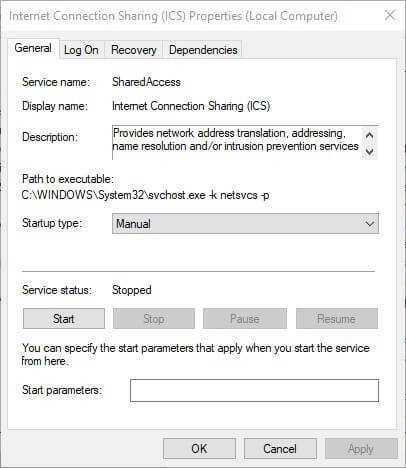
- Click the Stop button to terminate it.
- Select Disabled from the Startup type drop-down menu.
- Click the Apply button to apply the new settings.
- Select the OK option to close the window.
- Then right-click the Cisco System, Inc. VPN Service and select Start.
- Now try connecting with the Cisco VPN client.
Note: It is important to mention that the Cisco VPN Client is no longer supported by CISCO Systems since 2014 and that no updates were released for this product since 2012.
Running obsolete software can cause more damage than you might think, which is why we recommend a modern VPN client like Private Internet Access.

Switching to a world-leading VPN client like Kape Technologies owned PIA can significantly improve your online experience by streamlining your connection, reducing loading times, and enhancing your download speeds.
⇒ Install Private Internet Access
With an impressive network of global gateways, you will never have to worry about your connection to worldwide servers not being successful. Plus, your traffic data will be routed through secure VPN tunnels and protected by the best-in-class encryption technology.
Security-oriented features are complimented by PIA’s absolute privacy guarantee: between IP cloaking, anonymous browsing, and a strict no-log policy, your identity, location, and data including your online activity will never risk falling into the wrong hands.

Private Internet Access
Still using the Cisco VPN client? It’s time to explore the modern face of online privacy with PIA!
2. Edit the Registry
This resolution is more specifically for Windows 10, 8.1, and 8. Lots of Cisco VPN users have stated that editing the DisplayName string value for CVirtA with the Registry Editor fixed the Virtual Adapter error for them. Cisco VPN users should edit the registry as follows.
- First, open the Registry Editor by entering regedit in Run and clicking OK.
- Copy this registry path with the Ctrl + C hotkey:
HKEY_LOCAL_MACHINESYSTEMCurrentControlSetServicesCVirtA.Then paste the path into the Registry Editor’s address bar with the Ctrl + V hotkey, and press the Return key.
- Right-click DisplayName and select Modify to open its Edit String window.
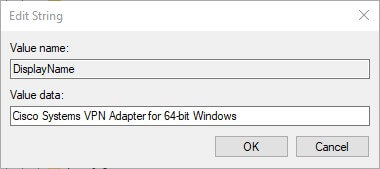
- Next, erase
@oem8.inf,%CVirtA_Desc%from the Value data box. Then the Value data box should include either Cisco Systems VPN Adapter for 64-bit Windows or Cisco Systems VPN Adapter depending on whether Windows is a 32 or 64-bit platform. - Press the OK button to close the Edit String window.
- Close the Registry Editor.
3. Turn Off Internet Connection Sharing
- Some users have also confirmed that turning internet sharing off for the network adapter that provides internet for Cisco VPN fixes the issue. To do that, enter ncpa.cpl in Run and click OK.
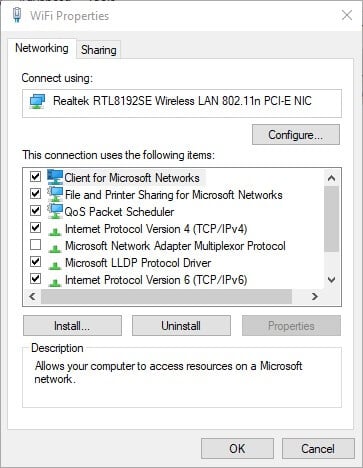
- Right-click the internet network adapter and select Properties to open the window below.
- Click the Sharing tab shown directly below.
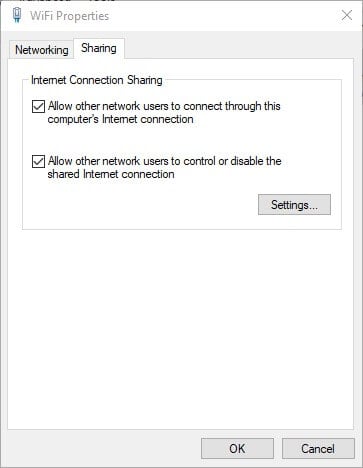
- Deselect the Allow other network users to connect through this computer’s Internet connection option on the Sharing tab.
- Press the OK button to close the properties window.
Those are three confirmed resolutions that fix the Failed to enable Virtual Adapter error in Windows 10, 8.1, 8, and 7.
Note that Windows 10 doesn’t officially support Cisco VPN, so it’s fairly essential to edit the registry as outlined above to get the client up and running on that platform. Ready to tackle this issue? Let us know how it worked in the comments section.
Your connection is not secure — websites you visit can find out your details:

- Your IP Address:
loading
Companies can sell this information, alongside your location and internet provider name, and profit from it by serving targeted ads or monitoring your data usage.
We recommend Private Internet Access, a VPN with a no-log policy, open source code, ad blocking and much more; now 79% off.

Newsletter
This article shows how to fix the Cisco VPN Reason 442: Failed to enable Virtual Adapter error on the Windows 7 (32bit or 64bit) operating system. If you are a Windows 7 user, it’s most likely you’ve stumbled into the Cisco VPN Client error message «Reason 442: Failed to enable Virtual Adapter». We provide a way to quickly fix this error and get your VPN client working. We also cover Windows 8 and Windows 10 operating systems.
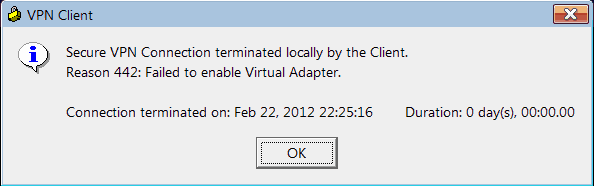 Unfortunately the good old ‘remove and reinstall’ method won’t get you far in this case as the problem is not within the Cisco VPN client program, but Microsoft’s Internet Connection Sharing (ICS) service.
Windows 8 32bit & 64bit users dealing with the same problem can refer to our Cisco VPN Client & Windows 8 (32bit & 64Bit) — Reason 442: Failed To Enable Virtual Adaptor — How To Fix It article.
Windows 10 32bit & 64bit can read our article Install & Fix Cisco VPN Client on Windows 10 (32 & 64 Bit). Fix Reason 442: Failed to enable Virtual Adapter.
Windows 10 32bit & 64bit Anniversary Update 1607 users can read our Fix Cisco VPN Client Break After Windows 10 Anniversary Update 1607.
Following the steps outlined below will help resolve this error and save you a lot of time and frustration:
1. Hit the start button and type «services.msc‘ as shown:

2. Locate and stop Cisco Systems, Inc. VPN Service;
3. Stop and disable Internet Connection Sharing (ICS) Service;
4. Restart Cisco System, Inc. VPN Service.
Launch the Cisco VPN Client again, and the problem is now gone!
Keep in mind that we are running Cisco Systems VPN Client version 5.0.07.0440 on Windows 7 Ultimate 64-bit edition, but we faced the same problem with other versions as well.
Note: It’s always a great idea to have the latest Cisco VPN client installed. Users can download the Cisco VPN client for Windows, Linux and MacOS operating systems by visiting our Cisco Tools & Applications download section.
Back to Cisco Services & Technologies Section
- Remove From My Forums
-
Вопрос
-
Windows 8, I am trying to connect on VPN and I only receive this error : 442 — Failed to enable Virtual Adapter.
Ответы
-
Hi,
If you are using Cisco VPN client, please contact Cisco Technical Support. Below is a similar thread asked in Cisco forum, hope it helps.
Reason 442: Failed to Enable Virtual Adapter — Windows 7 64 bit
https://supportforums.cisco.com/thread/2102064Best Regards,
Aiden
Aiden Cao
TechNet Community Support
-
Помечено в качестве ответа
7 января 2013 г. 2:46
-
Помечено в качестве ответа
Перейти к содержимому
…Однажды на машине с Windows 7, x64 вдруг прекратил работать Cisco VPN Client, выдав вот такую прелесть:
Secure VPN Connection terminated locally by the Client. Reason 442: Failed to enable Virtual Adapter.
…и упрямо не желал работать даже после переустановки. Вернее, поработает-поработает, и опять двадцать пять, сорок пять, а вернее, 442  . Смотрю на виртуальный адаптер – с ним всё нормально. Он не исчезает, его можно нормально переключить в Enable вручную (хотя при этом VPN Client всё равно не приходит в чувство).
Долго ли, коротко ли искал добрый молодец разные причины тайные беды сей, но нашёл одну важную, да такую, что скрыта была за семью печатями в тайном замке Windows.
Решение проблемы: запретить службу ICS (Internet Connection Sharing, Общий доступ к подключению к Интернету).
Точный механизм конфликта между ICS и Cisco VPN Client Virtual Adapter мне пока неясны, надо бы погуглить и самому поисследовать. Сделаю – напишу.
