Basically, I have the following table structure for subject and Levels, Although few levels can have the parent of id 1 and few categories can have the other parent id. please see the following example
In this case Pre School, Primary, Intermediate are the levels of the Academmics Category
Subject Categories & Levels
--------------------------------------------------
| Id | Name        | Parent_id       |
--------------------------------------------------
| 1 | Academic     | NULL            |
--------------------------------------------------
| 2 | Arts         | NULL            |
--------------------------------------------------
| 3 | Languages    | NULL            |
--------------------------------------------------
| 4 | Pre School   | 1               |
--------------------------------------------------
| 5 | Primary      | 1               |
--------------------------------------------------
| 6 | Intermediate | 1               |
--------------------------------------------------
Other than that, I have a subjects table, which is relevant to the academics category, please see the following example
Subjects
--------------------------------------------------
| Id | Name       | slug       |
--------------------------------------------------
| 1 | Drawing     | drawing    |
--------------------------------------------------
| 2 | English     | english    |
--------------------------------------------------
| 3 | Maths       | maths      |
--------------------------------------------------
Subject category relations
--------------------------------------------------
| Id | subject_id   | subject_category_id
--------------------------------------------------
| 1 | 1             | 4
--------------------------------------------------
| 2 | 2             | 5
--------------------------------------------------
| 3 | 3             | 6
--------------------------------------------------
I am getting the following error when I am trying to get list of all the subjects with selected, 
Note:
Its listing fine on load, but Its giving me the error on form submission and loading with selected subjects, Although record is saving in the database correctly.
exception: "ErrorException"
file: "/[project-directory]/vendor/laravel/framework/src/Illuminate/Support/Collection.php"
line: 1802
message: "Undefined offset: 0"
Please help me to fix this
Route:
Route::resource('/tutor/subjects', 'TutorSubjectAPIController')->except([
        'create', 'edit', 'show', 'update'
    ]);
Controller (API)
public function index(Request $request)
    {
        $user = $request->user();
        $tutorSubjects = $user->tutor->subjects;
        if(!$tutorSubjects->isEmpty()){
            $tutorSubjectsData['data'] = self::subjectsMapper($tutorSubjects);
            $findTutorParentCategory = DB::table('subject_tutor')->where([
                'tutor_id' => $user->tutor->id,
                'subject_id' => 0
            ])->get();
            $parentCategory =  $findTutorParentCategory['0']->subject_category_id;
            $tutorSubjectsData['parent_category_id'] = $parentCategory;

            return $this->sendResponse($tutorSubjectsData);
        }else{
            return $this->sendResponse('', 'No subjects found.',206);
        }
    }
Subject Mapper
public static function subjectsMapper($subjects){
        foreach ($subjects as $subject) {
            $data[] = [
                'subjectId' => $subject->pivot->subject_id,
                'categoryId' => $subject->pivot->subject_category_id,
            ];
        }
        return $data;
    }
Пользователи интернета и владельцы сайтов периодически сталкиваются с различными ошибками на веб-страницах. Одной из самых распространенных ошибок является error 500 (ошибка 500). Поговорим в нашей статье о том, что это за ошибка и как ее исправить.
Где и когда можно встретить ошибку 500
Вы можете увидеть ошибку на любом веб-ресурсе, браузере и устройстве. Она не связана с отсутствием интернет-соединения, устаревшей версией операционной системы или браузера. Кроме того, эта ошибка не указывает на то, что сайта не существует или он больше не работает.
Ошибка 500 говорит о том, что сервер не может обработать запрос к сайту, на странице которого вы находитесь. При этом браузер не может точно сообщить, что именно пошло не так.
Отображаться ошибка может по-разному. Вот пример:
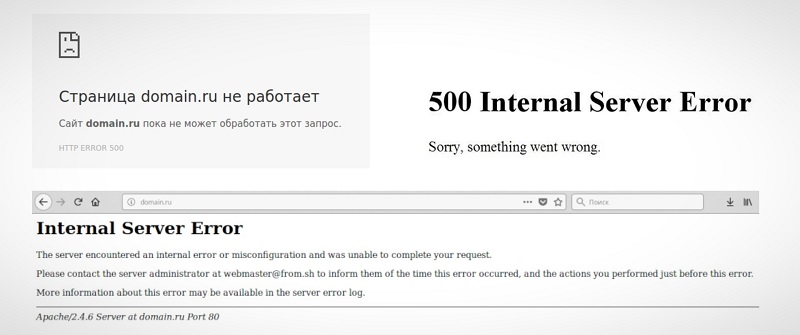
Если вы решили купить что-то в любимом интернет-магазине, но увидели на сайте ошибку 500, не стоит сильно огорчаться – она лишь сообщает о том, что вам нужно подождать, пока она будет исправлена.
Если ошибка появилась на вашем сайте, то нужно скорее ее исправлять. Далее я расскажу, как это можно сделать.
Комьюнити теперь в Телеграм
Подпишитесь и будьте в курсе последних IT-новостей
Подписаться
Причины возникновения ошибки
Итак, ошибка 500 возникает, когда серверу не удается обработать запрос к сайту. Из-за этого пользователи не могут попасть на сайт, а поисковые системы полноценно с ним работать. Очевидно, что ошибка нуждается в исправлении. В первую очередь необходимо найти проблему.
Основной причиной ошибки 500 может быть:
- Неверный синтаксис файла .htaccess. htaccess – это файл, в котором можно задавать настройки для работы с веб-сервером Apache и вносить изменения в работу сайта (управлять различными перенаправлениями, правами доступа к файлам, опциями PHP, задавать собственные страницы ошибок и т.д.).
Узнать больше о файле .htaccess можно в статье «Создание и настройка .htaccess». - Ошибки в скриптах сайта, то есть сценариях, созданных для автоматического выполнения задач или для расширения функционала сайта.
- Нехватка оперативной памяти при выполнении скрипта.
- Ошибки в коде CMS, системы управления содержимым сайта. В 80% случаев виноваты конфликтующие плагины.
Год хостинга в подарок при заказе лицензии 1С-Битрикс
Выбирайте надежную CMS с регулярными обновлениями системы и профессиональной поддержкой.
Заказать
Как получить больше данных о причине ошибки
Что означает ошибка 500, мы теперь знаем. Когда она перестала быть таким загадочным персонажем, не страшно копнуть глубже — научиться определять причину ошибки. В некоторых случаях это можно сделать самостоятельно, так что обращаться за помощью к профильному специалисту не понадобится.
Отображение ошибки бывает разным. Ее внешний облик зависит от того, чем она вызвана.
Самые частые причины ошибки 500 можно распознать по тексту ошибки или внешнему виду страницы.
- Сообщение Internal Server Error говорит о том, что есть проблемы с файлом .htaccess (например, виновата некорректная настройка файла). Убедиться, что .htaccess является корнем проблемы, поможет следующий прием: переименуйте файл .htaccess, добавив единицу в конце названия. Это можно сделать с помощью FTP-клиента (например, FileZilla) или файлового менеджера на вашем хостинге (в Timeweb такой есть, с ним довольно удобно работать). После изменения проверьте доступность сайта. Если ошибка больше не наблюдается, вы нашли причину.
- Сообщение HTTP ERROR 500 или пустая страница говорит о проблемах со скриптами сайта. В случае с пустой страницей стоит учесть, что отсутствие содержимого сайта не всегда указывает на внутреннюю ошибку сервера 500.
Давайте узнаем, что скрывается за пустой страницей, обратившись к инструментам разработчика. Эта браузерная панель позволяет получить информацию об ошибках и другие данные (время загрузки страницы, html-элементы и т.д.).
Как открыть панель разработчика
- Нажмите клавишу F12 (способ актуален для большинства браузеров на Windows). Используйте сочетание клавиш Cmd+Opt+J, если используете Google Chrome на macOS. Или примените комбинацию Cmd+Opt+C в случае Safari на macOS (но перед этим включите «Меню разработки» в разделе «Настройки» -> «Продвинутые»). Открыть инструменты разработчика также можно, если кликнуть правой кнопкой мыши в любом месте веб-страницы и выбрать «Просмотреть код» в контекстном меню.
- Откройте вкладку «Сеть» (или «Network») и взгляните на число в поле «Статус». Код ответа об ошибке 500 — это соответствующая цифра.
 Более детальную диагностику можно провести с помощью логов.
Простыми словами: лог — это журнал, в который записывается информация об ошибках, запросах к серверу, подключениях к серверу, действиях с файлами и т.д.
Как вы видите, данных в логи записывается немало, поэтому они разделены по типам. За сведениями о нашей ошибке можно обратиться к логам ошибок (error_log). Обычно такие логи предоставляет служба поддержки хостинга, на котором размещен сайт. В Timeweb вы можете включить ведение логов и заказать необходимые данные в панели управления. Разобраться в полученных логах поможет статья «Чтение логов».
Как устранить ошибку
Теперь поговорим о том, как исправить ошибку 500. Вернемся к популярным причинам этой проблемы и рассмотрим наиболее эффективные способы решения.
Ошибки в файле .htaccess
У этого файла довольно строгий синтаксис, поэтому неверно написанные директивы (команды) могут привести к ошибке. Попробуйте поочередно удалить команды, добавленные последними, и проверьте работу сайта.
Также найти проблемную директиву можно с помощью логов ошибок (через те же инструменты разработчика в браузере). На ошибку в директиве обычно указывает фраза «Invalid command». Информацию о верном написании директивы или способе исправления ошибок в .htaccess вы можете найти в интернете. Не нужно искать, почему сервер выдает ошибку 500, просто введите в строку поиска название нужной команды или текст ошибки из логов.
Ошибки в скриптах сайта
Скрипт не запускается
Обычно это происходит, когда существует ошибка в скрипте или функция, которая не выполняется. Для успешного запуска скрипта функция должна быть верно прописана, поддерживаться сервером и выполняться от используемой версии PHP. Бывают ситуации, когда функция несовместима с определенными версиями PHP. Получить более подробную информацию о той или иной функции можно в интернете.
Не хватает оперативной памяти
Если в логах вы видите ошибку «Allowed memory size», для устранения ошибки 500 стоит оптимизировать работу скрипта. Вы можете воспользоваться специальными расширениями для анализа производительности скрипта или обратиться за помощью к специалисту, который поработает над его оптимизацией.
Если ваш сайт размещен на отдельном физическом или виртуальном сервере, можно попробовать увеличить максимальное использование оперативной памяти на процесс (memory_limit). На шаред хостинге этот параметр обычно не изменяется, но есть возможность купить хостинг помощнее.
Ошибки в CMS
Если код CMS содержит неверный синтаксис, это может вывести сайт из строя. В таком случае логи сообщат вам об ошибке 500 текстом «PHP Parse error: syntax error, unexpected». Так происходит, когда некорректно работает плагин (или тема, используемая в CMS, но реже) либо есть ошибки в коде. Ошибка может быть допущена случайно, произойти при обновлении плагина или версии CMS.
При чтении логов обратите внимание на путь, который следует за сообщением об ошибке, ведь он может указать на проблемную часть кода или плагин. Если проблема в плагине, для восстановления работы сайта переименуйте на время папку, в которой он расположен. Попробуйте обновить плагин или откатить его до прежней версии. Если ситуацию не удается исправить, от расширения стоит отказаться либо заменить его аналогом.
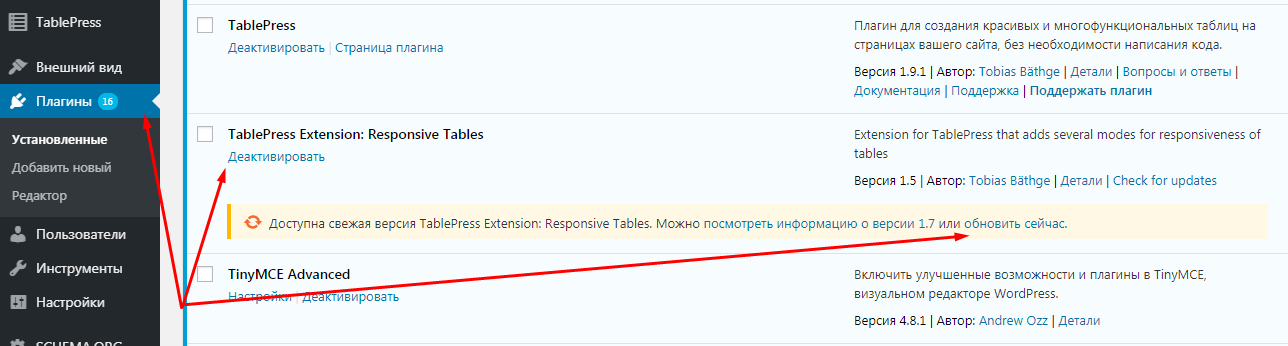 Также в большинстве случаев подобные проблемы помогает решить поддержка CMS.
Информацию о других распространенных ошибках вы можете найти в статье «6 наиболее часто возникающих ошибок HTTP и способы их устранения».
Удачи!
<div class="card">
        <div class="card-image">
              <img class="server-card-image" src="<?= $game_server_images[$g]; ?>">
              <a href="steam://connect/<?= $server.':'.$game_server_port[$g] ?>" class="btn-floating halfway-fab waves-effect waves-light green tooltipped"
             data-position="top" data-delay="50" data-tooltip="Join Server"><i class="fa fa-plug"></i></a>
         </div>
             <?php
                   if($bb != "76561198125135186"):
                    echo "pld 76561198125135179"; echo " 76561198125135186";
                    endif;
               ?>
                  <div class="card-content custom-card">
                   <span class="card-title truncate"><?= htmlspecialchars($game_servers[$g]['info']['HostName']) ?></span>
                   <h4 class="center-align truncate"><?= $lang['players'] ?>: <?= $game_servers[$g]['info']['Players'] ?>/<?= $game_servers[$g]['info']['MaxPlayers'] ?>  // Тут ошибка
                     - <?= $lang['mode'] ?>: <?= htmlspecialchars($game_servers[$g]['info']['ModDesc']) ?></h4>
</div>-
Вопрос заданболее трёх лет назад
-
2070 просмотров
Пригласить эксперта
Не нашлось в массиве элемента с таким ключом.
Посмотрите что у вас в массиве.
-
Показать ещё
Загружается…
30 янв. 2023, в 02:44
2000 руб./за проект
30 янв. 2023, в 00:44
500 руб./за проект
29 янв. 2023, в 22:56
10000 руб./за проект
Минуточку внимания
The dreaded 500 internal server error. It always seems to come at the most inopportune time and you’re suddenly left scrambling to figure out how to get your WordPress site back online. Trust us, we’ve all been there. Other errors that behave similarly that you might have also seen include the frightening error establishing a database connection and the dreaded white screen of death. But from the moment your site goes down, you’re losing visitors and customers. Not to mention it simply looks bad for your brand.
Today we’re going to dive into the 500 internal server error and walk you through some ways to get your site back online quickly. Read more below about what causes this error and what you can do to prevent it in the future.
- What is a 500 internal server error?
- How to fix the 500 internal server error
500 Internal Server Error (Most Common Causes):
500 Internal server error in WordPress can be caused by many things. If you’re experiencing one, there’s a high chance one (or more) of the following elements is causing the issue:
- Browser Cache.
- Incorrect database login credentials.
- Corrupted database.
- Corrupted files in your WordPress installation.
- Issues with your database server.
- Corrupted WordPress core files.
- Corrupted .htaccess file and PHP memory limit.
- Issues with third-party plugins and themes.
- PHP timing out or fatal PHP errors with third-party plugins.
- Wrong file and folder permissions.
- Exhausted PHP memory limit on your server
- Corrupted or broken .htaccess file.
- Errors in CGI and Perl script.
Check Out Our Ultimate Guide to Fixing the 500 Internal Server Error
What is a 500 Internal Server Error?
The Internet Engineering Task Force (IETF) defines the 500 Internal Server Error as:
The 500 (Internal Server Error) status code indicates that the server encountered an unexpected condition that prevented it from fulfilling the request.
When you visit a website your browser sends a request over to the server where the site is hosted. The server takes this request, processes it, and sends back the requested resources (PHP, HTML, CSS, etc.) along with an HTTP header. The HTTP also includes what they call an HTTP status code. A status code is a way to notify you about the status of the request. It could be a 200 status code which means “Everything is OK” or a 500 status code which means something has gone wrong.
There are a lot of different types of 500 status error codes (500, 501, 502, 503, 504, etc.) and they all mean something different. In this case, a 500 internal server error indicates that the server encountered an unexpected condition that prevented it from fulfilling the request (RFC 7231, section 6.6.1).
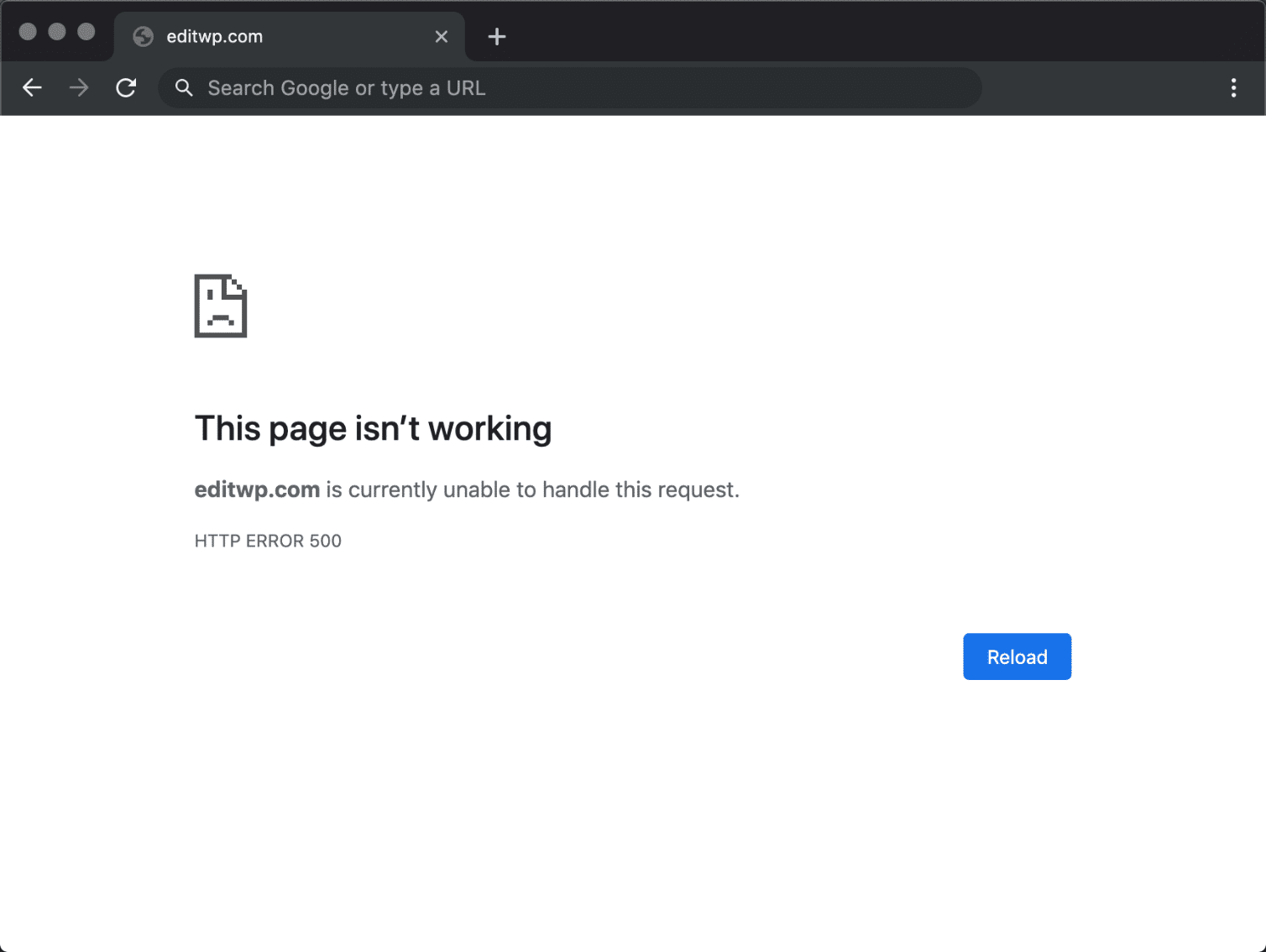
500 Internal Server Error Variations
Due to the various web servers, operating systems, and browsers, a 500 internal server error can present itself in a number of different ways. But they are all communicating the same thing. Below are just a couple of the many different variations you might see on the web:
-
- “500 Internal Server Error”
- “HTTP 500”
- “Internal Server Error”
- “HTTP 500 – Internal Server Error”
- “500 Error”
- “HTTP Error 500”
- “500 – Internal Server Error”
- “500 Internal Server Error. Sorry something went wrong.”
- “500. That’s an error. There was an error. Please try again later. That’s all we know.”
- “The website cannot display the page – HTTP 500.”
- “Is currently unable to handle this request. HTTP ERROR 500.”
You might also see this message accompanying it:
The server encountered an internal error or misconfiguration and was unable to complete your request. Please contact the server administrator, [email protected] and inform them of the time the error occurred, and anything you might have done that may have caused the error. More information about this error may be available in the server error log.
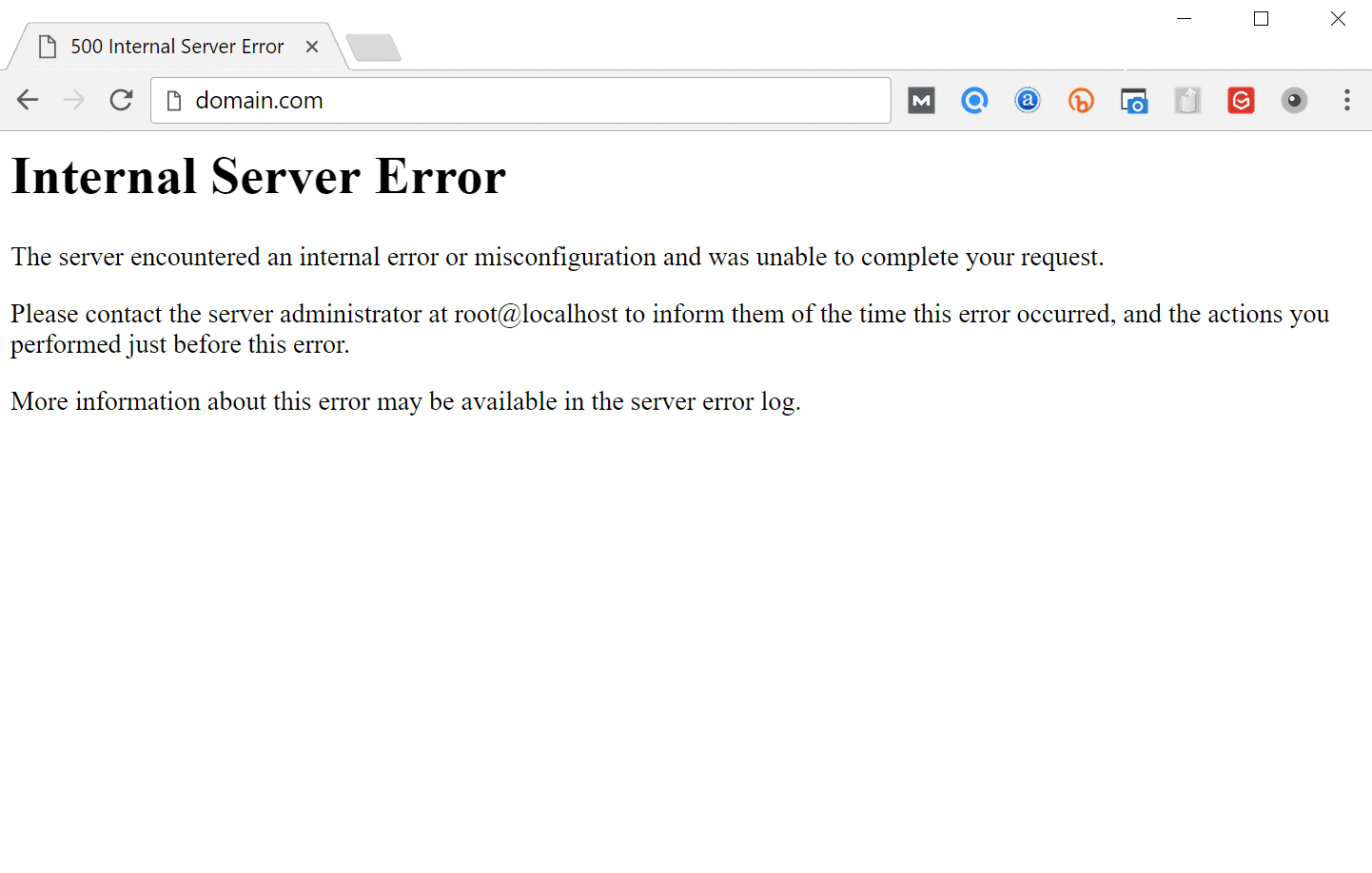
Other times, you might simply see a blank white screen. When dealing with 500 internal server errors, this is actually quite common in browsers like Firefox and Safari.

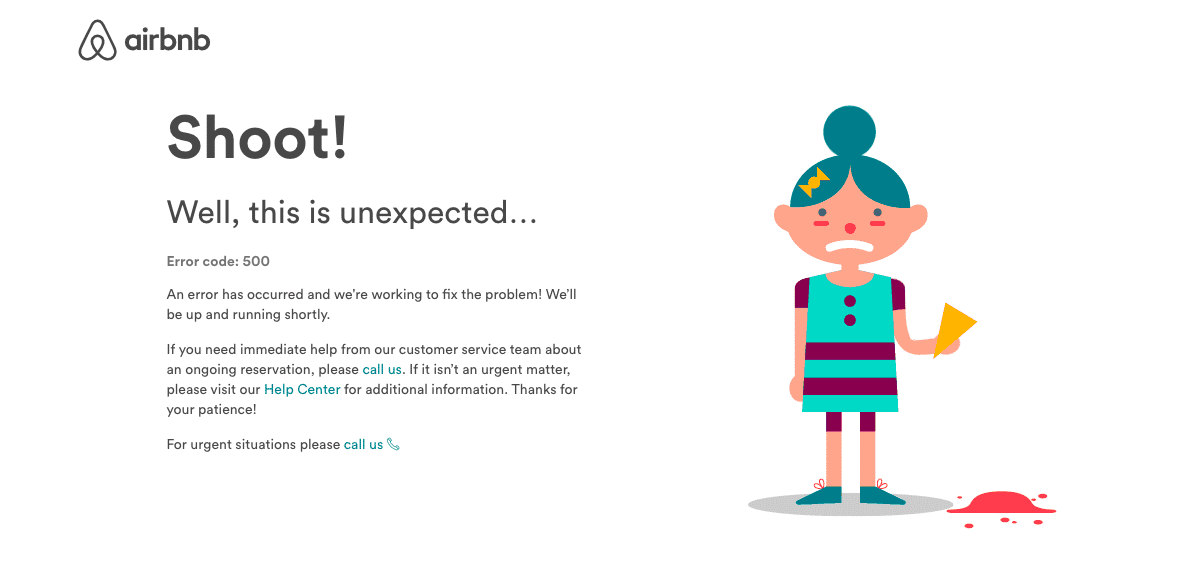
Bigger brands might even have their own custom 500 internal server error messages, such as this one from Airbnb.
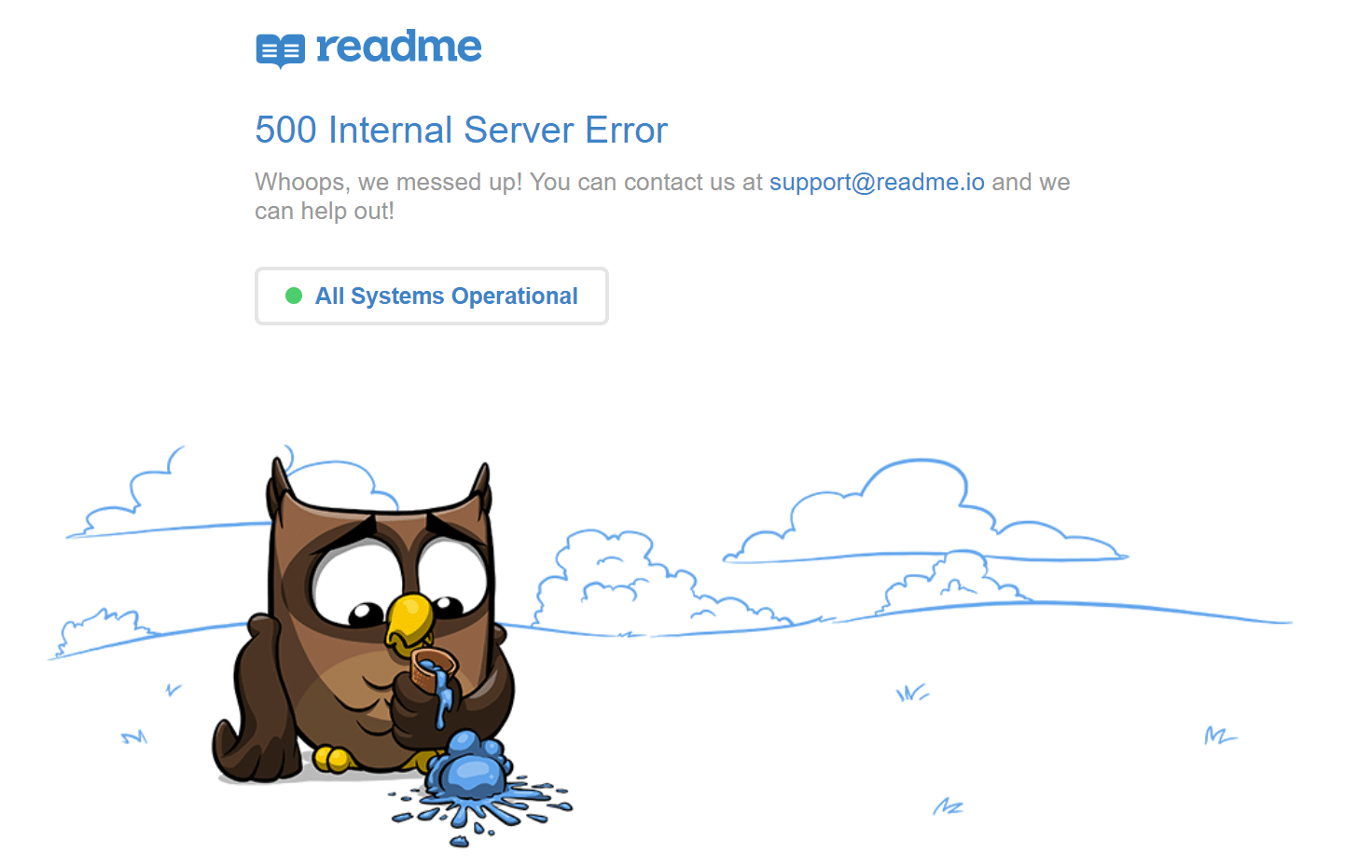
Here is another creative 500 server error example from the folks over at readme.
Even the mighty YouTube isn’t safe from 500 internal server errors.

If it’s an IIS 7.0 (Windows) or higher server, they have additional HTTP status codes to more closely indicate the cause of the 500 error:
- 500.0 – Module or ISAPI error occurred.
- 500.11 – Application is shutting down on the web server.
- 500.12 – Application is busy restarting on the web server.
- 500.13 – Web server is too busy.
- 500.15 – Direct requests for global.asax are not allowed.
- 500.19 – Configuration data is invalid.
- 500.21 – Module not recognized.
- 500.22 – An ASP.NET httpModules configuration does not apply in Managed Pipeline mode.
- 500.23 – An ASP.NET httpHandlers configuration does not apply in Managed Pipeline mode.
- 500.24 – An ASP.NET impersonation configuration does not apply in Managed Pipeline mode.
- 500.50 – A rewrite error occurred during RQ_BEGIN_REQUEST notification handling. A configuration or inbound rule execution error occurred.
- 500.51 – A rewrite error occurred during GL_PRE_BEGIN_REQUEST notification handling. A global configuration or global rule execution error occurred.
- 500.52 – A rewrite error occurred during RQ_SEND_RESPONSE notification handling. An outbound rule execution occurred.
- 500.53 – A rewrite error occurred during RQ_RELEASE_REQUEST_STATE notification handling. An outbound rule execution error occurred. The rule is configured to be executed before the output user cache gets updated.
500.100 – Internal ASP error.
500 Errors Impact on SEO
Unlike 503 errors, which are used for WordPress maintenance mode and tell Google to check back at a later time, a 500 error can have a negative impact on SEO if not fixed right away. If your site is only down for say 10 minutes and it’s being crawled consistently a lot of times the crawler will simply get the page delivered from cache. Or Google might not even have a chance to re-crawl it before it’s back up. In this scenario, you’re completely fine.
However, if the site is down for an extended period of time, say 6+ hours, then Google might see the 500 error as a site level issue that needs to be addressed. This could impact your rankings. If you’re worried about repeat 500 errors you should figure out why they are happening to begin with. Some of the solutions below can help.
How to Fix the 500 Internal Server Error
Where should you start troubleshooting when you see a 500 internal server error on your WordPress site? Sometimes you might not even know where to begin. Typically 500 errors are on the server itself, but from our experience, these errors originate from two things, the first is user error (client-side issue), and the second is that there is a problem with the server. So we’ll dive into a little of both.
This is never not annoying 😖 pic.twitter.com/pPKxbkvI9K
— Dare Obasanjo 🐀 (@Carnage4Life) September 26, 2019
Check out these common causes and ways to fix the 500 internal server error and get back up and running in no time.
1. Try Reloading the Page
This might seem a little obvious to some, but one of the easiest and first things you should try when encountering a 500 internal server error is to simply wait a minute or so and reload the page (F5 or Ctrl + F5). It could be that the host or server is simply overloaded and the site will come right back. While you’re waiting, you could also quickly try a different browser to rule that out as an issue.
Another thing you can do is to paste the website into downforeveryoneorjustme.com. This website will tell you if the site is down or if it’s a problem on your side. A tool like this checks the HTTP status code that is returned from the server. If it’s anything other than a 200 “Everything is OK” then it will return a down indication.

We’ve also noticed that sometimes this can occur immediately after you update a plugin or theme on your WordPress site. Typically this is on hosts that aren’t set up properly. What happens is they experience a temporary timeout right afterward. However, things usually resolve themselves in a couple of seconds and therefore refreshing is all you need to do.
2. Clear Your Browser Cache
Clearing your browser cache is always another good troubleshooting step before diving into deeper debugging on your site. Below are instructions on how to clear cache in the various browsers:
- How to Force Refresh a Single Page for All Browsers
- How to Clear Browser Cache for Google Chrome
- How to Clear Browser Cache for Mozilla Firefox
- How to Clear Browser Cache for Safari
- How to Clear Browser Cache for Internet Explorer
- How to Clear Browser Cache for Microsoft Edge
- How to Clear Browser Cache for Opera
3. Check Your Server Logs
You should also take advantage of your error logs. If you’re a Kinsta client, you can easily see errors in the log viewer in the MyKinsta dashboard. This can help you quickly narrow down the issue, especially if it’s resulting from a plugin on your site.

If your host doesn’t have a logging tool, you can also enable WordPress debugging mode by adding the following code to your wp-config.php file to enable logging:
define( 'WP_DEBUG', true );
define( 'WP_DEBUG_LOG', true );
define( 'WP_DEBUG_DISPLAY', false );
The logs are typically located in the /wp-content directory. Others, like here at Kinsta might have a dedicated folder called “logs”.
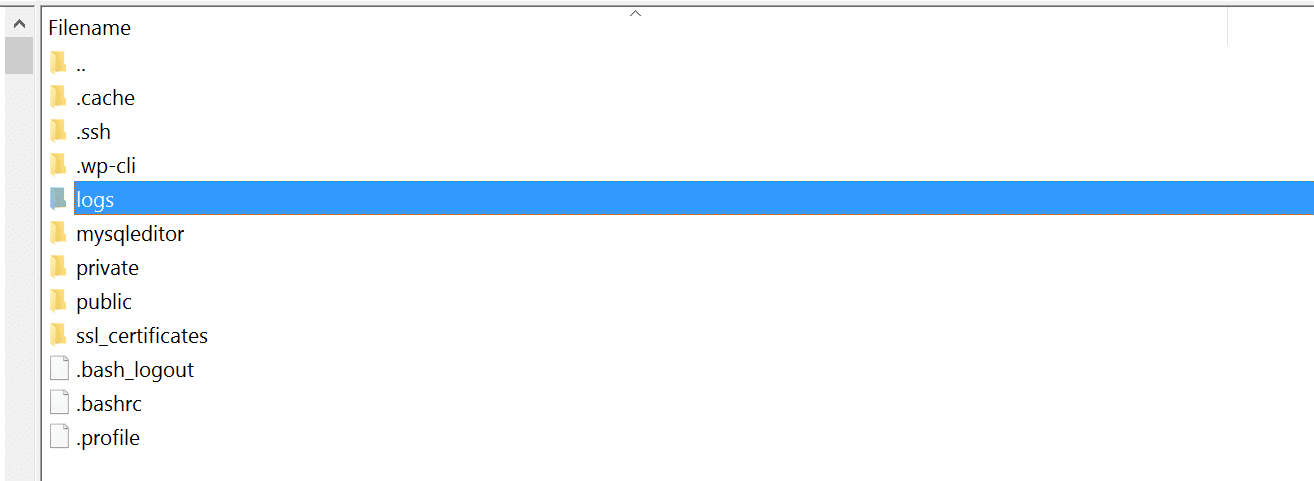
You can also check the log files in Apache and Nginx, which are commonly located here:
- Apache: /var/log/apache2/error.log
- Nginx: /var/log/nginx/error.log
If you’re a Kinsta client you can also take advantage of our analytics tool to get a breakdown of the total number of 500 errors and see how often and when they are occurring. This can help you troubleshoot if this is an ongoing issue, or perhaps something that has resolved itself.

If the 500 error is displaying because of a fatal PHP error, you can also try enabling PHP error reporting. Simply add the following code to the file throwing the error. Typically you can narrow down the file in the console tab of Google Chrome DevTools.
ini_set('display_errors', 1);
ini_set('display_startup_errors', 1);
error_reporting(E_ALL);
And you might need to also modify your php.ini file with the following:
display_errors = on4. Error Establishing a Database Connection
500 internal server errors can also occur from a database connection error. Depending upon your browser you might see different errors. But both will generate a 500 HTTP status code regardless in your server logs.
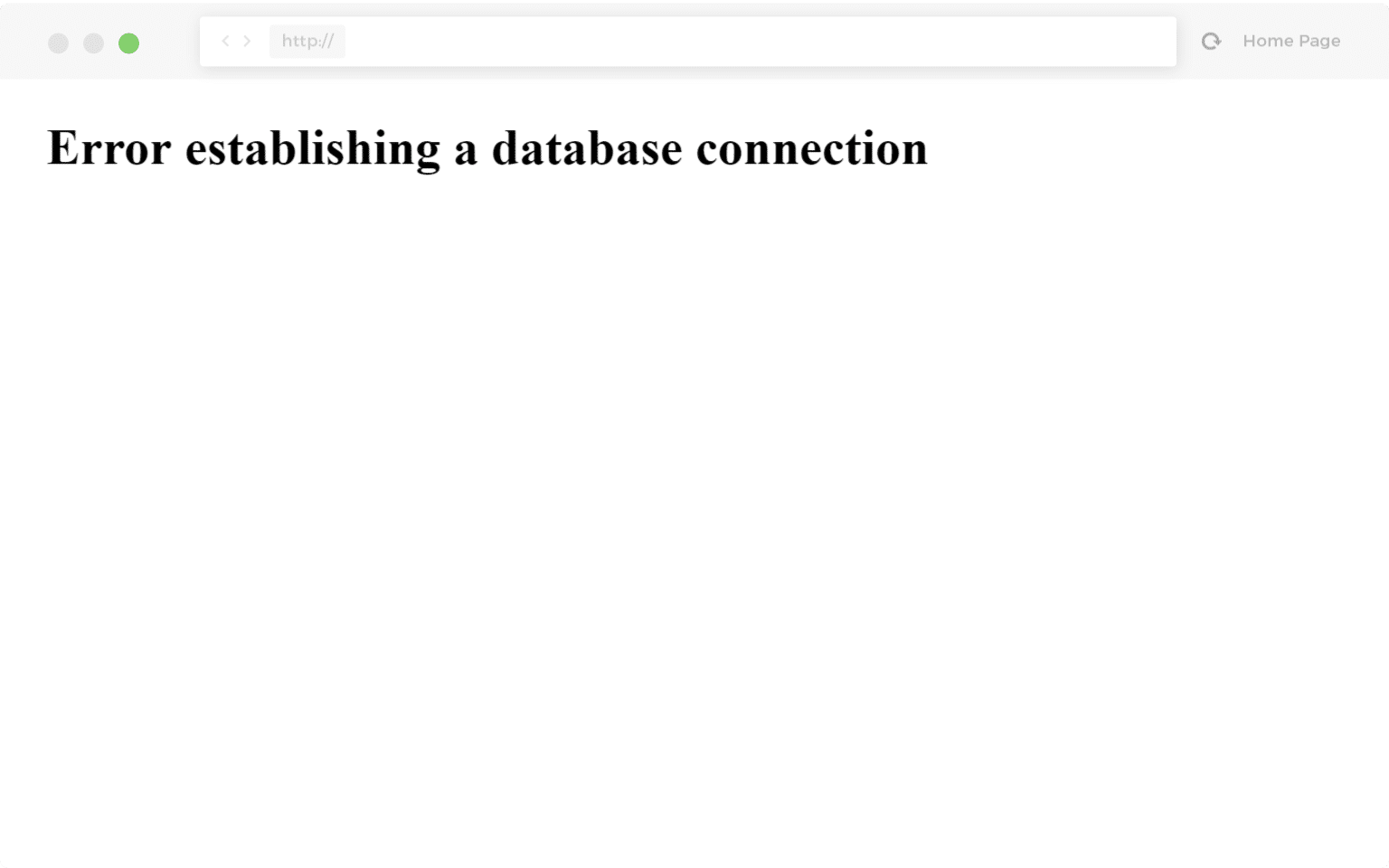
Below is an example of what an “error establishing a database connection” message looks like your browser. The entire page is blank because no data can be retrieved to render the page, as the connection is not working properly. Not only does this break the front-end of your site, but it will also prevent you from accessing your WordPress dashboard.
So why exactly does this happen? Well, here are a few common reasons below.
- The most common issue is that your database login credentials are incorrect. Your WordPress site uses separate login information to connect to its MySQL database.
- Your WordPress database is corrupted. With so many moving parts with themes, plugins, and users constantly deleting and installing them, sometimes databases get corrupted. This can be due to a missing or individually corrupted table, or perhaps some information was deleted by accident.
- You may have corrupt files in your WordPress installation. This can even happen sometimes due to hackers.
- Issues with your database server. A number of things could be wrong on the web hosts end, such as the database being overloaded from a traffic spike or unresponsive from too many concurrent connections. This is actually quite common with shared hosts as they are utilizing the same resources for a lot of users on the same servers.
Check out our in-depth post on how to fix the error establishing a database connection in WordPress.
5. Check Your Plugins and Themes
Third-party plugins and themes can easily cause 500 internal server errors. We’ve seen all types cause them here at Kinsta, from slider plugins to ad rotator plugins. A lot of times you should see the error immediately after installing something new or running an update. This is one reason why we always recommend utilizing a staging environment for updates or at least running updates one by one. Otherwise, if you encounter a 500 internal server error you’re suddenly scrambling to figure out which one caused it.
A few ways you can troubleshoot this is by deactivating all your plugins. Remember, you won’t lose any data if you simply deactivate a plugin. If you can still access your admin, a quick way to do this is to browse to “Plugins” and select “Deactivate” from the bulk actions menu. This will disable all of your plugins.
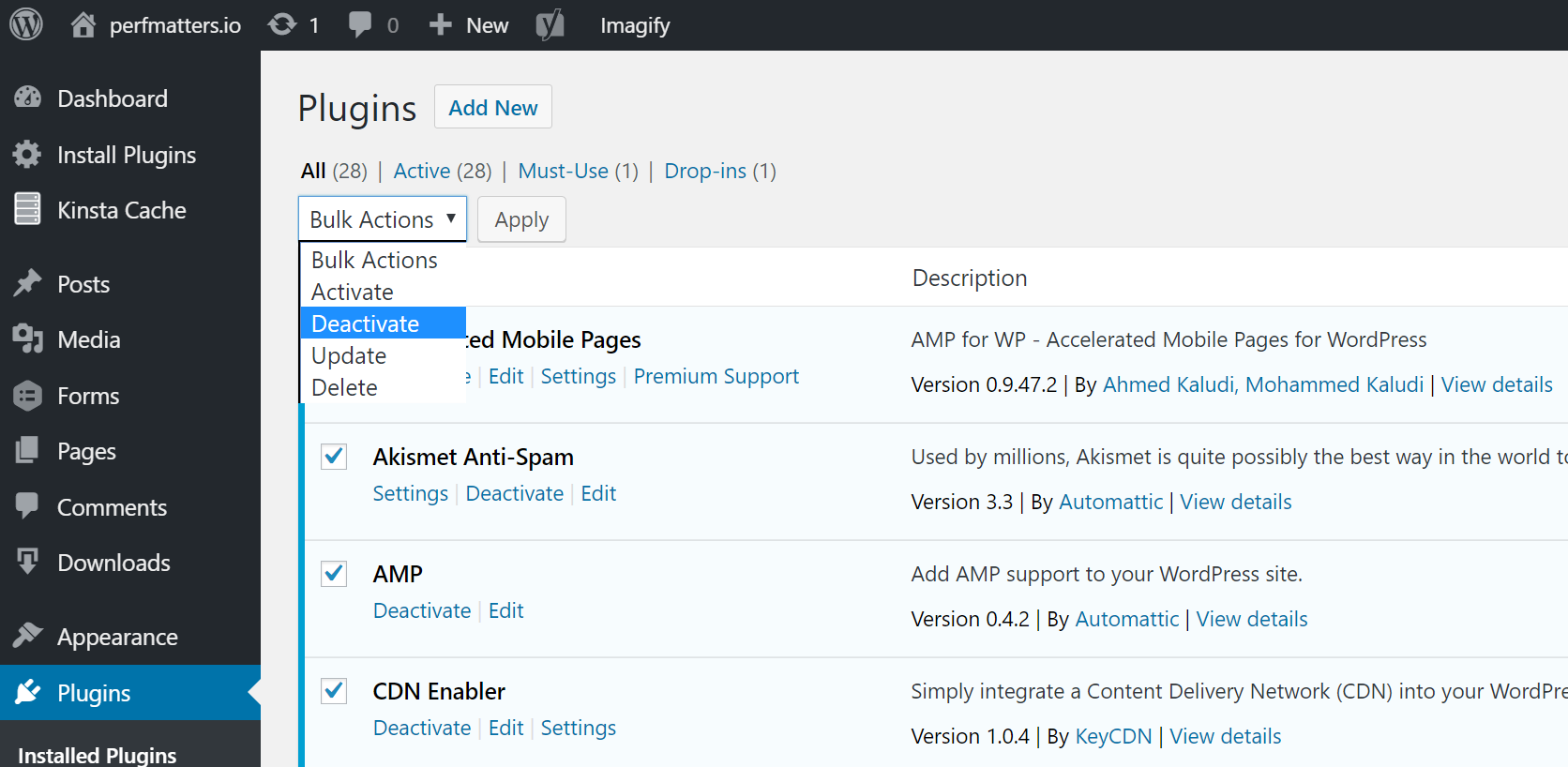
If this fixes the issue you’ll need to find the culprit. Start activating them one by one, reloading the site after each activation. When you see the 500 internal server error return, you’ve found the misbehaving plugin. You can then reach out to the plugin developer for help or post a support ticket in the WordPress repository.
If you can’t login to WordPress admin you can FTP into your server and rename your plugins folder to something like plugins_old. Then check your site again. If it works, then you will need to test each plugin one by one. Rename your plugin folder back to “plugins” and then rename each plugin folder inside of if it, one by one, until you find it. You could also try to replicate this on a staging site first.
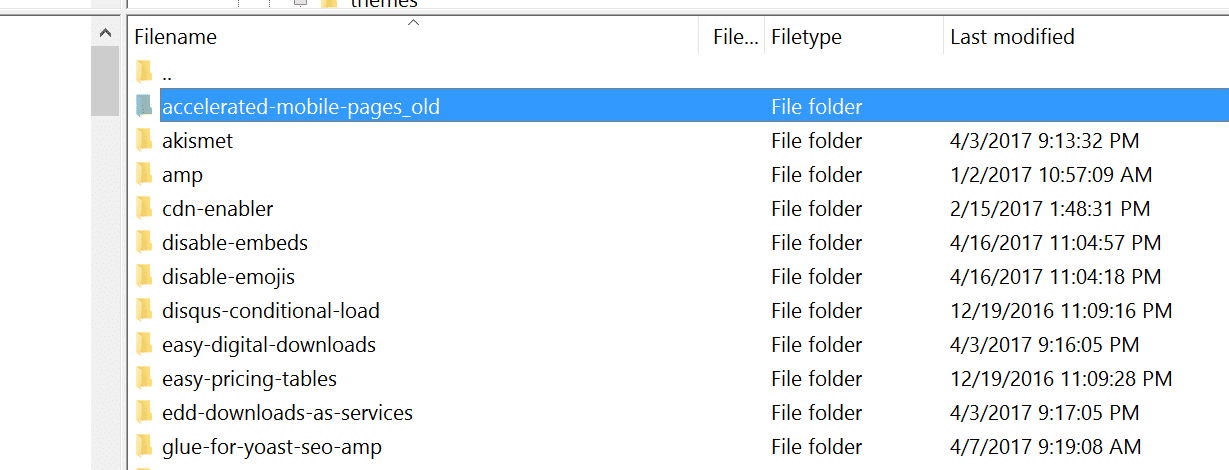
Always makes sure your plugins, themes, and WordPress core are up to date. And check to ensure you are running a supported version of PHP. If it turns out to be a conflict with bad code in a plugin, you might need to bring in a WordPress developer to fix the issue.
6. Reinstall WordPress Core
Sometimes WordPress core files can get corrupted, especially on older sites. It’s actually quite easy to re-upload just the core of WordPress without impacting your plugins or themes. We have an in-depth guide with 5 different ways to reinstall WordPress. And of course, make sure to take a backup before proceeding. Skip to one of the sections below:
- How to reinstall WordPress from the WordPress dashboard while preserving existing content
- How to manually reinstall WordPress via FTP while preserving existing content
- How to manually reinstall WordPress via WP-CLI while preserving existing content
7. Permissions Error
A permissions error with a file or folder on your server can also cause a 500 internal server error to occur. Here are some typical recommendations for permissions when it comes to file and folder permissions in WordPress:
- All files should be 644 (-rw-r–r–) or 640.
- All directories should be 755 (drwxr-xr-x) or 750.
- No directories should ever be given 777, even upload directories.
- Hardening: wp-config.php could also be set to 440 or 400 to prevent other users on the server from reading it.
See the WordPress Codex article on changing file permissions for a more in-depth explanation.
You can easily see your file permissions with an FTP client (as seen below). You could also reach out to your WordPress host support team and ask them to quickly GREP file permissions on your folders and files to ensure they’re setup properly.

8. PHP Memory Limit
A 500 internal server error could also be caused by exhausting the PHP memory limit on your server. You could try increasing the limit. Follow the instructions below on how to change this limit in cPanel, Apache, your php.ini file, and wp-config.php file.
Increase PHP Memory Limit in cPanel
If you’re running on a host that uses cPanel, you can easily change this from the UI. Under Software click on “Select PHP Version.”

Click on “Switch to PHP Options.”
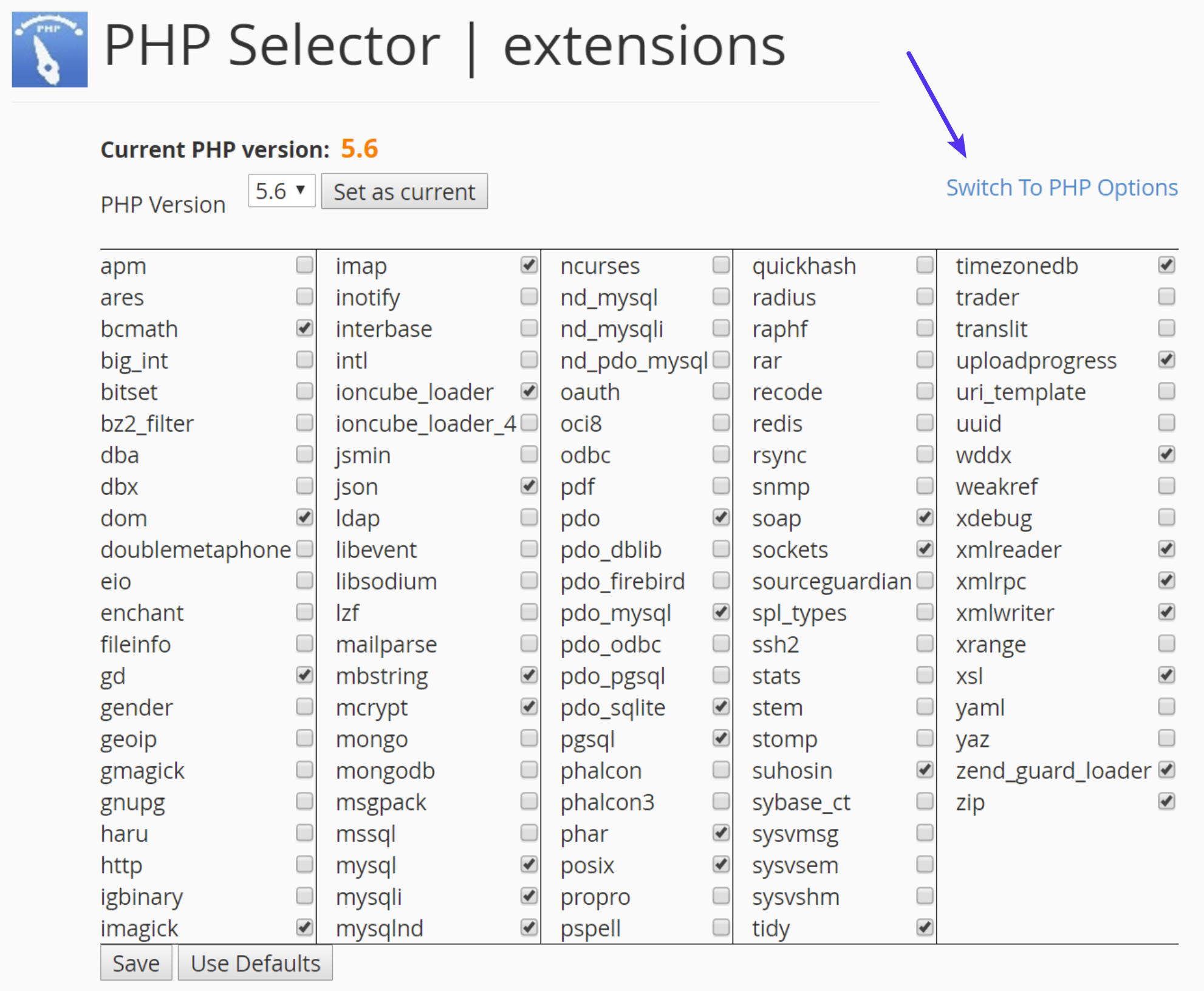
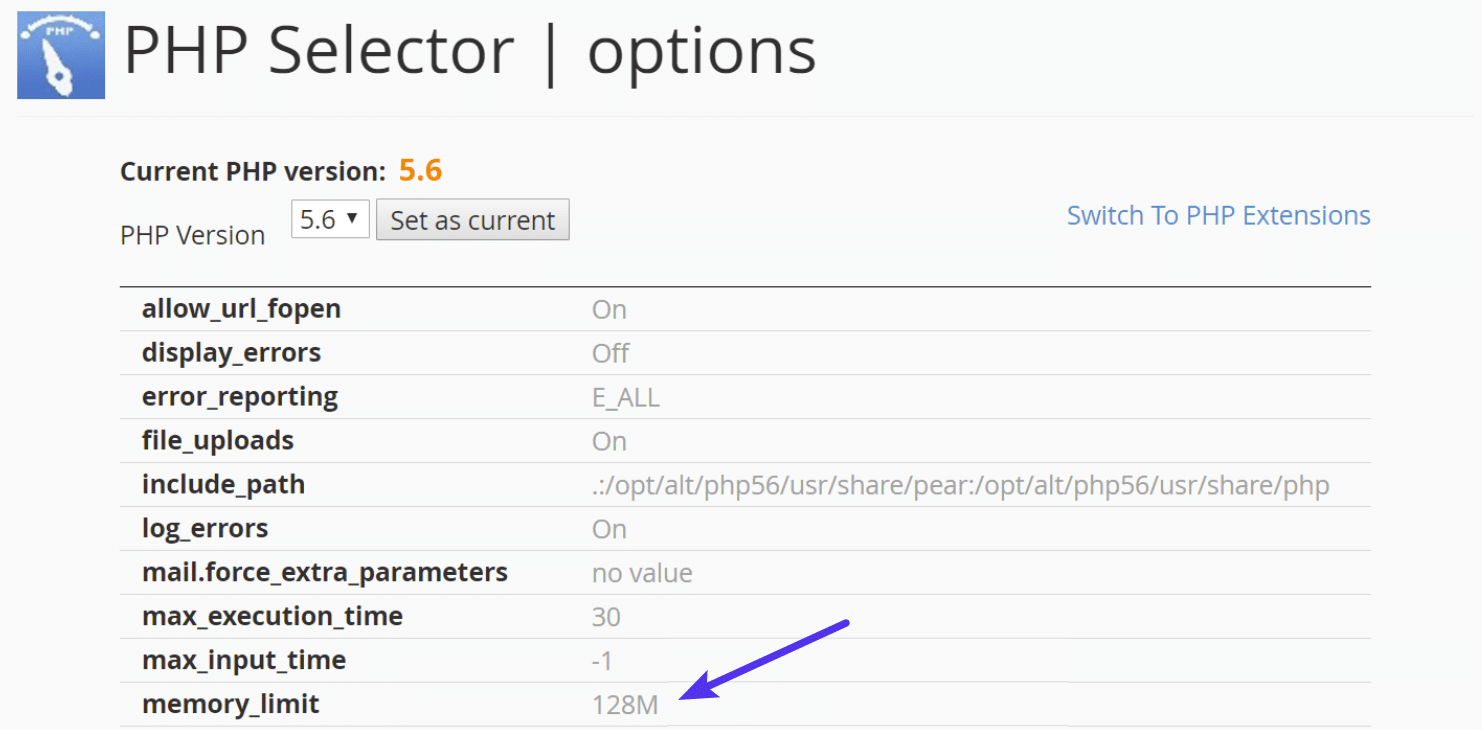
You can then click on the memory_limit attribute and change its value. Then click on “Save.”
Increase PHP Memory Limit in Apache
The .htaccess file is a special hidden file that contains various settings you can use to modify the server behavior, right down to a directory specific level. First login to your site via FTP or SSH, take a look at your root directory and see if there is a .htaccess file there.

If there is you can edit that file to add the necessary code for increasing the PHP memory limit. Most likely it is set at 64M or below, you can try increasing this value.
php_value memory_limit 128MIncrease PHP Memory Limit in php.ini File
If the above doesn’t work for you might try editing your php.ini file. Log in to your site via FTP or SSH, go to your site’s root directory and open or create a php.ini file.
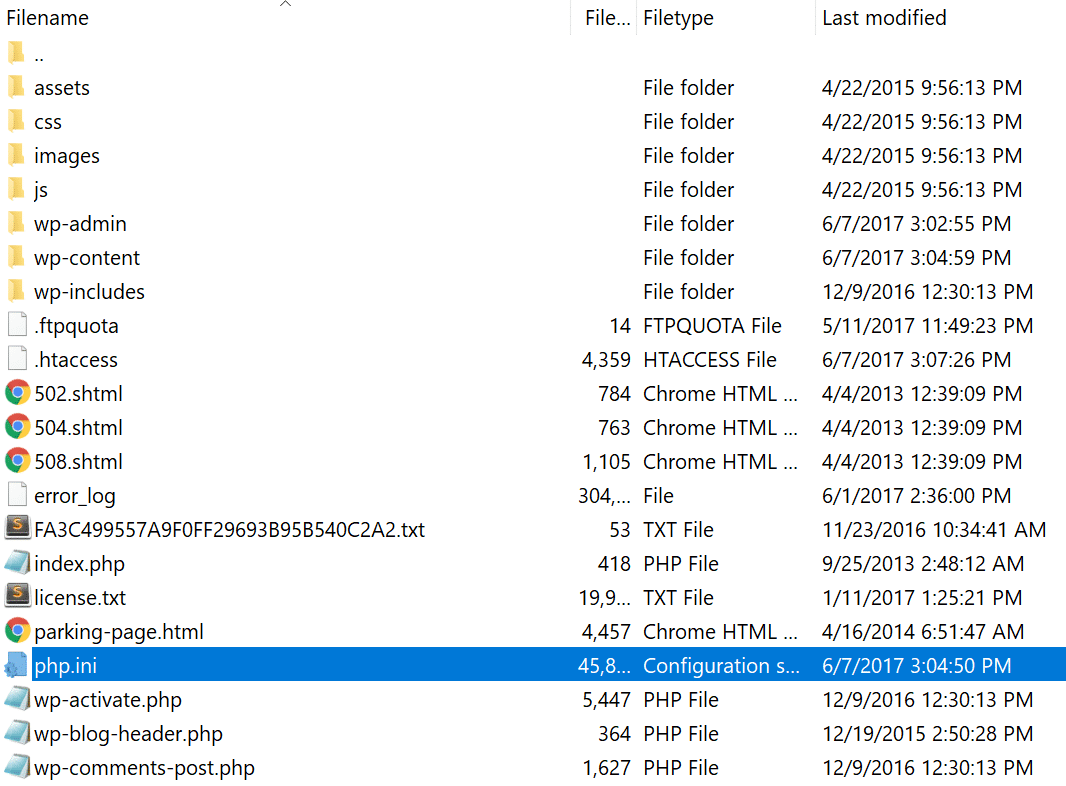
If the file was already there, search for the three settings and modify them if necessary. If you just created the file, or the settings are nowhere to be found you can paste the code below. You can modify of course the values to meet your needs.
memory_limit = 128MSome shared hosts might also require that you add the suPHP directive in your .htaccess file for the above php.ini file settings to work. To do this, edit your .htaccess file, also located at the root of your site, and add the following code towards the top of the file:
<IfModule mod_suphp.c>
suPHP_ConfigPath /home/yourusername/public_html
</IfModule>
If the above didn’t work for you, it could be that your host has the global settings locked down and instead have it configured to utilize .user.ini files. To edit your .user.ini file, login to your site via FTP or SSH, go to your site’s root directory and open or create a .user.ini file. You can then paste in the following code:
memory_limit = 128MIncrease PHP Memory Limit in wp-config.php
The last option is not one we are fans of, but if all else fails you can give it a go. First, log in to your site via FTP or SSH, and locate your wp-config.php file, which is typically in the root of your site.
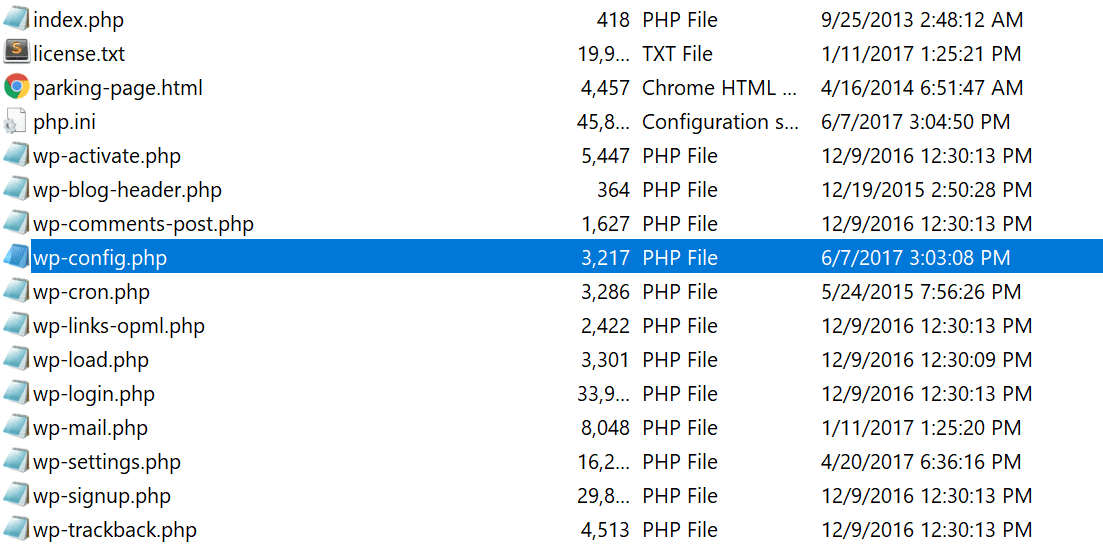
Add the following code to the top of your wp-config.php file:
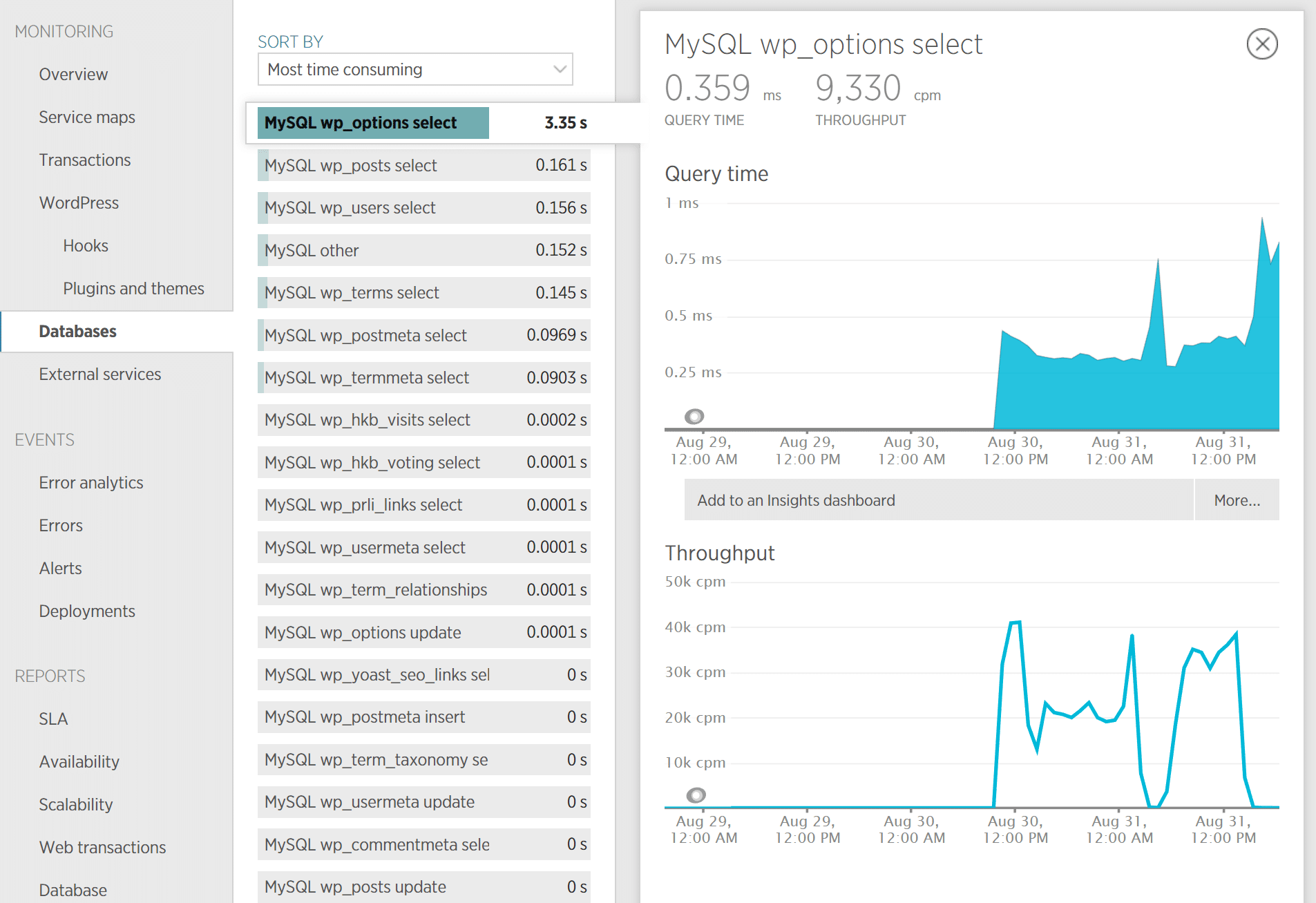
define('WP_MEMORY_LIMIT', '128M');You can also ask your host if you’re running into memory limit issues. We utilize the Kinsta APM tool and other troubleshooting methods here at Kinsta to help clients narrow down what plugin, query, or script might be exhausting the limit. You can also use your own custom New Relic key from your own license.
9. Problem With Your .htaccess File
Kinsta only uses Nginx, but if you’re using a WordPress host that is running Apache, it could very well be that your .htaccess file has a problem or has become corrupted. Follow the steps below to recreate a new one from scratch.
First, log in to your site via FTP or SSH, and rename your .htaccess file to .htaccess_old.
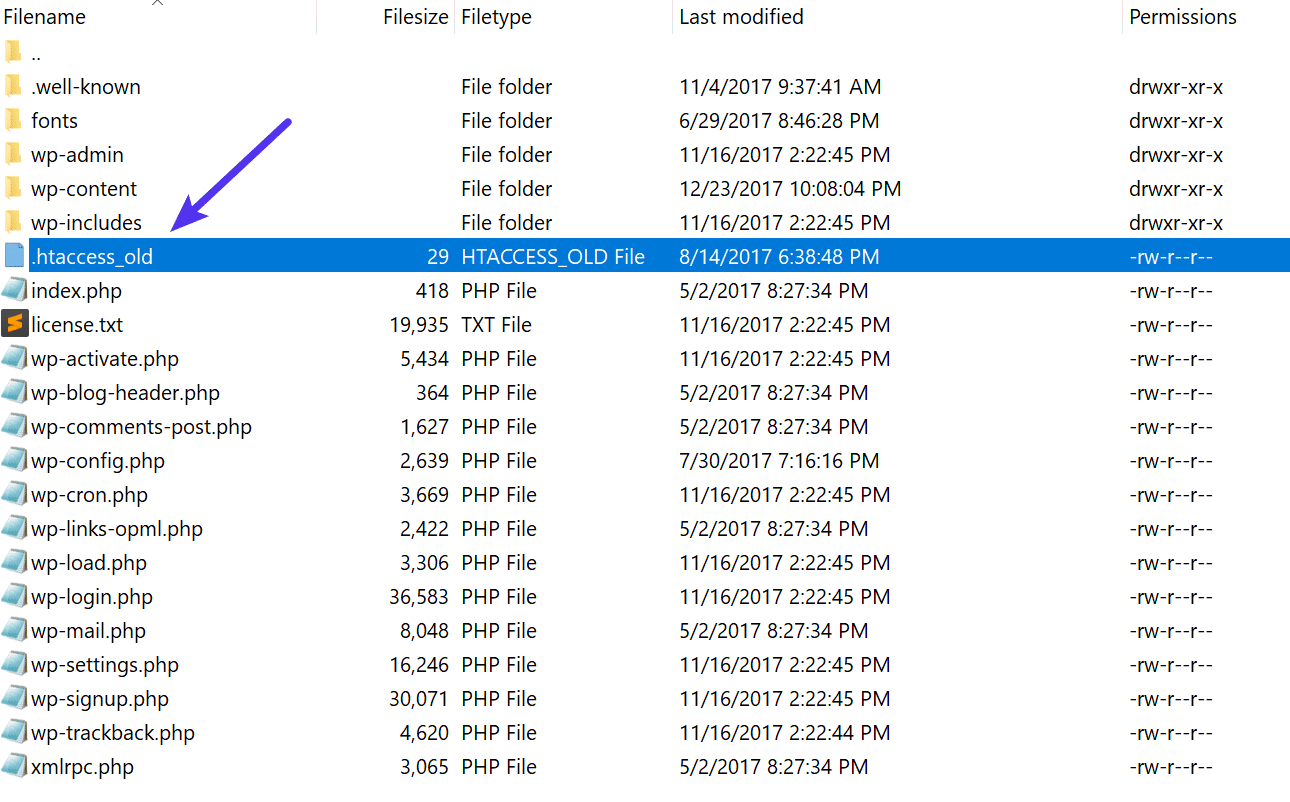
Normally to recreate this file you can simply re-save your permalinks in WordPress. However, if you’re in the middle of a 500 internal server error you most likely can’t access your WordPress admin, so this isn’t an option. Therefore you can create a new .htaccess file and input the following contents. Then upload it to your server.
# BEGIN WordPress
<IfModule mod_rewrite.c>
RewriteEngine On
RewriteBase /
RewriteRule ^index.php$ - [L]
RewriteCond %{REQUEST_FILENAME} !-f
RewriteCond %{REQUEST_FILENAME} !-d
RewriteRule . /index.php [L]
</IfModule>
# END WordPress
See the WordPress Codex for more examples, such as a default .htaccess file for multisite.
10. Coding or Syntax Errors in Your CGI/Perl Script
500 errors being caused by errors in CGI and Perl is a lot less common than it used to be. Although it’s still worth mentioning, especially for those using cPanel where there are a lot of one-click CGI scripts still being used. As AEM on Stack Overflow says:
CGI has been replaced by a vast variety of web programming technologies, including PHP, various Apache extensions like mod_perl, Java of various flavors and frameworks including Java EE, Struts, Spring, etc, Python-based frameworks like Django, Ruby on Rails and many other Ruby frameworks, and various Microsoft technologies.
Here are a few tips when working with CGI scripts:
- When editing, always used a plain text editor, such as Atom, Sublime, or Notepad++. This ensures they remain in ASCII format.
- Ensure correct permissions of chmod 755 are used on CGI scripts and directories.
- Upload your CGI scripts in ASCII mode (which you can select in your FTP editor) into the cgi-bin directory on your server.
- Confirm that the Perl modules you require for your script are installed and supported.
11. Server Issue (Check With Your Host)
Finally, because 500 internal server errors can also occur from PHP timing out or fatal PHP errors with third-party plugins, you can always check with your WordPress host. Sometimes these errors can be difficult to troubleshoot without an expert. Here are just a few common examples of some errors that trigger 500 HTTP status codes on the server that might have you scratching your head.
PHP message: PHP Fatal error: Uncaught Error: Call to undefined function mysql_error()...PHP message: PHP Fatal error: Uncaught Error: Cannot use object of type WP_Error as array in /www/folder/web/shared/content/plugins/plugin/functions.php:525We monitor all client’s sites here at Kinsta and are automatically notified when these types of errors occur. This allows us to be pro-active and start fixing the issue right away. We also utilize LXD managed hosts and orchestrated LXC software containers for each site. This means that every WordPress site is housed in its own isolated container, which has all of the software resources required to run it (Linux, Nginx, PHP, MySQL). The resources are 100% private and are not shared with anyone else or even your own sites.
PHP timeouts could also occur from the lack of PHP workers, although typically these cause 504 errors, not 500 errors. These determine how many simultaneous requests your site can handle at a given time. To put it simply, each uncached request for your website is handled by a PHP Worker.
When PHP workers are already busy on a site, they start to build up a queue. Once you’ve reached your limit of PHP workers, the queue starts to push out older requests which could result in 500 errors or incomplete requests. Read our in-depth article about PHP workers.
Monitor Your Site
If you’re worried about these types of errors happening on your site in the future, you can also utilize a tool like updown.io to monitor and notify you immediately if they occur. It periodically sends an HTTP HEAD request to the URL of your choice. You can simply use your homepage. The tool allows you to set check frequencies of:
- 15 seconds
- 30 seconds
- 1 minute
- 2 minutes
- 5 minutes
- 10 minutes
It will send you an email if and when your site goes down. Here is an example below.

This can be especially useful if you’re trying to debug a faulty plugin or are on a shared host, who tend to overcrowd their servers. This can give you proof of how often your site might actually be doing down (even during the middle of the night).
That’s why we always recommend going with an application, database, and managed WordPress host (like Kinsta).
Make sure to check out our post that explores the top 9 reasons to choose managed WordPress hosting.
Summary
500 internal server errors are always frustrating, but hopefully, now you know a few additional ways to troubleshoot them to quickly get your site back up and running. Remember, typically these types of errors are caused by third-party plugins, fatal PHP errors, database connection issues, problems with your .htaccess file or PHP memory limits, and sometimes PHP timeouts.
Was there anything we missed? Perhaps you have another tip on troubleshooting 500 internal server errors. If so, let us know below in the comments.
Get all your applications, databases and WordPress sites online and under one roof. Our feature-packed, high-performance cloud platform includes:
- Easy setup and management in the MyKinsta dashboard
- 24/7 expert support
- The best Google Cloud Platform hardware and network, powered by Kubernetes for maximum scalability
- An enterprise-level Cloudflare integration for speed and security
- Global audience reach with up to 35 data centers and 275+ PoPs worldwide
Test it yourself with $20 off your first month of Application Hosting or Database Hosting. Explore our plans or talk to sales to find your best fit.
The dreaded 500 internal server error. It always seems to come at the most inopportune time and you’re suddenly left scrambling to figure out how to get your WordPress site back online. Trust us, we’ve all been there. Other errors that behave similarly that you might have also seen include the frightening error establishing a database connection and the dreaded white screen of death. But from the moment your site goes down, you’re losing visitors and customers. Not to mention it simply looks bad for your brand.
Today we’re going to dive into the 500 internal server error and walk you through some ways to get your site back online quickly. Read more below about what causes this error and what you can do to prevent it in the future.
- What is a 500 internal server error?
- How to fix the 500 internal server error
500 Internal Server Error (Most Common Causes):
500 Internal server error in WordPress can be caused by many things. If you’re experiencing one, there’s a high chance one (or more) of the following elements is causing the issue:
- Browser Cache.
- Incorrect database login credentials.
- Corrupted database.
- Corrupted files in your WordPress installation.
- Issues with your database server.
- Corrupted WordPress core files.
- Corrupted .htaccess file and PHP memory limit.
- Issues with third-party plugins and themes.
- PHP timing out or fatal PHP errors with third-party plugins.
- Wrong file and folder permissions.
- Exhausted PHP memory limit on your server
- Corrupted or broken .htaccess file.
- Errors in CGI and Perl script.
Check Out Our Ultimate Guide to Fixing the 500 Internal Server Error
What is a 500 Internal Server Error?
The Internet Engineering Task Force (IETF) defines the 500 Internal Server Error as:
The 500 (Internal Server Error) status code indicates that the server encountered an unexpected condition that prevented it from fulfilling the request.
When you visit a website your browser sends a request over to the server where the site is hosted. The server takes this request, processes it, and sends back the requested resources (PHP, HTML, CSS, etc.) along with an HTTP header. The HTTP also includes what they call an HTTP status code. A status code is a way to notify you about the status of the request. It could be a 200 status code which means “Everything is OK” or a 500 status code which means something has gone wrong.
There are a lot of different types of 500 status error codes (500, 501, 502, 503, 504, etc.) and they all mean something different. In this case, a 500 internal server error indicates that the server encountered an unexpected condition that prevented it from fulfilling the request (RFC 7231, section 6.6.1).
500 Internal Server Error Variations
Due to the various web servers, operating systems, and browsers, a 500 internal server error can present itself in a number of different ways. But they are all communicating the same thing. Below are just a couple of the many different variations you might see on the web:
-
- “500 Internal Server Error”
- “HTTP 500”
- “Internal Server Error”
- “HTTP 500 – Internal Server Error”
- “500 Error”
- “HTTP Error 500”
- “500 – Internal Server Error”
- “500 Internal Server Error. Sorry something went wrong.”
- “500. That’s an error. There was an error. Please try again later. That’s all we know.”
- “The website cannot display the page – HTTP 500.”
- “Is currently unable to handle this request. HTTP ERROR 500.”
You might also see this message accompanying it:
The server encountered an internal error or misconfiguration and was unable to complete your request. Please contact the server administrator, [email protected] and inform them of the time the error occurred, and anything you might have done that may have caused the error. More information about this error may be available in the server error log.
Other times, you might simply see a blank white screen. When dealing with 500 internal server errors, this is actually quite common in browsers like Firefox and Safari.
Bigger brands might even have their own custom 500 internal server error messages, such as this one from Airbnb.
Here is another creative 500 server error example from the folks over at readme.
Even the mighty YouTube isn’t safe from 500 internal server errors.
If it’s an IIS 7.0 (Windows) or higher server, they have additional HTTP status codes to more closely indicate the cause of the 500 error:
- 500.0 – Module or ISAPI error occurred.
- 500.11 – Application is shutting down on the web server.
- 500.12 – Application is busy restarting on the web server.
- 500.13 – Web server is too busy.
- 500.15 – Direct requests for global.asax are not allowed.
- 500.19 – Configuration data is invalid.
- 500.21 – Module not recognized.
- 500.22 – An ASP.NET httpModules configuration does not apply in Managed Pipeline mode.
- 500.23 – An ASP.NET httpHandlers configuration does not apply in Managed Pipeline mode.
- 500.24 – An ASP.NET impersonation configuration does not apply in Managed Pipeline mode.
- 500.50 – A rewrite error occurred during RQ_BEGIN_REQUEST notification handling. A configuration or inbound rule execution error occurred.
- 500.51 – A rewrite error occurred during GL_PRE_BEGIN_REQUEST notification handling. A global configuration or global rule execution error occurred.
- 500.52 – A rewrite error occurred during RQ_SEND_RESPONSE notification handling. An outbound rule execution occurred.
- 500.53 – A rewrite error occurred during RQ_RELEASE_REQUEST_STATE notification handling. An outbound rule execution error occurred. The rule is configured to be executed before the output user cache gets updated.
500.100 – Internal ASP error.
500 Errors Impact on SEO
Unlike 503 errors, which are used for WordPress maintenance mode and tell Google to check back at a later time, a 500 error can have a negative impact on SEO if not fixed right away. If your site is only down for say 10 minutes and it’s being crawled consistently a lot of times the crawler will simply get the page delivered from cache. Or Google might not even have a chance to re-crawl it before it’s back up. In this scenario, you’re completely fine.
However, if the site is down for an extended period of time, say 6+ hours, then Google might see the 500 error as a site level issue that needs to be addressed. This could impact your rankings. If you’re worried about repeat 500 errors you should figure out why they are happening to begin with. Some of the solutions below can help.
How to Fix the 500 Internal Server Error
Where should you start troubleshooting when you see a 500 internal server error on your WordPress site? Sometimes you might not even know where to begin. Typically 500 errors are on the server itself, but from our experience, these errors originate from two things, the first is user error (client-side issue), and the second is that there is a problem with the server. So we’ll dive into a little of both.
This is never not annoying 😖 pic.twitter.com/pPKxbkvI9K
— Dare Obasanjo 🐀 (@Carnage4Life) September 26, 2019
Check out these common causes and ways to fix the 500 internal server error and get back up and running in no time.
1. Try Reloading the Page
This might seem a little obvious to some, but one of the easiest and first things you should try when encountering a 500 internal server error is to simply wait a minute or so and reload the page (F5 or Ctrl + F5). It could be that the host or server is simply overloaded and the site will come right back. While you’re waiting, you could also quickly try a different browser to rule that out as an issue.
Another thing you can do is to paste the website into downforeveryoneorjustme.com. This website will tell you if the site is down or if it’s a problem on your side. A tool like this checks the HTTP status code that is returned from the server. If it’s anything other than a 200 “Everything is OK” then it will return a down indication.
We’ve also noticed that sometimes this can occur immediately after you update a plugin or theme on your WordPress site. Typically this is on hosts that aren’t set up properly. What happens is they experience a temporary timeout right afterward. However, things usually resolve themselves in a couple of seconds and therefore refreshing is all you need to do.
2. Clear Your Browser Cache
Clearing your browser cache is always another good troubleshooting step before diving into deeper debugging on your site. Below are instructions on how to clear cache in the various browsers:
- How to Force Refresh a Single Page for All Browsers
- How to Clear Browser Cache for Google Chrome
- How to Clear Browser Cache for Mozilla Firefox
- How to Clear Browser Cache for Safari
- How to Clear Browser Cache for Internet Explorer
- How to Clear Browser Cache for Microsoft Edge
- How to Clear Browser Cache for Opera
3. Check Your Server Logs
You should also take advantage of your error logs. If you’re a Kinsta client, you can easily see errors in the log viewer in the MyKinsta dashboard. This can help you quickly narrow down the issue, especially if it’s resulting from a plugin on your site.
If your host doesn’t have a logging tool, you can also enable WordPress debugging mode by adding the following code to your wp-config.php file to enable logging:
define( 'WP_DEBUG', true );
define( 'WP_DEBUG_LOG', true );
define( 'WP_DEBUG_DISPLAY', false );
The logs are typically located in the /wp-content directory. Others, like here at Kinsta might have a dedicated folder called “logs”.
You can also check the log files in Apache and Nginx, which are commonly located here:
- Apache: /var/log/apache2/error.log
- Nginx: /var/log/nginx/error.log
If you’re a Kinsta client you can also take advantage of our analytics tool to get a breakdown of the total number of 500 errors and see how often and when they are occurring. This can help you troubleshoot if this is an ongoing issue, or perhaps something that has resolved itself.
If the 500 error is displaying because of a fatal PHP error, you can also try enabling PHP error reporting. Simply add the following code to the file throwing the error. Typically you can narrow down the file in the console tab of Google Chrome DevTools.
ini_set('display_errors', 1);
ini_set('display_startup_errors', 1);
error_reporting(E_ALL);
And you might need to also modify your php.ini file with the following:
display_errors = on4. Error Establishing a Database Connection
500 internal server errors can also occur from a database connection error. Depending upon your browser you might see different errors. But both will generate a 500 HTTP status code regardless in your server logs.
Below is an example of what an “error establishing a database connection” message looks like your browser. The entire page is blank because no data can be retrieved to render the page, as the connection is not working properly. Not only does this break the front-end of your site, but it will also prevent you from accessing your WordPress dashboard.
So why exactly does this happen? Well, here are a few common reasons below.
- The most common issue is that your database login credentials are incorrect. Your WordPress site uses separate login information to connect to its MySQL database.
- Your WordPress database is corrupted. With so many moving parts with themes, plugins, and users constantly deleting and installing them, sometimes databases get corrupted. This can be due to a missing or individually corrupted table, or perhaps some information was deleted by accident.
- You may have corrupt files in your WordPress installation. This can even happen sometimes due to hackers.
- Issues with your database server. A number of things could be wrong on the web hosts end, such as the database being overloaded from a traffic spike or unresponsive from too many concurrent connections. This is actually quite common with shared hosts as they are utilizing the same resources for a lot of users on the same servers.
Check out our in-depth post on how to fix the error establishing a database connection in WordPress.
5. Check Your Plugins and Themes
Third-party plugins and themes can easily cause 500 internal server errors. We’ve seen all types cause them here at Kinsta, from slider plugins to ad rotator plugins. A lot of times you should see the error immediately after installing something new or running an update. This is one reason why we always recommend utilizing a staging environment for updates or at least running updates one by one. Otherwise, if you encounter a 500 internal server error you’re suddenly scrambling to figure out which one caused it.
A few ways you can troubleshoot this is by deactivating all your plugins. Remember, you won’t lose any data if you simply deactivate a plugin. If you can still access your admin, a quick way to do this is to browse to “Plugins” and select “Deactivate” from the bulk actions menu. This will disable all of your plugins.
If this fixes the issue you’ll need to find the culprit. Start activating them one by one, reloading the site after each activation. When you see the 500 internal server error return, you’ve found the misbehaving plugin. You can then reach out to the plugin developer for help or post a support ticket in the WordPress repository.
If you can’t login to WordPress admin you can FTP into your server and rename your plugins folder to something like plugins_old. Then check your site again. If it works, then you will need to test each plugin one by one. Rename your plugin folder back to “plugins” and then rename each plugin folder inside of if it, one by one, until you find it. You could also try to replicate this on a staging site first.
Always makes sure your plugins, themes, and WordPress core are up to date. And check to ensure you are running a supported version of PHP. If it turns out to be a conflict with bad code in a plugin, you might need to bring in a WordPress developer to fix the issue.
6. Reinstall WordPress Core
Sometimes WordPress core files can get corrupted, especially on older sites. It’s actually quite easy to re-upload just the core of WordPress without impacting your plugins or themes. We have an in-depth guide with 5 different ways to reinstall WordPress. And of course, make sure to take a backup before proceeding. Skip to one of the sections below:
- How to reinstall WordPress from the WordPress dashboard while preserving existing content
- How to manually reinstall WordPress via FTP while preserving existing content
- How to manually reinstall WordPress via WP-CLI while preserving existing content
7. Permissions Error
A permissions error with a file or folder on your server can also cause a 500 internal server error to occur. Here are some typical recommendations for permissions when it comes to file and folder permissions in WordPress:
- All files should be 644 (-rw-r–r–) or 640.
- All directories should be 755 (drwxr-xr-x) or 750.
- No directories should ever be given 777, even upload directories.
- Hardening: wp-config.php could also be set to 440 or 400 to prevent other users on the server from reading it.
See the WordPress Codex article on changing file permissions for a more in-depth explanation.
You can easily see your file permissions with an FTP client (as seen below). You could also reach out to your WordPress host support team and ask them to quickly GREP file permissions on your folders and files to ensure they’re setup properly.
8. PHP Memory Limit
A 500 internal server error could also be caused by exhausting the PHP memory limit on your server. You could try increasing the limit. Follow the instructions below on how to change this limit in cPanel, Apache, your php.ini file, and wp-config.php file.
Increase PHP Memory Limit in cPanel
If you’re running on a host that uses cPanel, you can easily change this from the UI. Under Software click on “Select PHP Version.”
Click on “Switch to PHP Options.”
You can then click on the memory_limit attribute and change its value. Then click on “Save.”
Increase PHP Memory Limit in Apache
The .htaccess file is a special hidden file that contains various settings you can use to modify the server behavior, right down to a directory specific level. First login to your site via FTP or SSH, take a look at your root directory and see if there is a .htaccess file there.
If there is you can edit that file to add the necessary code for increasing the PHP memory limit. Most likely it is set at 64M or below, you can try increasing this value.
php_value memory_limit 128MIncrease PHP Memory Limit in php.ini File
If the above doesn’t work for you might try editing your php.ini file. Log in to your site via FTP or SSH, go to your site’s root directory and open or create a php.ini file.
If the file was already there, search for the three settings and modify them if necessary. If you just created the file, or the settings are nowhere to be found you can paste the code below. You can modify of course the values to meet your needs.
memory_limit = 128MSome shared hosts might also require that you add the suPHP directive in your .htaccess file for the above php.ini file settings to work. To do this, edit your .htaccess file, also located at the root of your site, and add the following code towards the top of the file:
<IfModule mod_suphp.c>
suPHP_ConfigPath /home/yourusername/public_html
</IfModule>
If the above didn’t work for you, it could be that your host has the global settings locked down and instead have it configured to utilize .user.ini files. To edit your .user.ini file, login to your site via FTP or SSH, go to your site’s root directory and open or create a .user.ini file. You can then paste in the following code:
memory_limit = 128MIncrease PHP Memory Limit in wp-config.php
The last option is not one we are fans of, but if all else fails you can give it a go. First, log in to your site via FTP or SSH, and locate your wp-config.php file, which is typically in the root of your site.
Add the following code to the top of your wp-config.php file:
define('WP_MEMORY_LIMIT', '128M');You can also ask your host if you’re running into memory limit issues. We utilize the Kinsta APM tool and other troubleshooting methods here at Kinsta to help clients narrow down what plugin, query, or script might be exhausting the limit. You can also use your own custom New Relic key from your own license.
9. Problem With Your .htaccess File
Kinsta only uses Nginx, but if you’re using a WordPress host that is running Apache, it could very well be that your .htaccess file has a problem or has become corrupted. Follow the steps below to recreate a new one from scratch.
First, log in to your site via FTP or SSH, and rename your .htaccess file to .htaccess_old.
Normally to recreate this file you can simply re-save your permalinks in WordPress. However, if you’re in the middle of a 500 internal server error you most likely can’t access your WordPress admin, so this isn’t an option. Therefore you can create a new .htaccess file and input the following contents. Then upload it to your server.
# BEGIN WordPress
<IfModule mod_rewrite.c>
RewriteEngine On
RewriteBase /
RewriteRule ^index.php$ - [L]
RewriteCond %{REQUEST_FILENAME} !-f
RewriteCond %{REQUEST_FILENAME} !-d
RewriteRule . /index.php [L]
</IfModule>
# END WordPress
See the WordPress Codex for more examples, such as a default .htaccess file for multisite.
10. Coding or Syntax Errors in Your CGI/Perl Script
500 errors being caused by errors in CGI and Perl is a lot less common than it used to be. Although it’s still worth mentioning, especially for those using cPanel where there are a lot of one-click CGI scripts still being used. As AEM on Stack Overflow says:
CGI has been replaced by a vast variety of web programming technologies, including PHP, various Apache extensions like mod_perl, Java of various flavors and frameworks including Java EE, Struts, Spring, etc, Python-based frameworks like Django, Ruby on Rails and many other Ruby frameworks, and various Microsoft technologies.
Here are a few tips when working with CGI scripts:
- When editing, always used a plain text editor, such as Atom, Sublime, or Notepad++. This ensures they remain in ASCII format.
- Ensure correct permissions of chmod 755 are used on CGI scripts and directories.
- Upload your CGI scripts in ASCII mode (which you can select in your FTP editor) into the cgi-bin directory on your server.
- Confirm that the Perl modules you require for your script are installed and supported.
11. Server Issue (Check With Your Host)
Finally, because 500 internal server errors can also occur from PHP timing out or fatal PHP errors with third-party plugins, you can always check with your WordPress host. Sometimes these errors can be difficult to troubleshoot without an expert. Here are just a few common examples of some errors that trigger 500 HTTP status codes on the server that might have you scratching your head.
PHP message: PHP Fatal error: Uncaught Error: Call to undefined function mysql_error()...PHP message: PHP Fatal error: Uncaught Error: Cannot use object of type WP_Error as array in /www/folder/web/shared/content/plugins/plugin/functions.php:525We monitor all client’s sites here at Kinsta and are automatically notified when these types of errors occur. This allows us to be pro-active and start fixing the issue right away. We also utilize LXD managed hosts and orchestrated LXC software containers for each site. This means that every WordPress site is housed in its own isolated container, which has all of the software resources required to run it (Linux, Nginx, PHP, MySQL). The resources are 100% private and are not shared with anyone else or even your own sites.
PHP timeouts could also occur from the lack of PHP workers, although typically these cause 504 errors, not 500 errors. These determine how many simultaneous requests your site can handle at a given time. To put it simply, each uncached request for your website is handled by a PHP Worker.
When PHP workers are already busy on a site, they start to build up a queue. Once you’ve reached your limit of PHP workers, the queue starts to push out older requests which could result in 500 errors or incomplete requests. Read our in-depth article about PHP workers.
Monitor Your Site
If you’re worried about these types of errors happening on your site in the future, you can also utilize a tool like updown.io to monitor and notify you immediately if they occur. It periodically sends an HTTP HEAD request to the URL of your choice. You can simply use your homepage. The tool allows you to set check frequencies of:
- 15 seconds
- 30 seconds
- 1 minute
- 2 minutes
- 5 minutes
- 10 minutes
It will send you an email if and when your site goes down. Here is an example below.
This can be especially useful if you’re trying to debug a faulty plugin or are on a shared host, who tend to overcrowd their servers. This can give you proof of how often your site might actually be doing down (even during the middle of the night).
That’s why we always recommend going with an application, database, and managed WordPress host (like Kinsta).
Make sure to check out our post that explores the top 9 reasons to choose managed WordPress hosting.
Summary
500 internal server errors are always frustrating, but hopefully, now you know a few additional ways to troubleshoot them to quickly get your site back up and running. Remember, typically these types of errors are caused by third-party plugins, fatal PHP errors, database connection issues, problems with your .htaccess file or PHP memory limits, and sometimes PHP timeouts.
Was there anything we missed? Perhaps you have another tip on troubleshooting 500 internal server errors. If so, let us know below in the comments.
Get all your applications, databases and WordPress sites online and under one roof. Our feature-packed, high-performance cloud platform includes:
- Easy setup and management in the MyKinsta dashboard
- 24/7 expert support
- The best Google Cloud Platform hardware and network, powered by Kubernetes for maximum scalability
- An enterprise-level Cloudflare integration for speed and security
- Global audience reach with up to 35 data centers and 275+ PoPs worldwide
Test it yourself with $20 off your first month of Application Hosting or Database Hosting. Explore our plans or talk to sales to find your best fit.

Expected Behavior
The mail is send with smtp
Actual Behavior
A 500 error is showing + no mail is send
Before posting this issue, confirm/answer the following:
- I have enabled debug mode
- I have read checked the Common Issues page
- I have read the Getting Help Documentation
Snipe-IT version v2.1.0-41-g6d810a9
PHP Version 5.5.9-1ubuntu4.14
Laravel Version 4.2.17
Hi guys,
I have the following issue:
When I try to send an email I get a 500 error
In the logs and debug mod it’s saying it’s caused by /vendor/swiftmailer/swiftmailer/lib/classes/Swift/Transport/Esmtp/Auth/NTLMAuthenticator.php:303
The following script is showing in the debug mode:
protected function getDomainAndUsername($name)
  {
    if (strpos($name, '\') !== false) {
            return explode('\', $name);
       }

       list($user, $domain) = explode('@', $name);

       return array($domain, $user);
This is my mail.php config:
<?php

return array(

    /*
    |--------------------------------------------------------------------------
    | Mail Driver
    |--------------------------------------------------------------------------
    |
    | Laravel supports both SMTP and PHP's "mail" function as drivers for the
    | sending of e-mail. You may specify which one you're using throughout
    | your application here. By default, Laravel is setup for SMTP mail.
    |
    | Supported: "smtp", "mail", "sendmail"
    |
    */

    'driver' => 'smtp',

    /*
    |--------------------------------------------------------------------------
    | SMTP Host Address
    |--------------------------------------------------------------------------
    |
    | Here you may provide the host address of the SMTP server used by your
    | applications. A default option is provided that is compatible with
    | the Postmark mail service, which will provide reliable delivery.
    |
    */

    'host' => 'mail.company.nl',

    /*
    |--------------------------------------------------------------------------
    | SMTP Host Port
    |--------------------------------------------------------------------------
    |
    | This is the SMTP port used by your application to delivery e-mails to
    | users of your application. Like the host we have set this value to
    | stay compatible with the Postmark e-mail application by default.
    |
    */

    'port' => '587',

    /*
    |--------------------------------------------------------------------------
    | Global "From" Address
    |--------------------------------------------------------------------------
    |
    | You may wish for all e-mails sent by your application to be sent from
    | the same address. Here, you may specify a name and address that is
    | used globally for all e-mails that are sent by your application.
    |
    */

    'from' => array('address' => 'prhc.systeembeheer@companydomain.nl', 'name' => 'Systeembeheer'),

    /*
    |--------------------------------------------------------------------------
    | E-Mail Encryption Protocol
    |--------------------------------------------------------------------------
    |
    | Here you may specify the encryption protocol that should be used when
    | the application send e-mail messages. A sensible default using the
    | transport layer security protocol should provide great security.
    |
    */

    'encryption' => '',

    /*
    |--------------------------------------------------------------------------
    | SMTP Server Username
    |--------------------------------------------------------------------------
    |
    | If your SMTP server requires a username for authentication, you should
    | set it here. This will get used to authenticate with your server on
    | connection. You may also set the "password" value below this one.
    |
    */

    'username' => 'prhc.systeembeheer',

    /*
    |--------------------------------------------------------------------------
    | SMTP Server Password
    |--------------------------------------------------------------------------
    |
    | Here you may set the password required by your SMTP server to send out
    | messages from your application. This will be given to the server on
    | connection so that the application will be able to send messages.
    |
    */

    'password' => '',

    /*
    |--------------------------------------------------------------------------
    | Sendmail System Path
    |--------------------------------------------------------------------------
    |
    | When using the "sendmail" driver to send e-mails, we will need to know
    | the path to where Sendmail lives on this server. A default path has
    | been provided here, which will work well on most of your systems.
    |
    */

    'sendmail' => '/usr/sbin/sendmail -bs',

    /*
    |--------------------------------------------------------------------------
    | Mail "Pretend"
    |--------------------------------------------------------------------------
    |
    | When this option is enabled, e-mail will not actually be sent over the
    | web and will instead be written to your application's logs files so
    | you may inspect the message. This is great for local development.
    |
    */

    'pretend' => false,

);
For the username I even tried the email adres.
The email account does not need a password
I hope you guys can help me.
greetz

What is the actual error that’s being thrown?
Hi the actual error is Whoops!
Server Error: 500 (Internal Server Error)
In the log I have the following:
[2016-03-03 13:31:37] production.ERROR: exception ‘ErrorException’ with message ‘Undefined offset: 1’ in /var/www/snipeit/vendor/swiftmailer/swiftmailer/lib/classes/Swift/Transport/Esmtp/Auth/NTLMAuthenticator.php:303
Stack trace:
#0 /var/www/snipeit/vendor/swiftmailer/swiftmailer/lib/classes/Swift/Transport/Esmtp/Auth/NTLMAuthenticator.php(303): IlluminateExceptionHandler->handleError(8, ‘Undefined offse…’, ‘/var/www/snipei…’, 303, Array)
#1 /var/www/snipeit/vendor/swiftmailer/swiftmailer/lib/classes/Swift/Transport/Esmtp/Auth/NTLMAuthenticator.php(197): Swift_Transport_Esmtp_Auth_NTLMAuthenticator->getDomainAndUsername(‘prhc.systeembeh…’)
#2 /var/www/snipeit/vendor/swiftmailer/swiftmailer/lib/classes/Swift/Transport/Esmtp/Auth/NTLMAuthenticator.php(66): Swift_Transport_Esmtp_Auth_NTLMAuthenticator->sendMessage3(‘NTLMSSP????????…’, ‘prhc.systeembeh…’, », ‘?A(?Hu??’, ‘:????n??’, Object(Swift_SmtpTransport))
#3 /var/www/snipeit/vendor/swiftmailer/swiftmailer/lib/classes/Swift/Transport/Esmtp/AuthHandler.php(176): Swift_Transport_Esmtp_Auth_NTLMAuthenticator->authenticate(Object(Swift_SmtpTransport), ‘prhc.systeembeh…’, »)
#4 /var/www/snipeit/vendor/swiftmailer/swiftmailer/lib/classes/Swift/Transport/EsmtpTransport.php(307): Swift_Transport_Esmtp_AuthHandler->afterEhlo(Object(Swift_SmtpTransport))
#5 /var/www/snipeit/vendor/swiftmailer/swiftmailer/lib/classes/Swift/Transport/AbstractSmtpTransport.php(118): Swift_Transport_EsmtpTransport->_doHeloCommand()
#6 /var/www/snipeit/vendor/swiftmailer/swiftmailer/lib/classes/Swift/Mailer.php(79): Swift_Transport_AbstractSmtpTransport->start()
#7 /var/www/snipeit/vendor/laravel/framework/src/Illuminate/Mail/Mailer.php(329): Swift_Mailer->send(Object(Swift_Message), Array)
#8 /var/www/snipeit/vendor/laravel/framework/src/Illuminate/Mail/Mailer.php(151): IlluminateMailMailer->sendSwiftMessage(Object(Swift_Message))
#9 /var/www/snipeit/vendor/laravel/framework/src/Illuminate/Support/Facades/Facade.php(214): IlluminateMailMailer->send(’emails.checkin-…’, Array, Object(Closure))
#10 /var/www/snipeit/app/controllers/admin/AssetsController.php(660): IlluminateSupportFacadesFacade::__callStatic(‘send’, Array)
#11 /var/www/snipeit/app/controllers/admin/AssetsController.php(660): IlluminateSupportFacadesMail::send(’emails.checkin-…’, Array, Object(Closure))
#12 [internal function]: ControllersAdminAssetsController->postCheckin(‘1070’)
#13 /var/www/snipeit/vendor/laravel/framework/src/Illuminate/Routing/Controller.php(231): call_user_func_array(Array, Array)
#14 /var/www/snipeit/vendor/laravel/framework/src/Illuminate/Routing/ControllerDispatcher.php(93): IlluminateRoutingController->callAction(‘postCheckin’, Array)
#15 /var/www/snipeit/vendor/laravel/framework/src/Illuminate/Routing/ControllerDispatcher.php(62): IlluminateRoutingControllerDispatcher->call(Object(ControllersAdminAssetsController), Object(IlluminateRoutingRoute), ‘postCheckin’)
#16 /var/www/snipeit/vendor/laravel/framework/src/Illuminate/Routing/Router.php(967): IlluminateRoutingControllerDispatcher->dispatch(Object(IlluminateRoutingRoute), Object(IlluminateHttpRequest), ‘ControllersAdm…’, ‘postCheckin’)
#17 [internal function]: IlluminateRoutingRouter->IlluminateRouting{closure}(‘1070’)
#18 /var/www/snipeit/vendor/laravel/framework/src/Illuminate/Routing/Route.php(109): call_user_func_array(Object(Closure), Array)
#19 /var/www/snipeit/vendor/laravel/framework/src/Illuminate/Routing/Router.php(1033): IlluminateRoutingRoute->run(Object(IlluminateHttpRequest))
#20 /var/www/snipeit/vendor/laravel/framework/src/Illuminate/Routing/Router.php(1001): IlluminateRoutingRouter->dispatchToRoute(Object(IlluminateHttpRequest))
#21 /var/www/snipeit/vendor/laravel/framework/src/Illuminate/Foundation/Application.php(775): IlluminateRoutingRouter->dispatch(Object(IlluminateHttpRequest))
#22 /var/www/snipeit/vendor/laravel/framework/src/Illuminate/Foundation/Application.php(745): IlluminateFoundationApplication->dispatch(Object(IlluminateHttpRequest))
#23 /var/www/snipeit/vendor/barryvdh/laravel-debugbar/src/Middleware/Stack.php(34): IlluminateFoundationApplication->handle(Object(IlluminateHttpRequest), 1, true)
#24 /var/www/snipeit/vendor/laravel/framework/src/Illuminate/Session/Middleware.php(72): BarryvdhDebugbarMiddlewareStack->handle(Object(IlluminateHttpRequest), 1, true)
#25 /var/www/snipeit/vendor/laravel/framework/src/Illuminate/Cookie/Queue.php(47): IlluminateSessionMiddleware->handle(Object(IlluminateHttpRequest), 1, true)
#26 /var/www/snipeit/vendor/laravel/framework/src/Illuminate/Cookie/Guard.php(51): IlluminateCookieQueue->handle(Object(IlluminateHttpRequest), 1, true)
#27 /var/www/snipeit/vendor/stack/builder/src/Stack/StackedHttpKernel.php(23): IlluminateCookieGuard->handle(Object(IlluminateHttpRequest), 1, true)
#28 /var/www/snipeit/vendor/laravel/framework/src/Illuminate/Foundation/Application.php(641): StackStackedHttpKernel->handle(Object(IlluminateHttpRequest))
#29 /var/www/snipeit/public/index.php(49): IlluminateFoundationApplication->run()
#30 {main} [] []
Does it happen ever time you try to send mail? What are you doing to trigger it?
Yes it is happing every time Try to send a mail.
I activate that users get a mail when an asset is checked in or out of their name. When I check an asset in or out I get the 500 error in about 6 seconds.
Do all of your users have email addresses in your system?
Yes all users have an email adress.
It looks like it’s trying to use prhc.systeembeh somewhere. Is that a username, a user’s email address, or what?
prhc.systeembeh should be prhc.systeembeheer as prhc.systeembeheer is in the mail.php as the username for smtp.
Could the problem be caused by the . Between prhc and systeembeheer?
I think it’s the no password thing that’s causing the problem. See this bit in the stack trace:
/var/www/snipeit/vendor/swiftmailer/swiftmailer/lib/classes/Swift/Transport/Esmtp/AuthHandler.php(176): Swift_Transport_Esmtp_Auth_NTLMAuthenticator->authenticate(Object(Swift_SmtpTransport), 'prhc.systeembeh...', '')
Tomorrow I will enter my own mail credentials(which requires a password) because the prhc.systeembeheer does not has a password. And I will check if the error still pops-up
Okay the Undefined offset: 1 error was indeed caused by the empty password field, I created a special service account that is allowed to send from the mailbox and Tadaa. I can send mails with Snipe-IT.
Thank you for your help @snipe

Dear snipe ,IxFail
Thanks to your support in this case, you can guide in more detail what to fix to be able to fix this error.
I have the same situation as you
How do I fix it with the code below
_Transport_SmtpAgent $agent to read/write
*/
public function afterEhlo(Swift_Transport_SmtpAgent $agent)
{
if ($this->username) {
$count = 0;
$errors = [];
foreach ($this->getAuthenticatorsForAgent() as $authenticator) {
if (in_array(strtolower($authenticator->getAuthKeyword()), array_map(‘strtolower’, $this->esmtpParams))) {
++$count;
try {
if ($authenticator->authenticate($agent, $this->username, $this->password)) {
return;
}
} catch (Swift_TransportException $e) {
// keep the error message, but tries the other authenticators
$errors[] = [$authenticator->getAuthKeyword(), $e->getMessage()];
}
}
}
        $message = 'Failed to authenticate on SMTP server with username "'.$this->username.'" using '.$count.' possible authenticators.';
        foreach ($errors as $error) {
            $message .= ' Authenticator '.$error[0].' returned '.$error[1].'.';
        }
        throw new Swift_TransportException($message);
    }
}

/**
 * Not used.
 */
public function getMailParams()
{
    return [];
}

/**
 * Not used.
 */
public function getRcptParams()
{
    return [];
}

/**
Thanks you so much
Hi @hoaimv ,
This issue was solved 4 years ago, so my memory is a little rusty, but if I read my own replies; I just added a SMTP account that was using a password.
'username' => 'PUT HERE A SMTP USERNAME',
'password' => 'PUT HERE THE USER PASSWORD FOR SMPT',
In Snipe version 2.1.0-41 the password was mandatory even if the SMTP user could send mail without a password.
Hi @hoaimv ,
This issue was solved 4 years ago, so my memory is a little rusty, but if I read my own replies; I just added a SMTP account that was using a password.
'username' => 'PUT HERE A SMTP USERNAME',
'password' => 'PUT HERE THE USER PASSWORD FOR SMPT',In Snipe version 2.1.0-41 the password was mandatory even if the SMTP user could send mail without a password.
Dear IxFail
Can you please send me 2 files mail.php config & AuthHandler.php has successfully run help
Thank You so much
@hoaimv,
Sorry I cant do that, I don’t work for the company that used Snipe-IT anymore +I haven’t used Snipe-It for atleast 3 years.
I wish you the best in finding a solution with your problem.
Dear snipe ,IxFail
when using snipe it when checking in and check out only send emails that have 2 layers security opened
Mail with 2-layer security off does not receive mail
Thanks to your support
Warning: Creating default object from empty value in /var/www/www-root/data/www/site.com/view/IndexView.php on line 180
Notice: Undefined property: stdClass::$submenus in /var/www/www-root/data/www/site.com/view/IndexView.php on line 185
Notice: Undefined property: stdClass::$submenus in /var/www/www-root/data/www/site.com/view/IndexView.php on line 185
Notice: Undefined property: stdClass::$submenus in /var/www/www-root/data/www/site.com/view/IndexView.php on line 185
Notice: Undefined property: stdClass::$submenus in /var/www/www-root/data/www/site.com/view/IndexView.php on line 185
Notice: Undefined property: stdClass::$submenus in /var/www/www-root/data/www/site.com/view/IndexView.php on line 185
Notice: Undefined property: stdClass::$submenus in /var/www/www-root/data/www/site.com/view/IndexView.php on line 185
Notice: Undefined property: stdClass::$submenus in /var/www/www-root/data/www/site.com/view/IndexView.php on line 185
Warning: Creating default object from empty value in /var/www/www-root/data/www/site.com/view/IndexView.php on line 180
Notice: Undefined property: stdClass::$submenus in /var/www/www-root/data/www/site.com/view/IndexView.php on line 185
Notice: Undefined property: stdClass::$submenus in /var/www/www-root/data/www/site.com/view/IndexView.php on line 185
Notice: Undefined property: stdClass::$submenus in /var/www/www-root/data/www/site.com/view/IndexView.php on line 185
Notice: Undefined property: stdClass::$submenus in /var/www/www-root/data/www/site.com/view/IndexView.php on line 185
Notice: Undefined property: stdClass::$submenus in /var/www/www-root/data/www/site.com/view/IndexView.php on line 185
Warning: Creating default object from empty value in /var/www/www-root/data/www/site.com/view/IndexView.php on line 180
Notice: Undefined property: stdClass::$submenus in /var/www/www-root/data/www/site.com/view/IndexView.php on line 185
Notice: Undefined property: stdClass::$submenus in /var/www/www-root/data/www/site.com/view/IndexView.php on line 185
Notice: Undefined property: stdClass::$submenus in /var/www/www-root/data/www/site.com/view/IndexView.php on line 185
Notice: Undefined property: stdClass::$submenus in /var/www/www-root/data/www/site.com/view/IndexView.php on line 185
Notice: Undefined property: stdClass::$submenus in /var/www/www-root/data/www/site.com/view/IndexView.php on line 185
Notice: Undefined index: wished_products in /var/www/www-root/data/www/site.com/view/IndexView.php on line 98
Notice: Undefined offset: 0 in /var/www/www-root/data/www/site.com/view/IndexView.php on line 103
Warning: Creating default object from empty value in /var/www/www-root/data/www/site.com/view/IndexView.php on line 180
Notice: Undefined property: stdClass::$subcategories in /var/www/www-root/data/www/site.com/view/IndexView.php on line 185
Notice: Undefined property: stdClass::$subcategories in /var/www/www-root/data/www/site.com/view/IndexView.php on line 185
Notice: Undefined property: stdClass::$subcategories in /var/www/www-root/data/www/site.com/view/IndexView.php on line 185
Notice: Undefined property: stdClass::$subcategories in /var/www/www-root/data/www/site.com/view/IndexView.php on line 185
Notice: Undefined property: stdClass::$subcategories in /var/www/www-root/data/www/site.com/view/IndexView.php on line 185
Notice: Undefined property: stdClass::$subcategories in /var/www/www-root/data/www/site.com/view/IndexView.php on line 185
Notice: Undefined property: stdClass::$subcategories in /var/www/www-root/data/www/site.com/view/IndexView.php on line 185
Notice: Undefined property: stdClass::$subcategories in /var/www/www-root/data/www/site.com/view/IndexView.php on line 185
Notice: Undefined property: stdClass::$subcategories in /var/www/www-root/data/www/site.com/view/IndexView.php on line 185
Deprecated: The each() function is deprecated. This message will be suppressed on further calls in /var/www/www-root/data/www/site.com/vendor/smarty/smarty/libs/sysplugins/smarty_internal_compilebase.php on line 75
Warning: Cannot modify header information - headers already sent by (output started at /var/www/www-root/data/www/site.com/view/IndexView.php:185) in /var/www/www-root/data/www/site.com/index.php on line 22


-
- Поделиться
Всем привет! Ребята на шапке сайта хотел поменять номер после редактирование номеров в header.tpl в папке common на сайте не какие изменение не происходить.Удалил кэш через ftp не помогло. Обновил модификаторы( рис1) после обновление на сайт по основному адресу не могу зайти Пишет Ошибка 500 а в админку сайта заходить не пойму что за ошибка? и как ее решить Может кто то сталкивался с такой проблемой и как решил подскажите пжл Спасибо за ранее !
Изменено 25 сентября 2017 пользователем ruslan91
Ссылка на комментарий
Поделиться на других сайтах


-
- Поделиться
3 минуты назад, ruslan91 сказал:
Всем привет! Ребята на шапке сайта хотел поменять номер после редактирование номеров в header.tpl в папке common на сайте не какие изменение не происходить. Обновил модификаторы( рис1) после обновление на сайт по основному адресу не могу зайти Пишет Ошибка 500 не пойму что за ошибка ребята помогите ! Спасибо за ранее !
Могли просто допустить синтаксическую ошибку в коде при редактирование файла header.tpl (пропустили кавички или неправильно написан оператор echo и т.п.)
Ссылка на комментарий
Поделиться на других сайтах

- Автор
-
- Поделиться
Отправить посмотришь header.tpl ? Спасибо за ответ
Ссылка на комментарий
Поделиться на других сайтах
- Автор
-
- Поделиться
3 минуты назад, Eldaeron сказал:
Могли просто допустить синтаксическую ошибку в коде при редактирование файла header.tpl (пропустили кавички или неправильно написан оператор echo и т.п.)
header.tpl
Ссылка на комментарий
Поделиться на других сайтах
- Автор
-
- Поделиться
3 минуты назад, Eldaeron сказал:
Могли просто допустить синтаксическую ошибку в коде при редактирование файла header.tpl (пропустили кавички или неправильно написан оператор echo и т.п.)
Ссылка на комментарий
Поделиться на других сайтах


-
- Поделиться
error log надо смотреть а не header tpl)
-

1
Ссылка на комментарий
Поделиться на других сайтах
- Автор
-
- Поделиться
1 минуту назад, spectre сказал:
error log надо смотреть а не header tpl)
error log в каком папке находиться ?
Ссылка на комментарий
Поделиться на других сайтах


-
- Поделиться
В 25.09.2017 в 14:35, ruslan91 сказал:
error log в каком папке находиться ?
По идее на сервере
Ссылка на комментарий
Поделиться на других сайтах


-
- Поделиться
Смотрите в админке Система>>Инструменты>>Журнал ошибок
Ссылка на комментарий
Поделиться на других сайтах


-
- Поделиться
А ты когда заходишь в сам «Менеджер дополнений», у тебя страница долго прогружается?
Ссылка на комментарий
Поделиться на других сайтах
- 5 месяцев спустя…
.thumb.jpg.ac933ed406c2a8db6a74987d03976684.jpg)
-
- Поделиться
On 02.10.2017 at 9:02 AM, WellChuck said:
А ты когда заходишь в сам «Менеджер дополнений», у тебя страница долго прогружается?
У меня долго загружается!
И иногда бывает после обновления модификаторов, страница модификаторов становится вся белая и при последующем заходе на страницу модификаторов она по прежнему вся белая (ничего нет, просто белый лист). Нужно только делать восстановление файлов сайта.
Подскажите, почему долго загружается страница модификаторов и иногда после обновления она слетает как написал выше.
Изменено 21 марта 2018 пользователем AlexandrSY
Ссылка на комментарий
Поделиться на других сайтах
- 2 месяца спустя…

-
- Поделиться
я тоже ковырялась в документе и все слетело помогитеheader.tpl
Ссылка на комментарий
Поделиться на других сайтах
- 2 месяца спустя…
-
- Поделиться
Удаляйте system/storage/logs/ocmod.log
Сервер просто не справляется пытаясь прочесть этого толстяка.
-
1
Ссылка на комментарий
Поделиться на других сайтах
- 1 год спустя…


-
- Поделиться
В 17.08.2018 в 11:47, Bersi сказал:
Удаляйте system/storage/logs/ocmod.log
Сервер просто не справляется пытаясь прочесть этого толстяка.
Помогло, спасибо
Ссылка на комментарий
Поделиться на других сайтах
- 5 недель спустя…
-
- Поделиться
В 17.08.2018 в 11:47, Bersi сказал:
Удаляйте system/storage/logs/ocmod.log
Лучший ответ! ★★★★★
В моем случае ошибка предупреждала о нехватке памяти.
Цитата
mod_fcgid: stderr: PHP Fatal error: Allowed memory size
А в интернете были сомнительные советы по увеличению памяти на сервере. Ваше решение правильное, на все века, Спасибо.
Ссылка на комментарий
Поделиться на других сайтах
- 1 год спустя…


-
- Поделиться
Возможно хорошее решение но мне не помогает
Ссылка на комментарий
Поделиться на других сайтах
-
- Поделиться
В 20.02.2022 в 16:23, Eldi сказал:
Возможно хорошее решение но мне не помогает
Включите показ ошибок. Чтобы определить в чем проблема. Возможно это решение не для вашей ситуации
Ссылка на комментарий
Поделиться на других сайтах
-
- Поделиться
В 20.02.2022 в 20:25, Dimasscus сказал:
Включите показ ошибок. Чтобы определить в чем проблема. Возможно это решение не для вашей ситуации
К сожалению исправить ошибки по кодам я не силен. В логах куча ошибок.
PHP Notice: Undefined variable: username in /var/www/vhosts//admin/view/template/common/column_left.tpl on line 5
и
/var/www/vhosts//system/storage/modification/admin/controller/user/user_permission.php on line 396Notice: Undefined offset: 1 in
Ссылка на комментарий
Поделиться на других сайтах

-
- Поделиться
@Eldi создайте свою тему с описанием проблемы. Сейчас непонятно, о чем вы вообще пишите.
То ли у вас номер не обновляется, то ли в админку зайти не можете, то ли просто где-то ошибки лезут.
Ссылка на комментарий
Поделиться на других сайтах
-
- Поделиться
В 25.02.2022 в 21:00, Shureg сказал:
@Eldi создайте свою тему с описанием проблемы. Сейчас непонятно, о чем вы вообще пишите.
То ли у вас номер не обновляется, то ли в админку зайти не можете, то ли просто где-то ошибки лезут.
В общем после установки модулей при обновлении модификатора админка слетает. То есть ошибка 500 все белое . В большинство случаев после восстановление все становятся на места. То есть модуль устанавливается как ни в чем не бывало. Пробовал все выше перечисленные и не перечисленные.
Ссылка на комментарий
Поделиться на других сайтах
-
- Поделиться
В 25.02.2022 в 22:27, Eldi сказал:
В общем после установки модулей при обновлении модификатора админка слетает. То есть ошибка 500 все белое . В большинство случаев после восстановление все становятся на места. То есть модуль устанавливается как ни в чем не бывало. Пробовал все выше перечисленные и не перечисленные.
Так устанавливается модуль как ни в чем не бывало? Или админка слетает? Что за модули? И зачем вы их сразу кучей ставите? Что значит
В 25.02.2022 в 22:27, Eldi сказал:
В большинство случаев после восстановление все становятся на места.
А в меньшинстве случаев ничего не помогает?
Здесь не полиция, можно свободно говорить без адвоката.
И еще раз советую создать свою тему. То, что вы сейчас делаете — это спам в чужой теме.
Ссылка на комментарий
Поделиться на других сайтах
-
- Поделиться
В 25.02.2022 в 21:42, Shureg сказал:
Так устанавливается модуль как ни в чем не бывало? Или админка слетает? Что за модули? И зачем вы их сразу кучей ставите? Что значит
А в меньшинстве случаев ничего не помогает?
Здесь не полиция, можно свободно говорить без адвоката.
И еще раз советую создать свою тему. То, что вы сейчас делаете — это спам в чужой теме.
Как спам, ошибка 500 ? Как в моем случае.
Ссылка на комментарий
Поделиться на других сайтах
-
- Поделиться
В 25.02.2022 в 22:51, Eldi сказал:
Как спам, ошибка 500 ? Как в моем случае.
У вас ошибка установки модуля. К данной теме она никакого отношения не имеет. Код 500 — это общий код ошибки в миллионе случаев, никаким идентификатором не является.
Ссылка на комментарий
Поделиться на других сайтах
-
- Поделиться
В 25.02.2022 в 21:55, Shureg сказал:
У вас ошибка установки модуля. К данной теме она никакого отношения не имеет. Код 500 — это общий код ошибки в миллионе случаев, никаким идентификатором не является.
 Разве?
Ссылка на комментарий
Поделиться на других сайтах
-
- Поделиться
У меня так же после обновление модификатора ошибка 500
Ссылка на комментарий
Поделиться на других сайтах
В статье мы расскажем, как исправить ошибку (код состояния) 500 со стороны пользователя и администратора сайта, а также подробно разберём, что такое ошибка запроса 500.
Что такое внутренняя ошибка сервера 500
Код ошибки 5хх говорит о том, что браузер отправил запрос корректно, но сервер не смог его обработать. Что значит ошибка 500? Это проблема сервера, причину которой он не может распознать.
Сообщение об ошибке сопровождается описанием. Самые популярные варианты:
- Внутренняя ошибка сервера 500,
- Ошибка 500 Internal Server Error,
- Временная ошибка (500),
- Внутренняя ошибка сервера,
- 500 ошибка сервера,
- Внутренняя ошибка HTTP 500,
- Произошла непредвиденная ошибка,
- Ошибка 500,
- HTTP status 500 internal server error (перевод ― HTTP статус 500 внутренняя ошибка сервера).
Дизайн и описание ошибки 500 может быть любым, так как каждый владелец сайта может создать свою версию страницы. Например, так выглядит страница с ошибкой на REG.RU:
Как ошибка 500 влияет на SEO-продвижение
Для продвижения сайта в поисковых системах используются поисковые роботы. Они сканируют страницы сайта, проверяя их доступность. Если страница работает корректно, роботы анализируют её содержимое. После этого формируются поисковые запросы, по которым можно найти ресурс в поиске.
Когда поисковый робот сканирует страницу с ошибкой 500, он не изменяет её статус в течение суток. В течение этого времени администратор может исправить ошибку. Если робот перейдёт на страницу и снова столкнётся с ошибкой, он исключит эту страницу из поисковой выдачи.
Проверить, осталась ли страница на прежних позициях, можно с помощью Google Search Console. Если робот исключил страницу из поисковой выдачи, её можно добавить снова.
Код ошибки 500: причины
Если сервер вернул ошибку 500, это могло случиться из-за настроек на web-хостинге или проблем с кодом сайта. Самые распространённые причины:
- ошибки в файле .htaccess,
- неподходящая версия PHP,
- некорректные права на файлы и каталоги,
- большое количество запущенных процессов,
- большие скрипты,
- несовместимые или устаревшие плагины.
Решить проблему с сервером можно только на стороне владельца веб-ресурса. Однако пользователь тоже может выполнить несколько действий, чтобы продолжить работу на сайте.
Что делать, если вы пользователь
Если на определённом ресурсе часто возникает ошибка 500, вы можете связаться с владельцем сайта по инструкции.
Перезагрузите страницу
Удаленный сервер возвращает ошибку не только из-за серьёзных проблем на сервере. Иногда 500 ошибка сервера может быть вызвана небольшими перегрузками сайта.
Чтобы устранить ошибку, перезагрузите страницу с помощью сочетания клавиш:
- на ПК — F5,
- на ноутбуке — Fn + F5,
- на устройствах от Apple — Cmd + R.
Обратите внимание! Если вы приобретаете товары в интернет-магазине и при оформлении заказа появляется 500 Internal Server Error (перевод — внутренняя ошибка сервера), при перезагрузке страницы может создаться несколько заказов. Поэтому сначала проверьте, оформился ли ваш предыдущий заказ. Если нет, попробуйте оформить заказ заново.
Очистите кэш и cookies браузера
Кэш и cookies сохраняют данные посещаемых сайтов и данные аутентификаций, чтобы в будущем загружать веб-ресурсы быстрее. Если на ресурсе уже был статус ошибки 500, при повторном входе на сайт может загружаться старая версия страницы с ошибкой из кэша, хотя на самом деле страница уже работает. Очистить кэш и куки браузера вам поможет инструкция.
Если ни одно из этих действий не решило проблему, значит, некорректно работает сам сервер сайта. Вернитесь на страницу позже, как только владелец решит проблему.
Что делать, если вы владелец сайта
В большинстве случаев устранить проблему может только владелец сайта. Как правило, ошибка связана с проблемами в коде. Реже проблемы могут быть на физическом сервере хостинг-провайдера.
Ниже рассмотрим самые популярные причины и способы решения.
Ошибки в файле .htaccess
Неверные правила в файле .htaccess — частая причина возникновения ошибки. Чтобы это проверить, найдите .htaccess в файлах сайта и переименуйте его (например, в test). Так директивы, прописанные в файле, не повлияют на работу сервера. Если сайт заработал, переименуйте файл обратно в .htaccess и найдите ошибку в директивах. Если вы самостоятельно вносили изменения в .htaccess, закомментируйте новые строки и проверьте доступность сайта.Также может помочь замена текущего файла .htaccess на стандартный в зависимости от CMS.
Найти директиву с ошибкой можно с помощью онлайн-тестировщика. Введите содержимое .htaccess и ссылку на сайт, начиная с https://. Затем нажмите Test:
Произошла непредвиденная ошибка
На экране появится отчёт. Если в .htaccess есть ошибки, они будут выделены красным цветом:
500 ошибка nginx
Активирована устаревшая версия PHP
Устаревшие версии PHP не получают обновления безопасности, работают медленнее и могут вызывать проблемы с плагинами и скриптами. Возможно, для работы вашего веб-ресурса нужна более новая версия PHP. Попробуйте сменить версию PHP на другую по инструкции.
Установлены некорректные права на файлы и каталоги сайта
В большинстве случаев корректными правами для каталогов являются «755», для файлов — «644». Проверьте, правильно ли они установлены, и при необходимости измените права на файлы и папки.
Запущено максимальное количество процессов
На тарифах виртуального хостинга REG.RU установлены ограничения на количество одновременно запущенных процессов. Например, на тарифах линейки «Эконом» установлено ограничение в 18 одновременно запущенных процессов, на тарифах «+Мощность» ― 48 процессов. Если лимит превышен, новый процесс не запускается и возникает системная ошибка 500.
Такое большое число одновременных процессов может складываться из CRON-заданий, частых подключений с помощью почтовых клиентов по протоколу IMAP, подключения по FTP или других процессов.
Чтобы проверить количество процессов, подключитесь по SSH. Выполните команду:
ps aux | grep [u]1234567 |wc -lВместо u1234567 укажите ваш логин хостинга: Как узнать логин хостинга.
Чтобы посмотреть, какие процессы запущены, введите команду:
Вместо u1234567 укажите логин услуги хостинга.
Командная строка отобразит запущенные процессы:
Код ошибки 500
Где:
- u1234567 — логин услуги хостинга,
- 40522 — PID процесса,
- S — приоритет процесса,
- /usr/libexec/sftp-server — название процесса.
Процесс можно завершить командой kill, например:
Вместо 40522 укажите PID процесса.
Чтобы решить проблему, вы также можете:
- увеличить интервал запуска заданий CRON,
- ограничить количество IMAP-соединений в настройках почтового клиента. Подробнее в статье Ограничение IMAP-соединений,
- проанализировать запущенные процессы самостоятельно или обратившись за помощью к разработчикам сайта.
Если вам не удалось самостоятельно устранить ошибку 500, обратитесь в техподдержку.
Скрипты работают слишком медленно
На каждом виртуальном хостинге есть ограничения на время выполнения скрипта. Если за установленное время скрипт не успевает выполниться, возникает ошибка сервера 500. Для решения проблемы обратитесь к разработчику сайта и оптимизируйте скрипты. Если оптимизировать нельзя, перейдите на более мощный вид сервера.
У пользователей VPS есть возможность увеличить максимальное использование оперативной памяти на процесс, но лучше делать скрипты меньшего размера.
Ошибка 500 на сайте, созданном на WordPress
WordPress предлагает много плагинов для создания хорошего сайта. Они значительно расширяют возможности CMS. Однако они же могут нарушать работу сайта и вызывать ошибку 500. Вызвать ошибку могут как недавно установленные плагины, так и старые.
Для начала проверьте, нужно ли обновить плагины. Часто устаревшие плагины перестают работать и вызывают проблемы работы сайта. Если все плагины обновлены, но 500 Internal Server Error остаётся, отключите все плагины, чтобы убедиться, что именно они мешают работе сайта. Как только станет понятно, что виноват один из плагинов, отключайте их по очереди, пока не найдёте тот, который нарушает работу сервера.
Как отключить плагин в WordPress
- 1.
-
2.
Перейдите во вкладку «Плагины» ― «Установленные».
-
3.
Нажмите Деактивировать у плагина, который, как вам кажется, повлиял на работу сайта:
Если все ваши действия не решили проблему или вы не уверены в своих технических знаниях, обратитесь к службе технической поддержки. Сообщите время обнаружения проблемы и опишите все действия, которые вы предприняли перед обращением. Специалисты сделают детальную проверку настроек вашего сайта и при необходимости обратятся к администраторам сервера на стороне хостинг-провайдера.
Инструкция для пользователей и владельцев ресурса.

Что означает код ошибки 500
Ошибка 500 (Internal Server Error) — это внутренняя проблема сервера. Она возникает, когда браузер или другой клиент отправляет серверу запрос, а тот не может его обработать.
Одна из самых частых причин появления ошибки 500 — это неправильный синтаксис файла .htaccess. Кроме того, она порой возникает после загрузки на сервер неверных CGI‑скриптов или установки некорректных прав доступа.
То есть в ошибке 500, как и в других ответах с кодом, который начинается на цифру 5, виноваты разработчики или администраторы сервера. Но никак не пользователи.
Что делать пользователю при ошибке 500
Если вы увидели ошибку 500 на чужом сайте, есть два варианта.
Подождать
Если у вас нет доступа к этому ресурсу, вы не сможете отредактировать файл, изменить настройки или выполнить другие подобные действия. Поэтому стоит подождать, пока администратор исправит ошибку, и зайти на сайт позднее.
Сообщить администратору ресурса
Не все владельцы сайтов круглосуточно мониторят логи и читают сообщения об ошибках. Вполне возможно, что администратор просто не в курсе, что сайт перестал работать.
В таком случае вы можете помочь. Попробуйте найти контактную информацию и связаться с владельцем ресурса, чтобы сообщить о проблеме. Если на самом сайте из‑за ошибки 500 вы никаких полезных данных не видите, найдите сохранённую копию страницы в поисковиках или в архиве интернета.
Что при ошибке 500 пользователю делать бессмысленно
Так как проблема связана с сервером, то нет резона что‑то предпринимать со стороны клиента. Поэтому не пытайтесь:
- перезагружать компьютер;
- менять браузер;
- переустанавливать ПО;
- перезагружать роутер.
Что делать администратору при ошибке 500
Конечно, многое зависит от специфики вашего ресурса: на каком движке он работает, на каком хостинге располагается и что вы меняли на сайте в последнее время. Но всё же универсальные рекомендации в большинстве случаев помогают избавиться от ошибки 500.
Советуем последовательно попробовать каждый из вариантов, если он, конечно, актуален для вашего ресурса.
Проверить синтаксис файла .htaccess
Если вы используете веб‑сервер Apache, то в корне вашего сайта или во вложенных папках, скорее всего, есть файл .htaccess. В нём хранятся серверные настройки.
В большинстве случаев ресурс будет работать и без этого файла. Попробуйте переименовать .htaccess, например, в .htaccess_, а затем снова зайти на главную страницу сайта.
Если ошибка 500 исчезла, значит, дело именно в .htaccess. Проверьте синтаксис этого файла — возможно, при редактировании вы где‑то вставили лишний символ или допустили опечатку. Если есть предыдущая версия настроек, верните её и посмотрите, появляется ли ошибка 500.
Иногда помогает закомментировать строку Options в .htaccess — вставить # в самом её начале. Если это не сработало, закомментируйте и другие строки, а затем последовательно убирайте #, чтобы найти проблемное место в файле.
Если вы отредактировали .htaccess, проверьте, сохранились ли изменения. Бывает, что хостер выставляет на этот файл права, которые запрещают редактирование. В таком случае попробуйте скачать .htaccess к себе на компьютер, изменить файл в любом текстовом редакторе и залить на сайт вместо старой версии.
Посмотреть лог ошибок
Если вы недавно проводили какие‑то работы на сайте, возможно, это привело к ошибке 500. Откройте логи и посмотрите, нет ли там сообщений о проблемах. Если есть, проанализируйте их и попробуйте отменить последние корректировки.
Хостеры обычно указывают, где по умолчанию хранятся логи и как получить к ним доступ из панели управления. Эти сведения можно найти в разделах помощи или FAQ (frequently asked questions — часто задаваемые вопросы) на сайте хостинга.
Выставить права для CGI‑скриптов
Если вы используете CGI‑скрипты, то сами файлы с ними и папки, в которых они лежат, должны иметь право доступа 0755 (drwxr‑xr‑x). Такая комбинация разрешает запись в них только для владельца. Остальные пользователи могут лишь читать эти файлы и запускать их.
Если у вас установлены другие права доступа, это может приводить к ошибке 500.
Проверить содержимое CGI‑скриптов
Корректные CGI‑скрипты должны иметь окончания строк в формате Unix (n), а не в формате Windows (rn). Чтобы сохранить правильный вариант, загружать код на большинство хостингов нужно по FTP в режиме ASCII. Если вы не знаете, какие настройки использовали, перезалейте скрипты и посмотрите, не исчезла ли ошибка 500.
Также CGI‑программы могут формировать неправильные HTTP‑заголовки ответа. В этом случае вы, скорее всего, увидите ошибки в логах.
Удалить или отключить недавно установленные плагины или компоненты
Бывает, что отдельные компоненты сайта или плагины конфликтуют между собой. Это также приводит к ошибке 500 и другим проблемам на стороне сервера.
Если вы недавно устанавливали модули либо обновляли их, попробуйте отключить эти элементы в панели администрирования. Возможно, после этого на сайте возникнут другие ошибки. Но если ответ 500 больше не приходит, дело как раз в конфликте компонентов или плагинов.
Оптимизировать скрипты
Если скрипты выполняются долго или для них не хватает ресурсов, попробуйте пересмотреть их содержимое. Возможно, код нуждается в оптимизации, чтобы он потреблял меньше процессорного времени и оперативной памяти.
Особенно часто скриптам не хватает ресурсов, если вы используете виртуальный хостинг. Там количество памяти жёстко ограничено, чтобы у всех аккаунтов в рамках одного физического сервера были равные возможности.
Попробуйте разбить скрипт на блоки и оценить эффективность работы каждого из них. Если в коде много внешних вызовов или потребление памяти стабильно растёт вплоть до установленного лимита, с этим точно стоит что‑то сделать.
Увеличить объём оперативной памяти сервера
Бывает, что даже после оптимизации скриптов они всё равно потребляют слишком много памяти. В этом случае придётся перейти на более дорогой пакет обслуживания на хостинге или, если предоставляется такая возможность, увеличить непосредственно выделение памяти. И не переплачивать за другие ресурсы, которые вам не нужны.
Попросить помощи
Обратитесь в службу поддержки хостера или на профильный форум. Поищите похожие ошибки на Stack Overflow — если там нет подходящей темы, создайте новую. Опишите ситуацию как можно более детально и будьте готовы пробовать различные варианты, которые вам предложат в комментариях.
Правда, порой ответов приходится ждать долго. Поэтому имеет смысл зайти в похожие темы и попросить помощи там.
Наконец, можно зарегистрироваться на сайтах для фрилансеров в качестве заказчика. Специалисты помогут вам решить проблему, пусть и не бесплатно.
Читайте также 💿⚙️💻
- Что делать, если тормозит браузер
- Как исправить ошибку CPU Fan Error при загрузке компьютера
- Что делать, если DNS-сервер не отвечает
- Что означает 404 Not Found и другие ошибки веб-страниц
- Что делать, если пропал интернет на Windows