
-
-
Предмет:
Английский язык
-
Автор:
ameliaberg624
-
Создано:
3 года назад
Ответы
Знаешь ответ? Добавь его сюда!
-
-
Физика2 минуты назад
Помогите пожалуйста физика
-
Геометрия2 минуты назад
Помогите решить задачу по геометрии!!! Пожалуйста!!!
-
Физика2 минуты назад
Помогите с химией
-
Литература2 минуты назад
«Модам Боварі» Запитання таке: Рід літератури, до якого належить твір
Допоможіть будь ласка! -
Химия2 минуты назад
Обчисліть кількість речовини, яка міститься в 40 г водню Н2
СРОЧНО
Информация
Посетители, находящиеся в группе Гости, не могут оставлять комментарии к данной публикации.
Вы не можете общаться в чате, вы забанены.
Чтобы общаться в чате подтвердите вашу почту
Отправить письмо повторно
Вопросы без ответа
-
Физика13 минут назад
Помогите с физикой -https://n.fcd.su/Luv
-
Химия34 минут назад
Рсаположить металлы, которые могут быть использованы в качестве анодного покрытия на стальном изделии, в порядке усиления защитных свойств:1) Zn 2) Cr 3) Ni 4) Ag 5) Mn
1) 12345
2) 5123
3) 215
4) 512
Топ пользователей
-

Fedoseewa27
22808
-

Sofka
7419
-

zlatikaziatik
5659
-

vov4ik329
5111
-

DobriyChelovek
4625
-

olpopovich
3461
-

TheDenty
3258
-

dobriykaban
2540
-
Udachnick
1867
-

ViktoriaBell0
1740
Войти через Google
или
Запомнить меня
Забыли пароль?
У меня нет аккаунта, я хочу Зарегистрироваться
Выберите язык и регион
Русский
Россия
English
United States

How much to ban the user?
1 hour
1 day
К содержанию
Анатолий
Анатольевич
Eфремов
Раздел 3 — Языковой материал (задания по Грамматике и Лексике)
Прочитайте приведённый ниже текст. Преобразуйте слова, напечатанные заглавными буквами в конце строк, обозначенных номерами 18-26, так, чтобы они грамматически соответствовали содержанию текста. Заполните пропуски полученными словами. Каждый пропуск соответствует отдельному заданию 18-26.
| 18 | Michael could not imagine his life without computers. His parents __________________ him his first computer at the age of seven. | BUY |
| Ответ: | bought | |
| 19 | It took __________________ several days to learn how to use it. | HE |
| Ответ: | him | |
| 20 | His mum said that younger people were much __________________ than adults at learning computer skills. | FAST |
| Ответ: | faster | |
| 21 | That was probably true — most __________________ in Michael’s class were very competent computer users. | CHILD |
| Ответ: | children | |
| 22 | Michael was really surprised to find out that the first personal computer __________________ in the 70s of the last century. | INVENT |
| Ответ: | was invented | |
| 23 | “And how did you chat or send your e-mails without computers?” he asked his mother. She smiled: “We __________________ each other e-mails. And there were no networks.” |
NOT/SEND |
| Ответ: | did not send / didn’t send | |
| 24 | She also said that it __________________ fun to communicate face-to-face, to play out-of-doors and to visit friends’ homes. | BE |
| Ответ: | was | |
| 25 | “But if there __________________ no computers, I wouldn’t be able to communicate with my friends who live far away from me,” Michael replied. | BE |
| Ответ: | were | |
| 26 | “True. Technological progress is a great thing,” his mother said. “And I think people __________________ even more amazing communication devices in the near future.” | CREATE |
| Ответ: | will create |
848781
Прочитайте приведённый ниже текст. Преобразуйте слова, напечатанные заглавными буквами в конце строк, обозначенных номерами 27-32, так, чтобы они грамматически и лексически соответствовали содержанию текста. Заполните пропуски полученными словами. Каждый пропуск соответствует отдельному заданию 27-32.
| 27 | British cuisine is simple. Puddings, stews, pies and breads are __________________ British dishes. Many of them are cooked and eaten on holidays. | TRADITION |
| Ответ: | traditionally | |
| 28 | The choice of dishes has been influenced by the climate, history and __________________ position of the country. | GEOGRAPHY |
| Ответ: | geographical | |
| 29 | England is __________________ for its butter and cheese. The most popular of them is, of course, cheddar. | FAME |
| Ответ: | famous | |
| 30 | Scotland is known for its __________________ meat dishes and cakes. Wales has a strong fishing culture. As a result, Welsh cookery includes a lot of seafood, such as shrimps and crabs. | TASTE |
| Ответ: | tasty | |
| 31 | However, nowadays most British restaurants offer food from __________________ parts of the world. | DIFFER |
| Ответ: | different | |
| 32 | The choice depends only on your pocketbook and your __________________. | IMAGINE |
| Ответ: | imagination |
0271CA
Опубликовано 3 года назад по предмету
Английский язык
от Кybako
-
Ответ
Ответ дан
КотДиланпрочитайте текст еще раз и определите правильное или неправильное предложение
-
Ответ
Ответ дан
_gatha_145T
f
t
f
tребят, делайте так. мне 5 поставили
Самые новые вопросы

Математика — 3 года назад
Решите уравнения:
а) 15 4 ∕19 + x + 3 17∕19 = 21 2∕19;
б) 6,7x — 5,21 = 9,54
Информатика — 3 года назад
Помогите решить задачи на паскаль.1)
дан массив случайных чисел (количество элементов
вводите с клавиатуры). найти произведение всех элементов массива.2)
дан массив случайных чисел (количество элементов
вводите с клавиатуры). найти сумму четных элементов массива.3)
дан массив случайных чисел (количество элементов
вводите с клавиатуры). найти максимальный элемент массива.4)
дан массив случайных чисел (количество элементов
вводите с клавиатуры). найти максимальный элемент массива среди элементов,
кратных 3.
География — 3 года назад
Почему япония — лидер по выплавке стали?
Математика — 3 года назад
Чему равно: 1*(умножить)х? 0*х?
Русский язык — 3 года назад
В каком из предложений пропущена одна (только одна!) запятая?1.она снова умолкла, точно некий внутренний голос приказал ей замолчать и посмотрела в зал. 2.и он понял: вот что неожиданно пришло к нему, и теперь останется с ним, и уже никогда его не покинет. 3.и оба мы немножко удовлетворим свое любопытство.4.впрочем, он и сам только еле передвигал ноги, а тело его совсем застыло и было холодное, как камень. 5.по небу потянулись облака, и луна померкла.
Информация
Посетители, находящиеся в группе Гости, не могут оставлять комментарии к данной публикации.
I. MAY: РАЗРЕШЕНИЕ И ВОЗМОЖНОСТЬ
4.95
May употребляется для выражения
разрешения/отказа в разрешении
что-либо сделать и в вопросах с целью разрешение получить (в формальной речи):
May I take a swim? Yes, you may.
You may enter.
He may go to the park tomorrow if he behaves himself.
May I put the TV on? – Yes, of course you may.
May I borrow the car? – No, I’m afraid you may not.
Students may not use the staff car park.
Borrowers may not (are not permitted to) take out of the library more than two books at a time.
Так как глагол may звучит достаточно формально, то в разговорном языке вместо него обычно употребляется can:
Can I go for a swim this afternoon, mother?
Can I go out and play? No, you can’t.
Can I look at your paper? (разговорно)
Excuse me, may I look at your newspaper for a moment?(очень формально)
ПРОШЛОЕ
4.96
Might как правило, не употребляется для выражения разрешения в прошлом и это передается другими способами:
You could/were allowed to take every Friday off last year.
Но might может употребляться в косвенной речи в качестве «заменителя» may:
The Manager says that we may leave our coats in the downstairs toilet.
She told him yesterday he might not go on the trip.
What are you doing here? – Peter said that I might look round (звучит очень формально).
СОСЛАГАТЕЛЬНОСТЬ
4.97
1. Might выражает «сослагательность» (как русское «бы»):
Might I speak to you for a moment?
Might I borrow your pen?
Такие вопросы звучат очень формально и несколько естественнее употреблять косвенные вопросы:
I wonder if I might have a little more cheese (более естественно, чем ‘Might I have …?’)
Ответ ‘Yes, you might’ также звучит достаточно неопределенно, но зато ‘No, you might not’ выражает вполне твердый отказ.
2. С помощью might+have+past participle выражается, что что-то
могло произойти, но не произошло
:
You were stupid to try climbing up there. You might have killed yourself.
If she hadn’t been so bad-tempered, I might have married her.
You oughtn’t to have driven that car with the brakes out of order. You might have had a serious accident.
Не might have come if we had asked him (но мы не просили).
(иногда употребляется May+have+past participle, но это считается не очень правильным: ‘You were stupid to try climbing up there. You may have killed yourself’.)
Так можно выразить
неудовольствие
:
You might have asked me to your wedding! (звучит формально)
She might have told me she was going to stay out all night (также довольно формально).
She’s gone without us. she might/could have waited!
You might/could have done the ironing instead of leaving it all to me.
(на might/could часто падает ударение).
3. Часто между may+have+past participle и might +have+past participle есть существенная разница:
Не may have been hurt (это возможно, но неизвестно).
Не might have been hurt (но не был).
Но обе формы могут быть использованы для предположения (это обычно ясно из контекста):
Do you think jean may/might/could have completed the report by now?
Don’t play with knives. You might get hurt.
(см. употребление may/might для предположений)
БУДУЩЕЕ
4.98
1. May может явно относится к будущему времени:
You may take next Friday afternoon off.
□ May и might, как правило, не употребляются, когда речь идет об уже полученных разрешениях/отказах, правах что-то делать, когда их уже имеют и правилах/законах. В этом случае употребляются can/could и be allowed:
These days, children can/ are allowed to do what they like (не ‘…children
may do what they like’.)
I could / was allowed to read what I liked when I was a child. (не ‘I might
read what I liked… ’)
Can you / Are you allowed to park on both sides of the road here? (более естественно, чем ‘May you park…’ ?)
2. May может употребляться для выражения
возможности
в значении очень близком к can/be possible (в достаточно формальном языке):
You may go (you can go/ it is possible to go) from A to В by changing trams at C, or you may (can) go by way of D, but you cannot go (it is impossible to go) there direct.
Specimen copies of these textbooks may be obtained on application to the publisher.
A plan of the new housing estate may be seen at the offices of the Town Council.
The weather has been excellent and we may expect a good harvest.
Не said he thought we might expect a good harvest.
With such a strong Ministry we may hope for an improvement in the country’s affairs.
(в отрицательных таких предложениях можно использовать cannot/ be impossible, но не may not).
3. В похожем значении may может употребляться в
научном или формальном языке
для выражения возможности с некоторой «примесью» вероятности (о типичных вещах):
The seeds from the plant may grow up to 20 centimetres in length.
A female crocodile may lay 30-40 eggs.
The flowers may have five or six petals, pink or red in colour.
Children of divorced parents may have difficulty with relationships.
В таких предложениях можно употреблять can, что будет звучать менее формально.
4. С помощью might можно выразить типичные случаи и в прошлом (звучит литературно):
In those days, a man might be hanged for stealing a sheep.
During the war, the police might/could arrest you for criticising the king.
Years ago children might/could be sent down mines at the age of six. (passive form)
5. May может употребляться в вопросительных предложениях такого рода (звучит формально):
And how much did you pay for your new car, if I may ask?
How far might that be from here? и далеко ли это отсюда?
Такие вопросы могут звучать иронично-высокомерно:
And what may you want?
And how old may/might you be?
And who may/might you bе?
6. Might употребляется в предложениях такого рода:
You might see if John’s free this evening (мог бы узнать…).
You might try asking your uncle for a job (мог бы попросить..).
7. Might может употребляться для выражения
недовольства
:
You might ask before you borrow my car (мог бы и спросить).
You might try writing (могли бы и написать).
She might have told me she was going to stay out all night.
you might at least have offered to help.
8. May (но не might) употребляется для выражения
пожеланий
(звучит весьма формально):
I hope that the young couple may enjoy many years of happiness together.
Let us pray that peace may soon return to our troubled land.
May you both be very happy! May God be with you.
May the New Year bring you all your heart desires.
May God bless you!
May you have a long and happy life!
Long may you live to enjoy it!
В разговорном языке употребляют обычно повелительное наклонение:
May you have a good time! → Have a good time!
May you enjoy yourselves! → Enjoy yourself!
II. MAY: ВЫРАЖЕНИЕ ПРЕДПОЛОЖЕНИЙ
4.99
1. Как и все модальные глаголы (кроме shall) may/ might может употребляться для выражения предположения с большой степенью неуверенности (might выражает, вероятно, наибольшую степень неуверенности из всех модальных глаголов):
I may go to London tomorrow (может быть поеду, а, может быть, и нет)
Joe might come with me (даже значительно вероятнее, что не поедет)
It may rain tomorrow.
I may be away from home tomorrow.
Не may need to borrow money.
That may, or may not, be true.
It’s so quiet (that) one may hear a pin drop.
If I ask him again, he may refuse.
Иногда (в том числе добавляя well), можно выразить и достаточно сильную уверенность:
I think it’s going to rain. – You may well be right — the sky’s really black.
He may well be a spy.
ВРЕМЯ
4.100
1. В придаточных предложениях might «работает», как форма прошедшего времени глагола may:
It was so quiet (that) one might hear a pin drop.
I was afraid that if I asked him again, he might refuse.
I may go to Scotland .. — What? — I said I might go to Scotland.
Не said he thought it might rain.
В остальных случаях в отношении прошлого might обычно не употребляется:
I felt very hot and tired. Perhaps I was ill. (не ‘… I might be ill’.)
Но might (как в примере в начале), как и may, может выражать предположения в отношении настоящего и будущего:
Take an umbrella. It will rain before evening.
You’d better take an umbrella. It may rain before evening.
I think you should take an umbrella. It might rain before evening.
He’s going to the USA in May (согласно его планам).
He may/might go to the USA in May (возможно)
I think Labour are going to win. – You may be right.
Peter might phone. If he does, ask him to ring later.
Where’s Emma? — I don’t know. She might be out shopping, I suppose.
I’m not quite sure where to go for my holidays but I may go to the USA.
The weather forecast is not very good. It might snow this evening.
I might paint the kitchen purple.
If you went to bed for an hour, you might feel better (условное предложение).
2. Инфинитив после may/might может быть и в продолженной форме:
He may/ might be going to the USA in May .
Malcolm isn’t in his office. He may/might be working at home today.
Don’t come at 6. I may/ might be watching my favourite film on
television.
3. Форма might добавляет «сослагательности» и обычно выражает меньшую уверенность, чем may.
May have + past participle употребляется для предположений в отношении прошлого и будущего. Might have + past participle также может употребляться в этом же смысле, а не только для выражения того, что могло произойти, но не произошло (He might have been killed!):
a)
прошлое
:
Polly’s very late. She may have missed her train. (= It is possible that she
missed … )
Не isn’t back yet. He may have had an accident.
I can’t find my key anywhere. — You may have lost it while you walked with your dog.
I wonder why Ann didn’t answer the doorbell. -Well, I suppose she may have been in the bath.
What was that noise? — It might have been a cat.
I can’t find my bag anywhere. — You might have left it in the shop.
Why didn’t she answer the phone? — She might have gone shopping.
Why didn’t he say hello when he passed us in the street? — He might have been day-dreaming.
b)
будущее
:
His maths may/might have improved by the time the exam comes round.
When i go to vienna i may/might be staying with richard, but i’m not sure yet.
By the end of this year I might have saved some money.
ОТРИЦАНИЕ
4.101
Необходимо помнить о разнице в употреблении may/might not (= ‘perhaps … not …’) и can/could not (часто означает ‘it is certain that … not…’)
You might win. (= Perhaps you will win.)
You might not win. (= Perhaps you won’t win.)
You can’t win. (= You certainly won’t win.)
She may be at home. (= Perhaps she is at home.)
She may not be at home. (= Perhaps she is not at home.)
She can’t be at home. (= She is certainly not at home.)
It may/might not rain tomorrow. (= Perhaps it will not rain.)
It can’t/couldn’t possibly rain tomorrow. (= It will certainly not rain.)
It may not be true. (= Perhaps it is not true.)
It can’t be true. (= It is certainly not true.)
He may/might not have understood. (= Perhaps he did not understand.)
He can’tlcouldn’t have understood. (= He certainly did not understand.)
ВОПРОСЫ
4.102
В значении, выражающем предположение may
не употребляется в прямых вопросах
:
Do you think you’ll go to the Alps? (не ‘May you go…?’)
Are you likely to go camping this summer? (не ‘may you go camping…?’)
Are you likely to be in Spain again this summer? (не ‘May you be in Spain…?’)
Has Emma gone shopping, I wonder? (не ‘May Emma have gone
shopping? ’)
Could it be that you don’t want to leave? (не ‘may it be that you… ?’)
Но may может употребляться в
косвенных вопросах
(когда вопрос выражается придаточным предложением – например, после ‘Do you think…’).
Do you think you may go camping this summer?
Might может употребляться и в прямых вопросах, но это звучит формально:
Might you go camping? (более естественно: ‘Do you think you may/might…?’)
Might they be persuaded to change their minds?
4.103
May и might могут выражать и возможность и вероятность:
You may/might walk miles and miles through the forest without meeting anyone.
4.104
May/might может употребляться, выражая цель или результат в придаточных предложениях с глаголами ‘hope’, ‘trust’, ‘fear’ и т.п. после ‘that’ и ‘so that’ (как правило, есть оттенок случайности). Такие конструкции звучат достаточно литературно и в разговорной речи вместо них употребляются обороты с will/would:
I trust that this arrangement may (will) meet with your approval.
Не trusted that the arrangement might (would) meet with our approval.
I hope he may succeed (succeeds/ will succeed).
I hoped he might succeed (would succeed).
4.105
Употребляется оборот may/might … but:
He may be clever, but he hasn’t got much common sense.
It may be a comfortable car, but it uses a lot of petrol.
She might have had a lovely voice when she was younger, but…
The painting may not be a masterpiece, but you’ve got to admit that the colours are striking.
She might not have danced very gracefully, but she had a lot of energy and enthusiasm.
В этом обороте may/might может относится к тому, что является фактом, а не предположением:
You may be my boss, but that doesn’t mean you’re better than me.
4.106
Оборот may/might as well выражает идею, что можно что-то сделать просто за неимением лучшего:
— Where shall we go tonight?
— I don’t know. Any ideas?
— Well, there’s a party at Brigs. A lot of people will be there.
— We might as well go there then. There’s nothing else to do.
We may as well go to the party. We’ve nothing else to do.
Shall we go shopping now? — We might as well .
There’s nobody interesting to talk to. We may as well go home.
I’ll have to wait half an hour for the next train, so I might as well walk.
(в таком обороте разницы между may и might почти нет).
Might as well употребляется также, чтобы сравнить две одинаково непривлекательные возможности:
This holiday isn’t much fun. We might just as well be back home (ничего не потеряем).
You never listen – I might as well talk to a brick wall.
1. Complete the following sentences using the most appropriate forms of the verbs.
1. Jack has got a headache. He … sleep well recently.
a) can’t
b) couldn’t have
c) hasn’t been able to
2. I … sleep for hours when I was a little girls.
a) could
b) am able to
c) can
3. Tom … play tennis well but he … play a game yesterday because he was ill.
a) couldn’t, could
b) can, was able
c) can, couldn’t
4. I didn’t want to be late for the meeting. We … meet at 5 sharp.
a) were to
b) had to
c) could
5. Where are my gloves? — I … put them on because it’s cold today.
a) can’t
b) have to
c) needn’t
6. You … take an umbrella today. The Sun is shining.
a) needn’t
b) mustn’t
c) can’t
7. I’m sorry, you didn’t invite me to your birthday party. You … invite me next time.
a) must
b) should
c) need to
8. Well, it’s 10 o’clock. I … go now.
a) can
b) has to
c) must
9. You … smoke so much.
a) would
b) can’t
c) shouldn’t
10. We have got plenty of time. We … hurry.
a) must
b) needn’t
c) should
2. Translate the sentences into English.
1. Вы должны бросить курить.
2. Вечеринка была замечательная. Вам следовало прийти.
3. Ты можешь решить эту проблему.
4. Тебе следует навестить своего больного друга.
5. Тебе следовало навестить своего больного друга, но ты не навестил.
6. Не хотите еще чая?
7. Я вынужден был сделать это.
8. Я не знаю, почему мы спешили. Нам не нужно было спешить.
9. Я бы хотел пойти с тобой.
10. Ты можешь делать все, что хочешь.
11. Ольге нужно уделить больше внимания занятиям по английскому языку.
12. Я не уверен, но возможно он неправ.
13. Ему разрешили взять машину своего отца в прошлую пятницу.
14. Я могу считать до 50 на испанском.
3. There is a mistake in each sentence. Correct the mistakes.
1. Actors may learn a lot of dialogues by heart.
2. Your glass is empty. Must I refill it?
3. Would I introduce Mr. Brown to you?
4. My sister can to play a few musical instruments.
5. Some years ago I didn’t can speak English.
Правильные ответы:
1. Закончите следующие предложения, используя наиболее подходящие формы глаголов.
1. c | 2. a | 3. c | 4. a | 5. b | 6. a | 7. b | 8. c | 9. c | 10. b
2. Переведите предложения на английский язык.
1. You must stop smoking.
2. The party was great. You should have come.
3. You can solve this problem.
4. You ought to visit your sick friend.
5. You ought to have visited your sick friend, but you didn’t.
6. Would you like some more tea?
7. I had to do that.
8. I don’t know why we hurried. We needn’t have hurried.
9. I’d like to go with you.
10. You may do everything you want.
11. Olga needs to pay more attention to her English classes.
12. I’m not sure but he may be wrong.
13. He was allowed to borrow his father’s car last Friday.
14. I can count to fifty in Spanish.
3. В каждом предложении есть ошибка. Исправьте ошибки.
1. may — must
2. must — can
3. would — can
4. can to play — can play
5. didn’t can — couldn’t
Ответка
Задайте свой вопрос и получите ответ от профессионального преподавателя. Выберите лучший ответ.
Задать вопрос
- Подготовка к ЕГЭ
- Подготовка к ОГЭ
- Подготовка к олимпиаде
- Разговорный
- Бизнес-английский
- Английский для путешествий
- С нуля
- Грамматика
- Для взрослых
Задать вопрос
-
Все вопросы
лиза
Английский язык
5 — 9 классы
12.04.2020 15:20
Ответы на вопрос
Записаться

Бесплатные вебинары с ответами на все вопросы у нас на канале!
Смотреть
Репетиторы в городах:
- Репетитор в Кондрово
- Репетитор в Советской Гавани
- Репетитор в Йоханнесбурге
- Репетитор в Высоковске
- Репетитор в Нелидово
- Репетитор в Шахтерске
- Репетитор в Харгейсе
- Репетитор в Карасуке
- Репетитор в Рязани
- Репетитор в Браззавиле
- Репетитор в Боровичах
Репетиторы по предметам:
- Репетитор по русскому языку
- Репетитор по английскому языку
- Репетитор по немецкому языку
- Репетитор по математике
- Репетитор по биологии
- Репетитор по физике
- Репетитор по химии
- Репетитор по французскому языку
- Репетитор по итальянскому языку
- Репетитор по китайскому языку
Модальные глаголы в английском языке. Упражнения с ответами

Модальные глаголы — это глаголы, которые не используются самостоятельно; они выражают отношение говорящего к какому-либо действию или состоянию. Говорящий может оценивать действие как возможное, необходимое, разрешенное, запрещенное, приказываемое и т.п. Модальные глаголы часто используются в английском языке для выражения обязательства, долга, необходимости, разрешения, запрета, возможности, способности/неспособности, для выражения критического замечания, предложения или для того, чтобы дать совет.
К модальным глаголам относятся can/could (уметь, быть в состоянии/мог, умел), may/might (может/мог (используется для выражения вероятности или разрешения)), must/have to (должен («категоричный» глагол)/должен в связи с какими-то обстоятельствами), ought to (следует, нужно), shall/should (для предложения совместного действия, предложение услуги,совет), will/would (намерения, желания, обещания). Could, would, might — это формы глаголов в прошлом времени.
Насколько хорошо Вы знакомы с английскими модальными глаголами, проверим на упражнениях.
Exercise 1. Выберите правильный вариант ответа.
- You can/could buy the present yesterday.
- 2. I think we could/will be able to buy the tickets beforehand.
- Eddy must/had to return me this book yesterday.
- The students must/mustn’t make a noise in the classroom.
- The children may/will be allowed to play in the park today.
- My mother may not/won’t allow me to take her camera.
- Your cousin can/may play guitar very well.
- All the students had to/will have to pass the exams at the end of the year.
- Last year Ben could/couldn’t speak English, but now he can/can’t speak English rather well.
- I think they can/will be able to take part in this festival next year.
Answers: 1. could 2. will be able to 3. had to 4. mustn’t 5. may 6. won’t allow 7. can 8. will have to 9. couldn’t, can 10. will be able to.
Exercise 2. Дополните предложения глаголами в скобках.

- Jane…play the violin a year ago, but now she … play well. She…play at the concert in two month. (can, could, be able to)
- You … watch this film yesterday. I…you to go for a walk when you finish your homework. Your friend…visit you today. (may, might, will allow)
- Oscar…take an aspirin an hour ago. He…go to bed right now. He…visit the doctor in three days. (must, had to, will have to)
- My friend…speak French very well. He…speak French when he was twelve. I think he…go to university in France in his future. (can, could, will be able to)
- We…clean the flat now. We…clean the flat yesterday, but we had a lot of homework to do. We…go shopping tomorrow evening. (had to, must, will be able to)
- Tony and Den…go to the cinema yesterday. If they have already had dinner, they…play computer games. Their parents…the boys to go to the river next Saturday. (may, might, will allow)
Answers: 1. could, can, will be able to 2. might, will allow, may 3. had to, must, will have to 4. can, could, will be able to 5. must, had to, will be able to 6. might, may, will allow.
Exercise 3. Сделайте предложения отрицательными и вопросительными.

- Henry can play volleyball very well.
- We could help you with house chores yesterday.
- Dolly must look after her little cousin.
- They may go fishing with Bob.
- Alex could return me this disc yesterday.
- He may give you sweets after dinner.
- Mary must translate this text.
- I can make a cup of tea for them.
- You must take care of your sister.
- The doctor can examine you.
- Nick could ski last winter.
Answers: 1. Henry can’t play volleyball very well. Can Henry play volleyball very well? 2. We couldn’t help you with house chores yesterday. Could we help you with house chores yesterday? 3. Dolly mustn’t look after her little cousin. Must Dolly look after her little cousin? 4. They may not go fishing with Bob. May they go fishing with Bob? 5. Alex couldn’t return me this disc yesterday. Could Alex return me this disc yesterday? 6. He may not give you sweets after dinner. May he give you sweets after dinner? 7. Mary mustn’t translate this text. Must Mary translate this text? 8. I can’t make a cup of tea for them. Can I make a cup of tea for them? 9. You mustn’t take care of your sister. Must you take care of your sister? 10. The doctor can’t examine you. Can the doctor examine you? 11. Nick couldn’t ski last winter. Could Nick ski last winter?
Exercise 4. Дополните предложения, используя модальные глаголы и слова в скобках (как в примере).
Ron can play football but (to play basketball —) — Ron can play football but he can’t play basketball.
Sue must learn the poem but (to write an essay ?) — Sue must learn the poem but must she write an essay?

- Jack and Paul may ride bikes but (to ride fast -).
- Amy could skate last year but (to ski ?).
- You may watch the cartoon but (to watch the film -).
- I must paint the roof but (to paint the fence ?).
- Eric can read in French but (to speak French ?).
- Children must eat fruit but (to eat many sweets -).
- At the age of two Betty could walk but (to speak -).
- You may take my car but (drive without a licence -).
Answers: 1. Jack and Paul may ride bikes but they may not ride fast. 2. …could she ski? 3. …you may not watch the film. 4. must I paint the fence? 5. …can he speak French? 6. … they mustn’t eat many sweets. 7. … she couldn’t speak. 8. … you may not drive without a licence.
Exercise 5. Напишите вопросы к выделенным словам.

- The boys can swim in the lake in summer.
- We must buy a present for our mother.
- Pam may listen to music in her room.
- They could ski in the mountains in winter.
Answers: 1. Who can swim in the lake in summer? What can the boys do in summer? Where can the boys swim in summer? When can the boys swim in the lake? 2. Who must buy a present for our mother? What must we do for our mother? What must we buy for our mother? Whom must we buy a present for? 3. Who may listen to music in her room? What may Pam do in her room? What may Pam listen to in her room? In whose room may Pam listen to music? Where may Pam listen to music? 4. Who could ski in the mountains in winter? What could they do in winter? Where could they ski in winter? When could they ski in the mountains?
Exercise 6. Дополните шутки глаголами can или can’t.

1.B: …a kangaroo jump higher than the Eiffel Tower?
А: Yes, because the Eiffel Tower … jump!
2. А: Meet my newborn brother.
B: I don’t know. I … understand a wprd he says.
3. Teacher: How … we get some clean water?
Student: Bring the water from the river and wash it.
Answers: 1. can, can’t 2. can’t 3. can.
Exercise 7. Дополните предложения must или have to.

- I am very tired. I … go to bed earlier today.
- My parents think I … go to bed early to have a good sleep.
- I … buy bread. My mother asked me about it.
- I have got a terrible headache. I … take an aspirin.
- My teacher says I … pay more attention to my pronunciation.
- We have nothing to eat. We … go shopping.
- Paul’s coach says he … exercise more to get good results at the competition.
- Vicky’s room is in mess. She … tidy it.
- The weather is so wonderful today! We … go out for a picnic.
- Jane’s boss thinks she … speak to the clients more politely.
Answers: 1. must 2. have to 3. have to 4. must 5. have to 6. must 7. has to 8. must 9. must 10. has to.
Exercise 8. Дополните предложения глаголом have to в правильной форме (утвердительной, отрицательной или вопросительной) и времени (настоящее, прошедшее или будущее).

- Sam has got a toothache so he … visit his dentist today.
- … we … prepare all the documents yesterday? — No, you … .
- It is my day off tomorrow so I … go to the office.
- It was raining yesterday so Frank … take his umbrella.
- Sally has recovered so now she … stay in bed any more.
- Sheila and Marion can’t come to our party because they … study for the test tonight.
- … you … type all these letters today? — Yes, I … .
- My aunt arrives tomorrow so I … meet her at the railay station.
- It was very warm yesterday and Jessie … put on her warm sweater.
- … Clara … fill in this report right now? — No, she… .
- Let’s go shopping now so that we … do it tomorrow.
- … Mike … book a hotel room yesterday? — Yes, he… .
Answers: 1. has to 2. Did we have to, didn’t 3. won’t have to 4. had to 5. doesn’t have to 6. can’t, have to 7. have to, do. 8. will have to 9. didn’t have to
10. Does Clara have to, doesn’t 11. won’t have to 12. Did Mike have to, did.
Exercise 9. Выберите правильный вариант ответа.

- My little brother can/could count when he was six.
- I will be able to/was able to send the invitations tomorrow.
- We can/could order a taxi right now.
- She won’t be able to/wasn’t able to understand the rule because she had a headache.
- Alan could/was able to win the competition because his leg didn’t hurt.
- I’m afraid Sue can’t/won’t be able to take you to the exhibition because she’ll be very busy next Friday.
- It eas snowing hard and we can’t/weren’t able to drive fast.
- Olga can’t/couldn’t say a word in English two years ago but now she can/could speak English fluently.
Answers: 1. could 2. will be able 3. can 4. wasn’t able to 5. was able to 6. won’t be able to 7. weren’t able to 8. couldn’t, can.
Exercise 10. Перепишите предложения, используя may/might, must, can’t, could как в примере.
I don’t think this film is interesting.
This film can’t be interesting.

- She usually phones me. I think she will phone me today.
- I don’t know if we meet our cousins.
- I hope your little brother is near the sandpit.
- I don’t think the plane arrives on time in such bad weather.
- I’m not sure if our teacher is still at school.
- Perhaps your parents will give you some good advice.
- It’s quite possible that Nick will buy the cake.
- It’s certain that they are of the same age.
- I don’t think that the situation is so bad.
Answers: 1. He must phone me today. 2. We may/might meet our cousins. 3. Your little brother could be near the sandpit. 4. The plane can’t arrive on time in such bad weather. 5. Our teacher can’t still be at school. 6. Your parents could/may/might give you some good advice. 7. Nick may/might buy the cake. 8. They must be of the same age. 9. The situation can’t be so bad.
Exercise 11. Выберите правильный вариант ответа.

- Can/could you buy a newspaper for me, please?
- I shall/will give you my umbrella if you don’t mind.
- Would/could you like a ham sandwich?
- Can/could you phone me in the evening?
- Shall/will we go to the concert tonight?
- Can/would you like to try this jumper on?
- Wait a minute! I shall/will write you my address.
- Shall/will we have lunch in a cafe?
- Shall/will you leave a message for me?
- Can/could he show me the cheque?
Answers: 1. could 2. will 3. would 4. can 5. shall 6. would 7. will 8. shall 9. will 10. can.
Exercise 12. Переведите на английский язык.

- Наши соседи должны быть сейчас на работе.
- Мы опаздываем. Наш учитель может рассердиться.
- Это не может быть ее номер телефона. Она недавно сменила номер.
- Мой брат может забыть о встрече.
- Ты можешь думать, что этот вопрос не такой уж и важный.
- Она не может быть удивленной. Она знала об этом и раньше.
- Твои одноклассники могут иметь и другие задания.
- Этот журнал должен быть у твоего брата. Я давал его ему неделю назад.
- Эти девушки могут быть сестрами.
- Я думаю, может пойти дождь.
Answers: 1. Our neighbours must be at work now. 2. We are late. Our teacher may get angry. 3. This can’t be her phone number. She has recently changed her number. 4. My brother may/might forget about the meeting. 5. You may/might think that this question isn’t so important. 6. She can’t be surprised. She knew about it beforehand. 7. Your classmates could have other tasks. 8. Your brother must have this magazine. I gave it to him a week ago. 9. These girls may/might be sisters. I think it may/might rain.
Exercise 13. Переведите на английский язык.

- Ты можешь пользоваться компьютером, если у тебя есть работа.
- Ты не можешь смотреть телевизор. Ты еще не сделал уроки.
- Ученикам не позволяется пользоваться калькулятором на уроках математики.
- Можно мне взять ваш чемодан?
- Можно мне одолжить вашу машину, пожалуйста?
- Он не может оставаться с нами.
- Здесь не позволяется оставлять машину.
- Он может присоединиться к нам, если хочет.
- Можно мне посмотреть на ваши расчеты, пожалуйста? — Да, конечно.
- Можно мне яблоко? — Сначала тебе следует помыть руки, а потом ты можешь взять яблоко.
Answers: 1. You may use the computer if you have any work. 2. You can’t watch TV. You haven’t done the homework yet. 3. Students can’t use calculators at the Math lessons. 4. Can I take your suitcase? 5. Could I borrow your car, please? 6. He can’t stand with us. 7. You mustn’t leave a car here. 8. He may join us if he wants. 9. Could/Might I look at yourcalculations, please? — Of course, you can. 10. Can I have an apple? — First you should wash your hands and then you can have an apple.
5 интересных заданий на модальные глаголы (modals of deduction)

Модальные глаголы в функции предположения не всегда с легкостью даются студентам, особенно перфектная форма. Как же помочь студенту в интересной форме закрепить непростую грамматическую структуру?
Guess the celebrity: Modals of deduction (present)

Уровни – pre-intermediate — intermediate
Прекрасно подойдет подрастающему поколению и людям, активно интересующимся музыкой, кино и жизнью звёзд. Преподаватель подбирает 5-15 фото знаменитостей, но не слишком известных или фотографии, где они не очень похожи на себя — нечеткие, где есть резкая смена имиджа, чтобы было не так легко догадаться, кто это.
Преподаватель показывает фотографию, а задача студента – выразить свои предположения, используя структуры:
It/he/she must/ might/could/ can’t be Justin Bieber.

В зависимости от интересов студента, тематику можно менять, например, звёзды спорта, столицы мира, достопримечательности, марки машин, картины известных художников, предметы. В учебнике Speak out дается такой пример
В качестве альтернативы можно выбрать несколько картинок и ключевой элемент на них закрыть квадратом. Например, как на этой картинке.
Задача студента – догадаться какой продукт рекламируется: It must/ might/can’t be an advertisement /ədˈvɜːtɪsmənt/ for… Затем после того как вы получили достаточное количество догадок, демонстрируем ему оригинал.

Guess what they are doing: Modals of deduction (continuous)
Уровни – intermediate
Для закрепления формы Continuous прекрасно подходят известные фотографии, где происходят какие то действия легко описать.
Например, картины Edward Hopper или Steve McCurry.
Преподаватель демонстрирует фотографию и задаёт наводящие вопросы, на которые студент отвечает, используя must/might/can’t be doing.
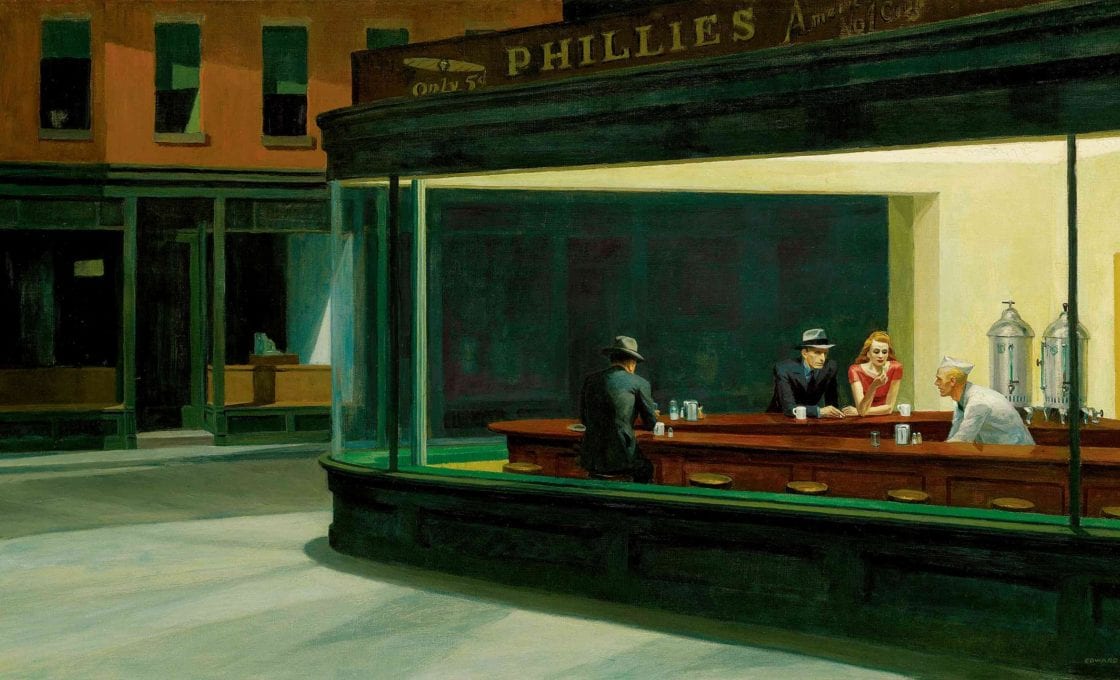
Example:
Who do you see in the pictures? A barman, a couple and a male visitor.
What are people doing? A man might be reading a newspaper, a couple must be talking.
What are their relationships? They can’t be husband and wife, they might be lovers because…
What are they talking about? They could be talking about going away.
The next morning: Modals of deduction (past)
Уровни – upper-intermediate-advanced

Задание для студента:
Imagine that you have woken up on a Sunday morning with a terrible headache. You can’t remember anything from the night before, but you discover some clues. Speculate about what happened
There’s a strange telephone number with the letters CS in your pocket.
There’s a half-eaten hamburger in the kitchen, but you’re a vegetarian.
You’ve got a graze on your forehead.
The front door is wide open.
Your photo is on the front page of the morning paper.
Если задание кажется слишком личным, то можно его заменить предложениями или картинками, описывающими других людей. Например,
Katie’s ankle is twisted.
Kevin has woken up in the place he has never been before и так далее.
Tough Luck: Modals of deduction (past)

Уровни – upper-intermediate-advanced
Отличие от предыдущего задания в том, что дается начальная и конечная ситуация. Предложения составляются в зависимости от лексического наполнения урока.
John was the most experienced candidate ? He was turned down for the job.
Possible answer:
The employer might have changed his mind.
Готовые предложения можно взять в книге Maria Lucia Zaorob “Games for grammar practice”
Videos: Modals of deduction (past)
Уровни – upper-intermediate-advanced
Преподавателю необходимо найти небольшой ролик или фрагмент фильма. Студент должен посмотреть его и предположить, что произошло с героями.
Например, видео с готовыми разработками и ответами. Раз и два
Или можно вырезать кусок из трейлера или короткого анимационного фильма, показать студенту, попросить его догадаться что произошло:

Why was she so slim and now she is fat? What has happened?
She might have eaten a lot.
She can’t have gained weight so quickly.
Модальные глаголы в английском языке: упражнения с ответами
Модальные глаголы – это очень важная тема, которую обязательно нужно проходить при изучении грамматических правил английского языка. Главной сложностью модальных глаголов является то, что они не подчиняют общим правилам глаголов и при построении имеют свои особенности и исключения.

В данной статье будут рассмотрены часто использующиеся модальные глаголы, а также их основное значения. Большая часть будет посвящена различным упражнениям, которые помогут отработать вам навык построения модальных глаголов с разных сторон.
Скорее приступайте к изучению модальных глаголов!
Основные значения модальных глаголов и их перевод
Ниже будет дана таблица, в которой вы сможете найти все основные модальные глаголы, их значение, особенности употребления и примеры:
Английские модальные глаголы – упражнения для начинающих
Ниже будут приведены различные упражнения с модальными глаголами, каждое из которых направлено на свою микротему. Попытайтесь решить их, не подсматривая в ответы.
Упражнение 1
В данные предложения нужно подставить подходящий по смыслу модальный глагол, а также перевести их на русский язык:
- You ___ do your homework tomorrow because tomorrow we are going to the cinema.
- Mickey ___ wear the uniform at school bur he really hates it.
- You really ___ jog this early morning. It is so cold.
Ответы:
- should;
- has to;
- need not.
Упражнение 2
Ниже приведены предложения с модальными глаголами, вам нужно поставить их в отрицательную форму согласно правилу:
- My pupils ___ do such kinds of things because they are really dangerous for their health.
- My parents ___ swim but I really love swimming. And also I do it every week in the local swimming pool.
- You ___ smoke there! There are many people and little children every day. It can be dangerous for them.
Ответы на упражнение:
- should not;
- cannot (can`t);
- must not.
Упражнение 3
Поставьте предложения, расположенные ниже, в вопросительную форму согласно общему правилу модальных глаголов:
- Mr. Collins, ___ I come into the classroom? I was in the library with Mrs. Gallaher. We were talking about my future exams.
- ___ you give that book, sweaty? I need to prepare my biology project.
- ___ I use your car? I want to drive with Sammy. She loves guys with car but I do not have one. So do you lend it me?
Ответы с глаголами:
- may;
- can;
- may.
Упражнение 4
Из предложенных слов составьте вопросительное предложение с модальными глаголами и дайте на него краткий ответ:

- make, can, a cup, for me, you? Really, am, these days, tired, I, me, help, so, a little bit, please.
- Mary, break up, Dilan, should, with? These days, have not, they, met, often.
- do, teacher, this layout, by, of, make, have to, we, the end, the week?
Ответы на упражнение:
- Can you make a cup of coffee for me? I am really tired these days, so help me a little bit, please. – Yeah. (I will you a cup of coffee in a couple of minutes).
- Should Mary break up with Dilan? They have not met often these days. – No, she should not. (They were just a little bit busy).
- Teacher, do we have to make this layout by the end of the week? – Oh, no, you do not. (You have a month for this work).
Если Вы устали учить английский годами?
Наши читатели рекомендуют попробовать 5 бесплатных уроков курса «АНГЛИЙСКИЙ ДО АВТОМАТИЗМА» с Анастасией Божок.
Те, кто посещают даже 1 урок узнают больше, чем за несколько лет! Удивлены?
Без домашки. Без зубрежек. Без учебников
Из курса «АНГЛИЙСКИЙ ДО АВТОМАТИЗМА» Вы:
- Научитесь составлять грамотные предложения на английском без заучивания грамматики
- Узнаете секрет прогрессивного подхода, благодаря которому Вы можете сократить освоение английского с 3 лет до 15 недель
- Будете проверять свои ответы мгновенно + получите доскональный разбор каждого задания
- Скачаете словарик в форматах PDF и MP3, обучающие таблицы и аудиозапись всех фраз
Упражнение 5
В этих предложениях с модальными глаголами вам необходимо найти ошибки и исправить их. Повторите правило перед началом выполнения упражнения на модальный глаголы.
Упражнение:
- She cans read and write and speak in English. I have been learning this language for 10 years.
- Do we should read this book about young boy named Harry Potter? I think it will be very interesting story.
- Peter does not can drive a car because he is so young for this. But in the nearest future he wants to learn how to drive a car.
Ответы с глаголами:
- She can read and write and speak English. I have been learning this language for 10 years.
- Should we read this book about a young boy named Harry Potter? I think it will be a very interesting story.
- Peter cannot (can`t) drive a car because he is so young for this. But in the nearest future he wants to learn how to drive a car.
Упражнение 6
В предложения вам нужно подставить подходящий по смыслу модальный глагол – CAN’T или COULDN’T:

- She ___ listen to music yesterday. She was cooking dinner for her sisters and brothers because they haven’t had parents since their childhood.
- You ___ do this for Peter. He will be hurt because of your behavior! You such a fool!
- My mother ___ get this product a week ago and she was really disappointed about it. But now she is absolutely okay.
Ответы с глаголами:
- could not;
- cannot (can`t);
- could not.
Упражнение 7
В предложенные предложения подставьте подходящий по смыслу модальный глагол, которые обозначает невозможность что-либо сделать или выполнить – CAN’T и MUSTN’T. Учтите смысловую разницу между этими модальными глаголами.
Задание:
- You ___ drink my coffee! Because it is my coffee and I have made it for my, not for you! Do not do such kind of thing anymore!
- Alice ___ sing but she is really good at dancing. Actually, she is a professional dancer and has her own dance team.
- My best friend Daniel ___ eat tomatoes and cucumbers because he really hates these kinds of vegetables. Daniel prefers eating fried meet, such beef of chicken, and cherry cakes.
Ответы:
- must not;
- cannot (can`t);
- cannot (can`t).
Упражнение 8
Предложения с отрицаением возможности какого-либо действия знакомы вам уже давно. Осталось только перевести их на русский язык, сохраняя смысловую разницу между ними. Для этого стоить повторить правило модальных глаголов.
Задание:
- You must not read my personal diary because it is personal. It means only I can read it!
- I cannot (can`t) write beautiful stories about love, fillings, pain or whatever. I have always wanted do this but just cannot.
- Children, you must not drink alcohol and smoke cigarettes at that early age. It is really bad for your health. You should stop do it immediately!
Ответы на упражнение:
- Ты не должна читать мой личный дневник, потому что они личный. Это значит, что только я могу читать его.
- Я не могу писать красивые истории о любви, чувства, боли и подобном. Я всегда хотела, но не могла.
- Дети, вы не должны пить алкоголь и курить сигареты. Это опасно для вашего здоровья. Просто прекратите делать это немедленно!
Упражнение 9
Используя глаголы совета – should и shouldn’t, составьте модальные предложения, в которых вы советуете кому-то что-либо сделать.
Ответы (возможные предложения):
- You should stop do it. It so disgusting and terrible. Just stop and go away from my life. (Тебе стоит прекратить поступать так. Это отвратительно и ужасно. Просто прекрати и убирайся из моей жизни).
- You should not read this article. There are really bad words in it. Just throw it away and read this book, which is good for your brain. (Тебе следует прекратить читать эту статью. В ней слишком много плохого. Просто выбрось её и прочитай эту полезную для твоего мозга книгу).
- Mary should not talk with that boy. I know what he has done with Emily, He is a real monster. Please, tell her truth about him. She will listen to you. (Мэри не следует общаться с тем парнем. Я знаю, что он сделал с Эмили. Он настоящий монстр. Пожалуйста, скажи ей правду о нём. Она послушает тебя).
Упражнение 10
Переведите русские предложения на английский язык, используя различные модальные глаголы:

- Мне не нужно делать проект сегодня, потому что завтра у меня нет этого урока, поэтому мы можем посмотреть интересный фильм. Что ты думаешь об этом?
- Мой отец очень умный мужчина. Он может писать статьи, слушать радио и смотреть новости одновременно. У него удивительные способности.
- Он должен быть в его комнате. Сходи и проверь. Потому что я не хочу говорить с ним.
Ответы на упражнение с переводом:
- I need not do my project because I will not have this lesson tomorrow, so we can watch an interesting film. What do you think about it?
- My father is a very smart man. He can write articles, listen to the radio and watch news at the same time. He has amazing skills.
- He must be in his room. Go and check it. Because I do not want to talk with him.
Упражнение 11
Переведите предложения с английского на русский, учитывая значение модальных глаголов:
- Polly will be able to wash the dishes tomorrow but today she feels bad. So let`s do not worry her.
- She needs you. But she feels pain in her heart because of what you have done. Please, come and talk with her. She is dying inside.
- You cannot be alone. You are so beautiful, kind and a nice girl. You just need to be more active and sociable.
Ответы на тренировочное упражнение:
- Полли сможет выпить всю посуду завтра, но сегодня она чувствует себя плохо. Поэтому давайте не беспокоить её.
- Она нуждается в тебе. Но ей больно из-за того, что ты сделал. Пожалуйста, иди к ней и поговори. Она умирает внутри.
- Ты не можешь быть одна. Ты такая красивая, добрая и милая девушка. Просто тебе нужно быть более активной и социальной.
Упражнение 12
Перестройте данные предложения, используя эквиваленты их модальных глаголов:
- She can swim and dance. She is a very athletic girl.
- My friend must to go to the library every day because of his historical project.
- Do not worry about it. I cannot go to that club with bad guys.
Ответы:
- She is able to swim and dance. She is a very athletic girl.
- My friend has to go to the library every day because of his historical project.
- Do not worry about it. I will not be able to go to that club with bad guys.
Заключение
Модальные глаголы – очень важный элемент в английском языке, поэтому стоит уделить ему немало времени и внимания, так как в современной английской речи в большинстве используется именно данный вид глаголов.
Для того чтобы лучше усвоить модальные глаголы, прорешивайте все предложенные в этой статье упражнения на грамматику онлайн через некоторый промежуток времени, также не забывайте повторять правило. Если вы будете соблюдать все эти условия, то совсем скоро спокойно сможете употреблять в своей речи различные модальные глаголы.
источники:
https://engfairy.com/modalnye-glagoly-v-anglijskom-yazyke-uprazhneniya-s-otvetami/
https://skyteach.ru/2017/01/20/modals/
https://eng911.ru/exercises/uprazhneniya-modalnye-glagoly.html